
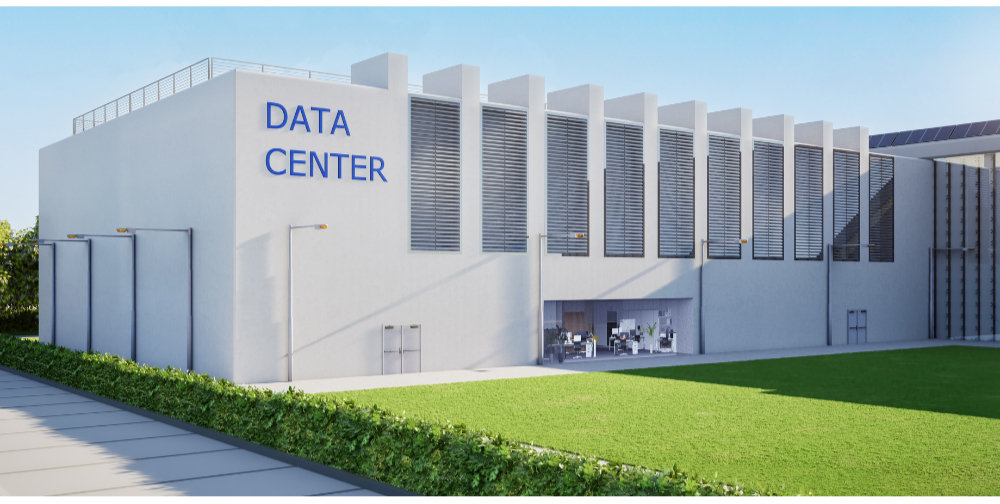
Why Canada Is Welcoming AI Data Centres as the US Faces Growing Resistance
As opposition to artificial intelligence (AI) data centre projects grows across the United States, Canadian industry leaders are seeing an opportunity to attract more investment.
“Data centres in Canada are looking pretty appealing right now,” Lucy Hargreaves, CEO of non-profit policy group Build Canada, posted on X after US voters approved 40 of 41 local ballot measures seeking to restrict or block data centre developments during this month’s midterm elections.
Although the US has far more proposed AI data centres than its northern neighbour, Canada has increasingly been promoted in recent months as a destination for large-scale, or “hyperscale”, projects.
Alberta is leading Canada’s AI data centre expansion, with 90% of all currently proposed sites expected to be located in the western province.
Rich in natural gas reserves, Alberta has marketed itself as “North America’s destination of choice” for AI data centres. It has also introduced a “concierge” service to help investors develop projects at “unparalleled speed”.
Among the investors is Canadian businessman, television personality and Donald Trump ally Kevin O’Leary, who announced plans this year to develop two major AI data centres, one in Alberta and another in Utah, US.
However, his two proposed Wonder Valley sites are facing sharply different reactions in the two locations.
In Utah, residents have mounted strong opposition to the project. The backlash prompted outgoing state senator Stuart Adams to call on O’Leary in June to reduce its proposed size by 75%, from 40,000 to 13,000 acres.
Funding for the Utah data centre is still being arranged, with no clear timeline for construction or certainty that the project will proceed.
Meanwhile, the proposed 7,000-acre, 7.5-gigawatt Alberta Wonder Valley development has received considerable support from the provincial government and local authorities.
Described as an “off-grid” project, the facility will generate its own electricity using locally sourced natural gas. In April, Alberta’s government waived the requirement for an environmental impact assessment, saying one was unnecessary, although construction permits are still required.
Opposition at a local town hall meeting earlier this year was relatively limited. Dan Harms, a resident, told Bloomberg in June that he recognised the project’s economic potential and noted that it was being developed “out in the middle of nowhere”.
Speaking to BBC News, Ryan Ratzlaf, Reeve of Greenview Municipality in north-western Alberta, described the development as a “perfect fit” for the rural community, which had spent 13 years seeking an industrial tenant for a resource-rich parcel of land.
However, some residents remain concerned about the project’s projected annual water consumption for cooling, estimated at six million cubic metres, equivalent to roughly 2,400 Olympic-sized swimming pools.