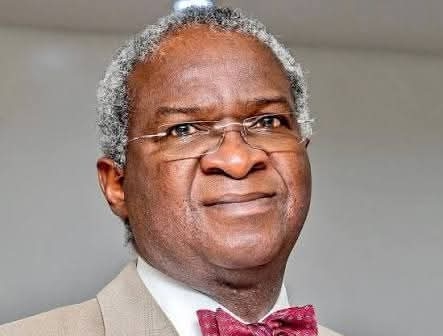
Former Lagos State governor, Mr. Babatunde Fashola has said the World Bank told Nigeria it would no longer finance the country unless the country get rid of petrol subsidy.
Fashola made the revelation during an interview on Channels Television.
Fashola, who was minister of power under the administration of late President Muhammadu, said the decision to scrap subsidy was not simply a policy choice but was also linked to legal provisions and the country’s financial situation.
He urged Nigerians to revisit President Bola Tinubu’s inaugural address, adding that public attention had focused largely on the declaration that “subsidy is gone” without considering other statements made during the speech.
He said the Petroleum Industry Act (PIA) provided that petroleum products should be sold at competitive market rates, adding that the provision had implications for any attempt to reinstate subsidy.
“The World Bank simply said, ‘We won’t finance your country again unless you remove subsidy.’ It was that simple,” he said.
According to Fashola, the issue was discussed during the previous administration, when he was a member of the federal executive council (FEC) adding that Nigeria was spending close to 90 percent of its revenue on debt servicing.
He stated that the country could not afford to continue financing the subsidy regime, asking those advocating its reinstatement to explain where the money would come from.
The former minister also challenged Tinubu’s opponents who opposed subsidy removal to explain how they would implement a different policy if elected.
He said some politicians who had previously declared their support for subsidy removal had changed their positions because the policy had become unpopular.
Fashola said the Tinubu administration deserved commendation for refusing to reverse the policy despite the economic difficulties it had created for Nigerians.
“What this government deserves commendation for is not falling over on its word and saying, ‘Because the people like it, let’s bring it back.’ It was a road to perdition,” he said.
He acknowledged that subsidy removal had created challenges for household livelihoods and increased the cost of living, but said the government was deploying other measures to ease the impact.
Fashola listed tax reforms, the Nigerian Education Loan Fund (NELFUND), salary adjustments and compressed natural gas (CNG) initiatives among the measures being used to address the cost-of-living crisis.
He also cited the decline in inflation from more than 30 percent to about 14 percent, insisting that reversing the policy midway could disrupt the progress recorded.
The former minister recalled the Subsidy Reinvestment and Empowerment Programme (SURE-P), introduced under the administration of former President Goodluck Jonathan, as an example of an earlier attempt to manage the proceeds of subsidy removal.
He said the programme’s chairman resigned after becoming concerned about the management of its funds.
In August, Atiku Abubakar, the presidential candidate of the African Democratic Congress (ADC), said he would restore the petrol subsidy if elected president in 2027.