



The UK government has launched a sweeping Strategic Defence Review, pledging billions to strengthen military power against mounting dangers from Russia and China.
Defence Secretary John Healey warned global threats now surpass Cold War unpredictability, citing European conflicts, Russian aggression, nuclear risks, and relentless cyberattacks.
Former Labour Defence Secretary Lord Robertson guided the review, with all 62 recommendations adopted.
Plans include constructing twelve nuclear-powered submarines while blending Aukus technology with unmanned vessels for Atlantic patrols.

Factories will churn out 7,000 long-range missiles and drones alongside £1.5 billion in munitions plants to sustain constant production.
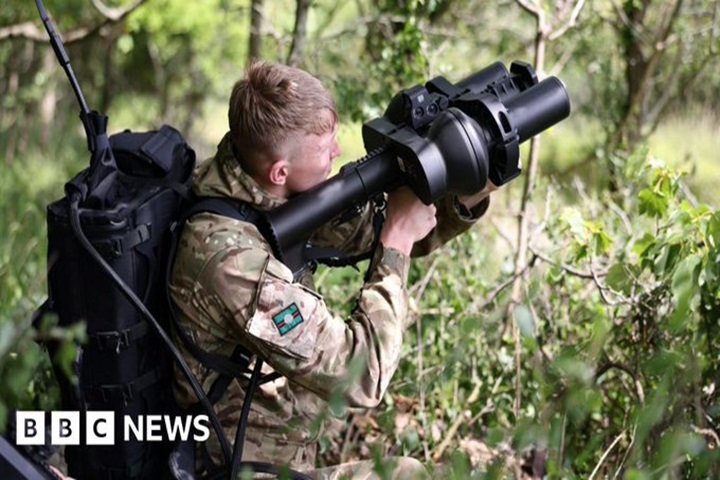
Cutting-edge warfare tools take center stage, with artificial intelligence and laser systems receiving major funding.
A dedicated cyber command will counter digital threats, while £15 billion expands nuclear arsenals.
Meanwhile, crumbling barracks get £1.5 billion for urgent repairs by 2029 to improve soldiers’ living conditions.
The British Army will grow to 76,000 troops post-election, supplemented by 30% more cadets and new military gap years.
These changes aim to address critical shortages in personnel, equipment, and morale that leave forces ill-prepared for modern combat.
Russia emerges as the most urgent threat following its Ukraine invasion, with China’s expanding nuclear arsenal and cyber-espionage raising alarms.
Iran and North Korea further destabilize global security, compounding challenges for UK defenses already strained by daily infrastructure cyberattacks.
Funding uncertainties cloud these ambitions despite targets to lift defense spending from 2.3% to 3% of GDP by 2034.
Opposition leaders blast the plan as unfunded, with Conservatives dismissing shipbuilding proposals as “fantasy fleets” and Liberals demanding clearer financial commitments.
Prime Minister Sunak defended the strategy in Glasgow, insisting preparedness deters aggression.
“Strength secures peace when facing advanced adversaries,” he asserted.
Labour backed the vision for a “battle-ready” nation as the review promises 30,000 skilled jobs through weapons research and production boosts.
This overhaul signals Britain’s pivot toward high-tech, adaptable defenses amid unprecedented threats.
Yet with budgets stretched and skepticism brewing, delivering Healey’s pledge for “tenfold deadlier” forces hangs in the balance.
The nation watches whether words will translate into concrete protection for turbulent times ahead.




