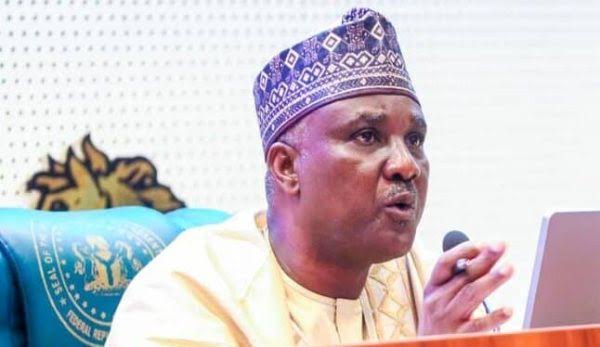
Speaker of the House of Representatives, Tajudeen Abbas, has refuted claims that he condemned Nigeria’s borrowing policy.
Speaking at the 11th Annual Conference of the West Africa Association of Public Accounts Committees on Monday, September 7, Abbas raised alarm over Nigeria’s debt profile but maintained that his position was misrepresented.
He expressed concern that Nigeria’s public debt had reached “a critical point” and needed urgent reform in borrowing practices and legislative oversight.
“As at the first quarter of 2025, Nigeria’s total public debt stood at ₦149.39 trillion, equivalent to about $97 billion,” he said.

“Even more concerning is the debt-to-GDP ratio, which now stands at roughly 52 per cent, well above the statutory ceiling of 40 per cent set by our laws.”
Abbas warned that the rising debt posed not just a budgetary issue but a “structural crisis” requiring coordinated reform and stronger parliamentary intervention.
However, in a swift clarification, his Special Adviser on New Media, Jowosimi Enitan, explained that the Speaker never condemned borrowing outright.
Instead, he supports responsible borrowing that is transparent, well-managed, and beneficial to the people.
“For the record, Speaker Abbas Tajudeen never condemned borrowing,” Enitan stated.
“Public debt, if managed prudently, can be a tool for growth and prosperity.
His call was for stronger oversight and accountability to ensure that every naira borrowed delivers tangible results roads, schools, hospitals, and innovation.”
Enitan further noted that President Bola Tinubu’s administration has already made efforts to reduce reliance on loans through an aggressive non-oil revenue drive.
According to him, Nigeria met its 2025 revenue target ahead of schedule without borrowing, which he described as “proof that with discipline and focus, the country can secure its economic sovereignty.”
He emphasized that the Speaker’s remarks were about protecting Nigeria’s financial future rather than scoring political points.
“Oversight of public debt is both a constitutional duty and a moral responsibility of parliament,” Enitan added.
“This is not about playing to the gallery; it is about ensuring Nigeria’s debt translates into real development and long-term prosperity.”
The clarification comes at a time when concerns about Nigeria’s growing debt burden have dominated national discourse, with economists and civil society groups calling for greater transparency in loan management.