


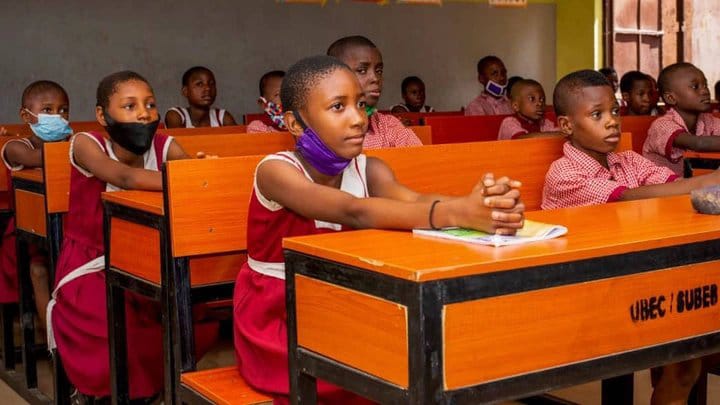
(DDM) – Nigeria has embarked on one of its most ambitious education reforms, unveiling a new national curriculum that introduces artificial intelligence, robotics, coding, reproductive health, and digital entrepreneurship into schools.
Diaspora Digital Media (DDM) gathered that the initiative, approved by the Federal Ministry of Education, covers primary, secondary, and technical schools across the country.
The policy, announced in September 2025, is designed to position Nigerian students for competitiveness in an era dominated by technology, science, and global innovation.
Officials said the reform represents a deliberate break from outdated syllabuses that had long been criticized for failing to prepare graduates for modern challenges.

Under the revised curriculum, coding and robotics will be taught from the early years, enabling pupils to master programming, problem-solving, and automation skills.
Artificial intelligence is also included, with plans to expose students to machine learning concepts, data science, and the ethical dimensions of AI applications.
Reproductive health studies have been added to address growing social challenges, including teenage pregnancies, unsafe abortions, and health misinformation.
The curriculum will also introduce digital entrepreneurship, encouraging students to not only seek employment but also create innovative businesses in Nigeria’s evolving economy.
According to the Education Ministry, the new subjects will complement traditional courses such as mathematics, English, and sciences, while reshaping Nigerian education for the knowledge economy.
Analysts note that the reform reflects global trends, with countries like Finland, Singapore, and South Korea long integrating coding and robotics into schools.
However, critics warn that Nigeria’s infrastructural challenges could undermine the bold vision.
Millions of classrooms across the country still lack basic facilities such as electricity, internet access, and digital devices.
Teacher training also remains a major obstacle, as many educators are unprepared to teach specialized subjects like AI and robotics.
Experts argue that unless government commits to continuous retraining, laboratories, and teacher incentives, the policy may remain a lofty aspiration.
Civil society groups have urged transparency in the allocation of funds, warning against corruption and waste, which have crippled past reforms.
Despite concerns, parents and students have expressed optimism, especially in urban centers where access to computers and internet facilities is more feasible.
Stakeholders in Nigeria’s technology sector have pledged to support implementation, offering mentorship programs, training workshops, and digital resources for schools.
The government said the reform will be implemented in phases, beginning with pilot programs in selected states before nationwide expansion.
Education historians note that Nigeria’s curricula have undergone reforms in the past, but few have addressed emerging global skills as directly as this one.
The policy signals an intent to align with the Fourth Industrial Revolution, emphasizing innovation, creativity, and scientific excellence.
Observers insist that the real test will be execution, accountability, and the ability to bridge rural-urban disparities in education delivery.
For now, the reform has ignited debate across the country, with many seeing it as a turning point in Nigeria’s quest to transform its human capital for future generations.




