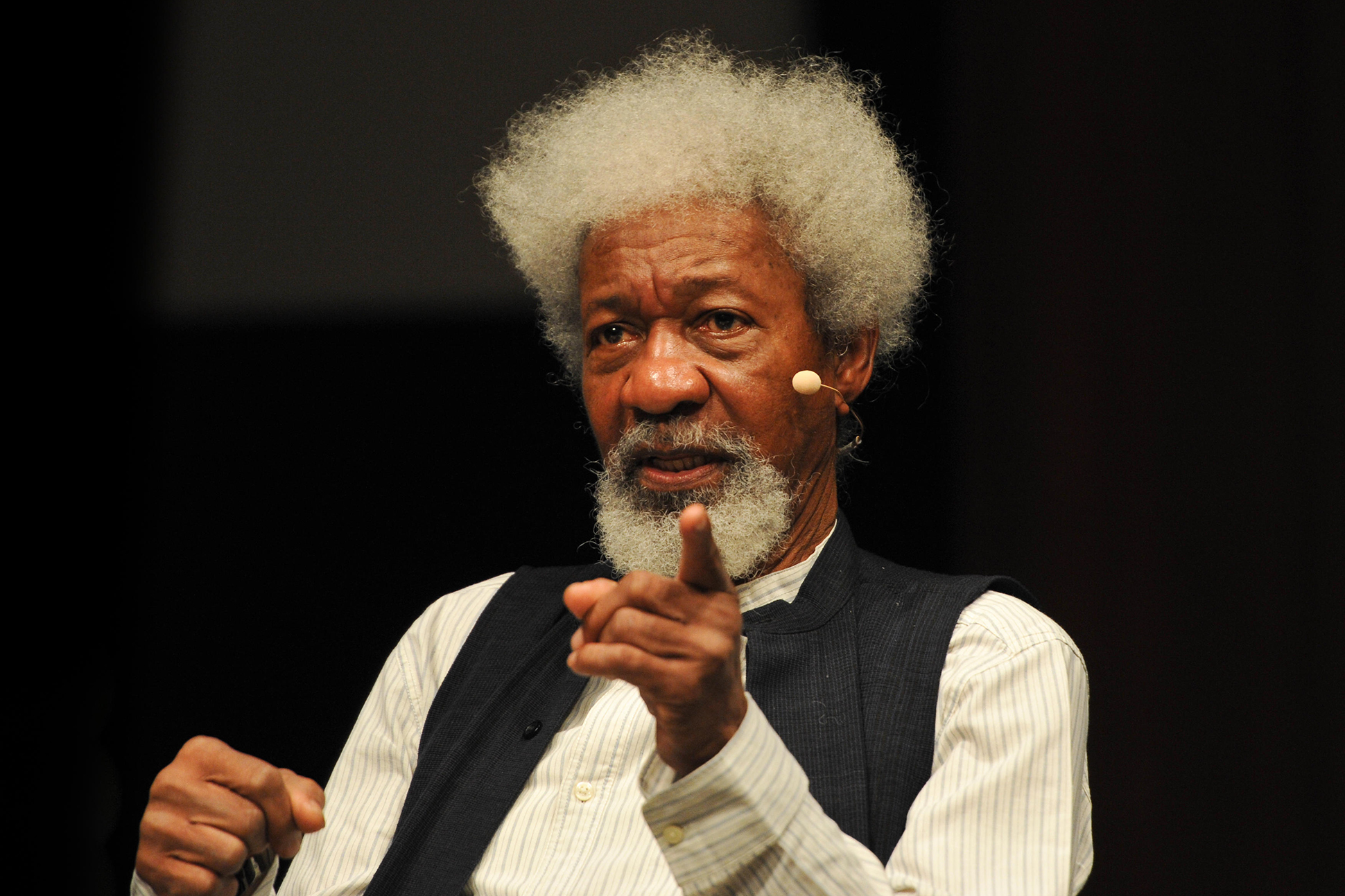
Nobel Laureate Prof. Wole Soyinka has explained why he accepted the renaming of the National Theatre in Lagos after him, despite his well-known opposition to naming public monuments after individuals.
Speaking during the reopening and re-dedication of the refurbished landmark, Soyinka admitted he received the honour with “mixed emotions.”
The National Theatre, located in Iganmu, has now been renamed the Wole Soyinka Centre for Culture and the Creative Arts by President Bola Tinubu.
Soyinka said the decision felt ironic because he has often criticized past leaders who renamed public institutions and monuments after themselves.

“I have been guilty of saying other people do not merit this kind of monumental dedication. Then I had to stand up in public and watch my own name being put up. It just didn’t sit well with me,” he said.
The Nobel Laureate stressed that only a small fraction of monuments in Nigeria genuinely deserve their names.
“I’ll be modest to say that about 25 percent of monuments, whether roads or buildings, are well and truly deserved,” he noted.
However, he accepted the recognition partly out of nostalgia.
He recalled the theatre’s importance during FESTAC ’77 and its decline in later years. At one point, he had even described the building as “irredeemable” and likened it to a slum.
“I remember when Lagos marked its 50th anniversary. We considered this place as a hub, but when I saw its state, I told the governor to go without me.
I even joked that the best solution was to plant a bomb and blow it up,” Soyinka said.
Despite his earlier criticism, Soyinka praised the new transformation of the National Theatre.
He admitted that the extensive renovations gave him reason to “eat his words.”
“If eating one’s word produces a morsel like this, then it’s a very tasty set of words,” he remarked.
The playwright also paid tribute to pioneers of Nigerian theatre such as Hubert Ogunde and opera composer Adam Fiberesima, adding that “somebody has to carry the can” for the history of Nigerian culture.
For Soyinka, the renaming of the theatre represents both a personal contradiction and a reminder of the importance of preserving Nigeria’s cultural heritage.