


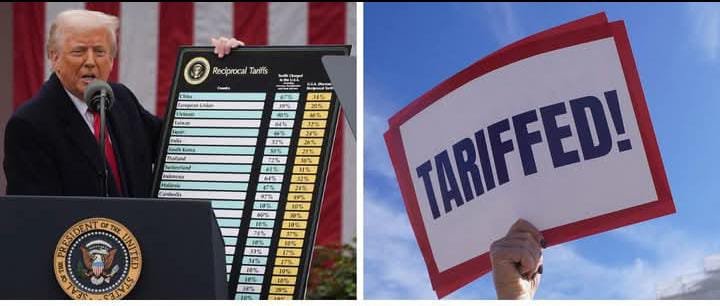
(DDM) – A majority of the nine justices of the United States Supreme Court have voiced concern over former President Donald Trump’s use of emergency powers to impose wide-ranging tariffs on foreign imports during his administration.
According to Diaspora Digital Media (DDM), the justices expressed unease during oral arguments in a case challenging the legality of Trump’s decision to invoke the International Emergency Economic Powers Act (IEEPA) to justify sweeping trade restrictions.
The policy, introduced during Trump’s presidency, allowed the White House to bypass congressional approval in levying tariffs on a broad range of imported goods from China and other countries.
Critics argue that Trump’s actions amounted to an abuse of executive authority, using emergency powers meant for national security threats to pursue aggressive trade policies.

During the hearing, several justices questioned whether such broad economic measures could genuinely be considered part of an “emergency,” warning that the move could set a dangerous precedent for future presidents.
Justice Elena Kagan reportedly remarked that allowing presidents to label any economic dispute as an emergency could effectively “turn every trade disagreement into an unchecked executive decree.”
Similarly, Justice Neil Gorsuch expressed concern that the power granted under IEEPA was being stretched beyond its intended limits, calling for a clearer distinction between legitimate emergencies and policy decisions disguised as such.
Background checks by DDM reveal that Trump’s 2018 tariffs sparked a series of trade battles, particularly with China, leading to retaliatory tariffs and widespread disruption in global markets.
The U.S. Chamber of Commerce and multiple trade associations have long criticized the policy for harming American manufacturers and increasing consumer prices.
The case currently before the Supreme Court stems from a lawsuit filed by a coalition of importers and business groups, who argue that Trump’s use of the emergency statute violated constitutional checks and balances.
Lawyers for the government, however, defended the former president’s actions, insisting that the law grants broad discretion to the executive branch in times of perceived economic threats.
Analysts told DDM that the outcome of the case could have far-reaching implications for the scope of presidential power in U.S. trade and foreign policy.
If the Court limits the use of emergency powers, it could significantly reshape how future administrations handle economic conflicts with foreign nations.
Observers also note that the justices’ questioning reflects growing judicial skepticism toward the expansive use of emergency authority, a trend that could redefine executive-legislative relations in Washington.
A ruling is expected in the coming months, and both the business community and foreign governments are closely watching, as the decision may influence the future of American trade strategy and its global economic posture.




