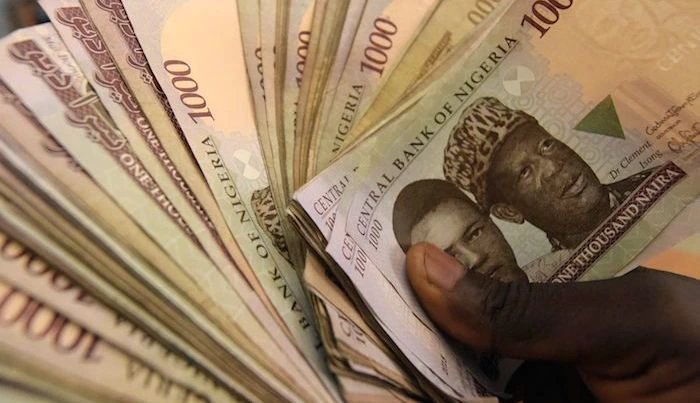
Nigeria’s naira ended 2025 outside Africa’s list of the ten worst-performing currencies, marking nearly two years of improved performance after previous sharp devaluations.
DDM notes that the Central Bank of Nigeria (CBN) data showing the naira closed the year at N1,436 per US dollar, a year-on-year appreciation of 6.5 percent from N1,535.82 at the end of 2024.
The improvement reflects policy reforms, enhanced liquidity, and rising foreign-exchange reserves, which reached $45.48 billion by December 30, 2025—the highest in six years. Analysts attribute the gain to early-term measures by President Bola Tinubu, including the removal of currency controls and previous devaluations in June 2023 and January 2024.

Forbes’ currency analysis indicated that while exact rankings were undisclosed, the naira potentially sits among Africa’s 15–20 weakest currencies, with the Rwandan franc at N1,456 per dollar ranking tenth. The country exited the bottom-ten list in October 2025 and maintained its improved standing through year-end.
The CBN reported that the official exchange rate remained largely stable below N1,500 per dollar, with the naira trading between N1,440 and N1,500 for most of the latter half of 2025. Muda Yusuf, director-general of the Centre for the Promotion of Private Enterprise (CPPE), noted that exchange-rate stability strengthened business confidence, reduced imported inflation, and restored predictability for investment and contracts.

Inflation also moderated sharply in 2025, with headline inflation declining from 24.48 percent in January to 14.45 percent by November.
The average inflation rate for the year was 20.96 percent, down from 33.2 percent in 2024 and 24.66 percent in 2023. Reduced currency pressures, stable petrol costs, and improved supply chains contributed to the easing of price volatility.
Structural developments further supported naira stability. The Dangote Refinery’s operation reduced refined-product import demand, lowering foreign-exchange outflows.
Nigeria’s renewed currency-swap agreement with China also eased dollar demand by enabling trade settlements in yuan and naira. The refinery’s planned expansion to 700,000 barrels per day in 2025, with a medium-term target of 1.4 million barrels, is expected to further strengthen reserves and FX stability.
Despite these gains, analysts warn that the disinflation trajectory remains susceptible to exchange-rate pressures, supply shocks, and global market volatility. The World Bank noted that a more competitive naira could encourage export diversification while moderating import dependence.
Africa’s weakest currencies in 2025 included the São Tomé and Príncipe dobra, Sierra Leonean leone, Guinean franc, Malagasy ariary, and Ugandan shilling. Conversely, the continent’s strongest currencies were led by the Tunisian dinar, Libyan dinar, Moroccan dirham, Ghanaian cedi, and Botswanan pula.
(Diaspora Digital Media (DDM) gathered) experts highlight that Nigeria’s policy reforms, FX management, and domestic production growth collectively signal a potential turning point for the naira, fostering greater stability and investor confidence.
DDM gathered concluded that while the naira’s journey remains sensitive to external shocks, 2025 represents a marked improvement, offering hope for continued strengthening in 2026.