


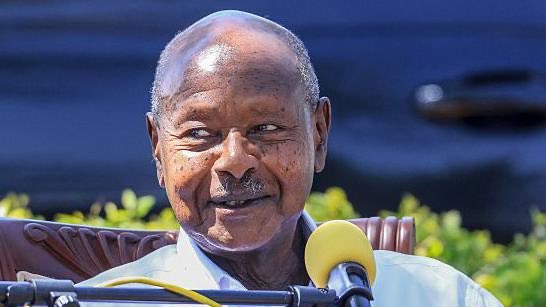
Uganda’s veteran leader, President Yoweri Museveni, has been declared the winner of the country’s presidential election, extending his rule into a fifth decade following a contest marked by violence, an internet blackout and allegations of fraud.
The Electoral Commission announced on Saturday that Museveni, 81, secured just under 72 percent of the vote, while his main challenger, opposition leader Bobi Wine, garnered about 24 percent.
The landslide victory reinforces Museveni’s grip on power amid growing speculation over his eventual succession.
Bobi Wine, whose real name is Robert Kyagulanyi, alleged widespread electoral fraud and called on supporters to protest. His whereabouts were unclear on Saturday after he said he escaped a raid on his home by security forces. People close to him told Reuters that he was in hiding somewhere in Uganda.

“Last night was very difficult at our home,” Wine wrote on X. “The military and the police raided us. They switched off power and cut off some of our CCTV cameras. I managed to escape. Currently, I am not at home.”
He also claimed that his wife and other family members were placed under house arrest, a claim Reuters said it could not independently verify.
The election was held under an internet blackout imposed by authorities, who said it was necessary to curb misinformation. Wine and his supporters argue the shutdown was used to suppress opposition activities and conceal irregularities.
Violence was reported shortly after polls closed. Police said seven people were killed and three injured in central Uganda when officers fired in self-defence against what they described as opposition “goons.” However, local lawmaker Muwanga Kivumbi rejected the police account, claiming that 10 people were killed by security forces inside his home.
Despite fears of widespread unrest similar to post-election violence in neighbouring Tanzania, large-scale chaos did not materialise nationwide.
Museveni’s victory was widely expected. Since coming to power in 1986, he has amended the constitution to remove age and term limits and maintains firm control over state institutions. He also defeated Wine in the disputed 2021 election, which the United States said was neither free nor fair.
During the 2026 campaign, opposition rallies were repeatedly disrupted by security forces, with reports of arrests, tear gas use and live ammunition. At least one person was killed and hundreds of opposition supporters were detained.
While Museveni has faced sustained criticism over human rights, he remains a key regional ally for Western governments due to Uganda’s military deployments in countries such as Somalia and its hosting of millions of refugees. Domestically, supporters credit him with maintaining stability and point to anticipated economic growth as Uganda prepares to begin crude oil production.
Attention is now increasingly focused on succession. Museveni is widely believed to favour his son, army chief Muhoozi Kainerugaba, although he has denied grooming him for leadership.
In a recent interview, Museveni dismissed calls to step aside, saying he still had the capacity and experience to lead if the country required it.




