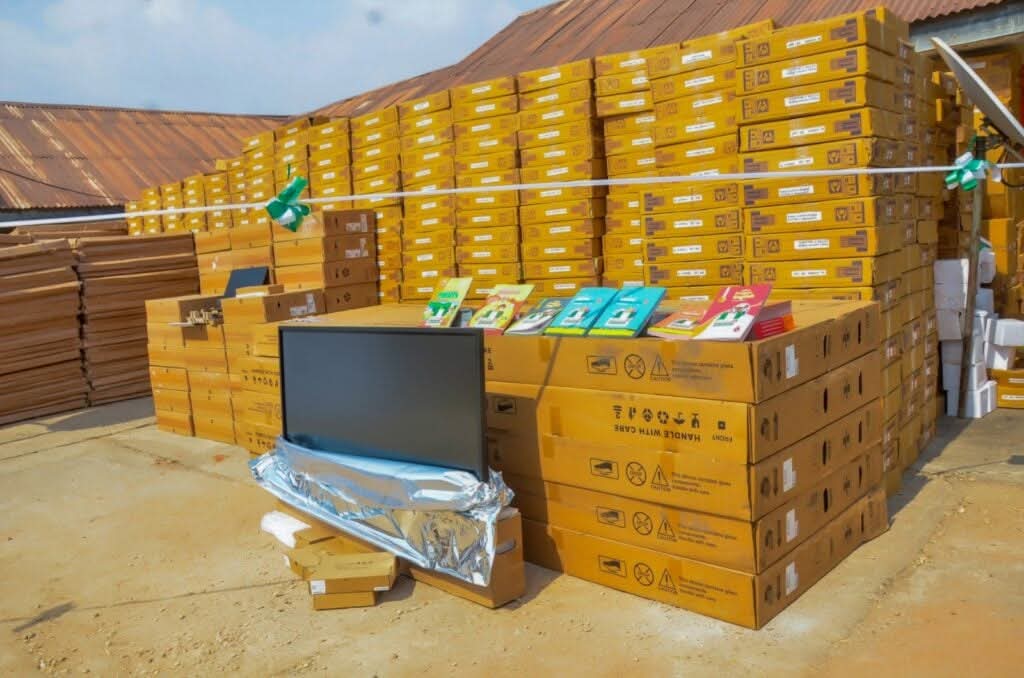
The Universal Basic Education Commission has distributed essential learning materials to public basic schools across Benue State to strengthen teaching and learning outcomes.
The intervention targets improved classroom delivery and enhanced pupil engagement in line with national basic education standards.
Officials confirmed that the distributed items include smart boards, textbooks, instructional aids, and other learning resources.
The materials were handed over to school administrators during a coordinated distribution exercise across selected local government areas.
UBEC explained that the initiative aligns with its mandate to support states in delivering quality, inclusive, and equitable basic education.

The commission stated that the learning tools would modernise classrooms and support digital literacy among pupils and teachers.
Education stakeholders in Benue welcomed the development, describing it as timely and impactful.
They noted that many public schools face shortages of up-to-date instructional materials.
School heads said the smart boards would improve interactive teaching and help teachers explain complex concepts visually.
Teachers added that new textbooks would reduce the burden on pupils who previously shared outdated materials.
Parents expressed optimism that the intervention would improve learning outcomes and reduce dropout rates.
UBEC officials emphasised that the distribution followed needs assessments conducted in collaboration with the Benue State Universal Basic Education Board.
They explained that priority was given to schools with high enrolment and limited resources.
The commission reiterated its commitment to transparency and accountability in the use of intervention funds.
UBEC urged school authorities to properly maintain the equipment to ensure long-term benefits.
The commission also encouraged teachers to undergo training to maximise the use of digital tools.
Benue State education officials said the intervention complements ongoing state-led school rehabilitation projects.
They stated that improved learning environments are critical to boosting literacy and numeracy levels.
Education experts observed that access to modern learning materials can significantly improve pupil performance.
They added that technology-enabled teaching supports critical thinking and problem-solving skills.
UBEC noted that the initiative supports the federal government’s broader education reform agenda.
The commission highlighted its focus on bridging educational gaps between urban and rural communities.
Officials confirmed that monitoring teams would visit beneficiary schools to assess utilisation and impact.
They warned that misuse or diversion of materials would attract sanctions.
Community leaders pledged to support schools in safeguarding the new resources.
They said community ownership would help sustain educational improvements.
Civil society groups praised UBEC for prioritising foundational education.
They called for continuous investment to address infrastructure and teacher welfare.
UBEC assured stakeholders that additional distributions would follow based on performance and compliance.
The commission maintained that strengthening basic education remains essential to national development.
Observers agreed that the Benue distribution represents a positive step toward improving public education quality.
They stressed that sustained funding and effective implementation would determine long-term success.
The initiative has raised expectations among pupils, teachers, and parents across the state.
Many expressed hope that improved resources would translate into better academic achievement.
UBEC concluded that investing in basic education is investing in Nigeria’s future.