


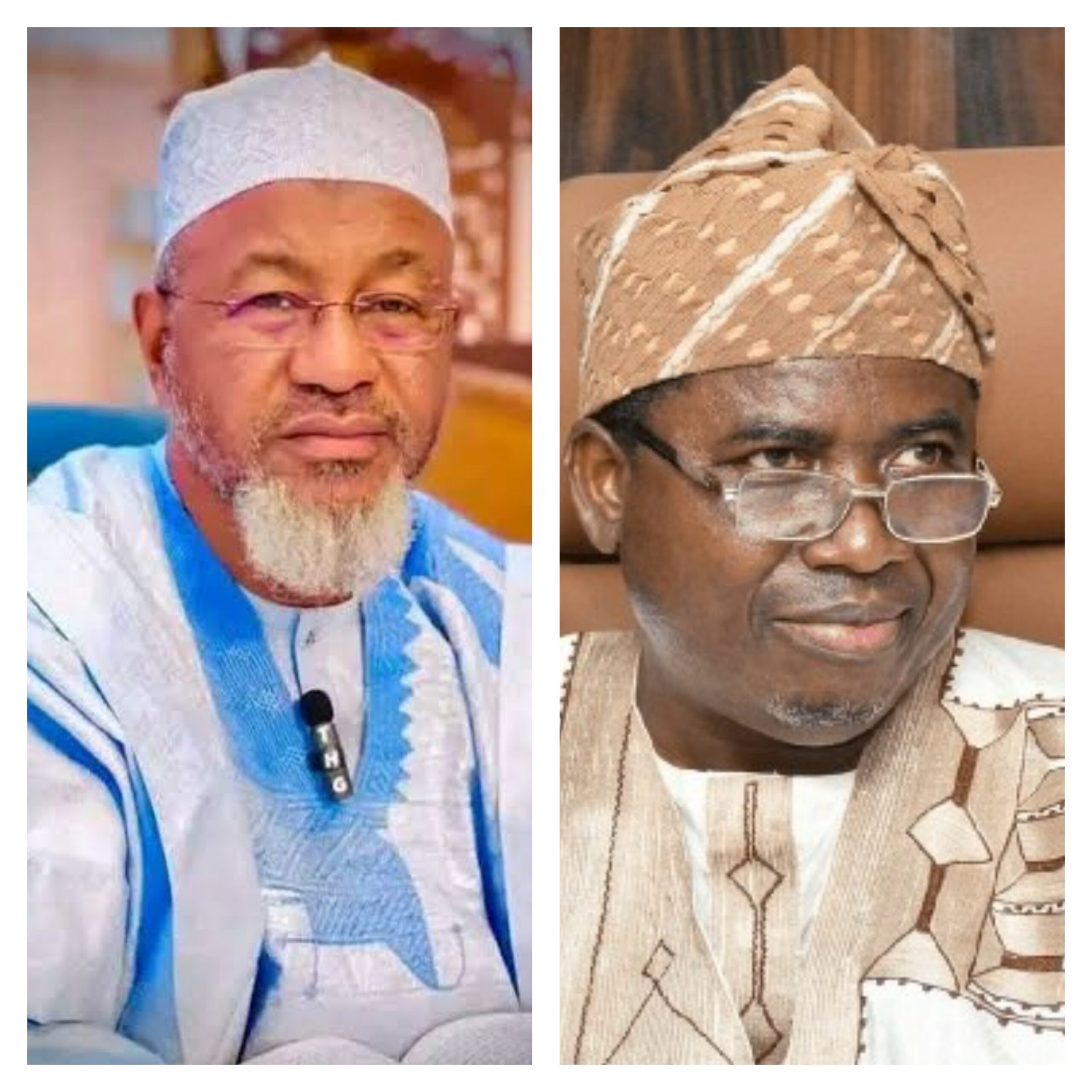
The Supreme Council for Shari’ah in Nigeria (SCSN) has intensified its demand for the immediate removal of the Chairman of the Independent National Electoral Commission (INEC), Amupitan, warning that his continued stay in office poses a grave threat to the credibility, neutrality, and future of Nigeria’s democratic process.
The Council declared that Muslims across Nigeria would neither recognise nor legitimise any election conducted under the leadership of an INEC chairman whose integrity, it insists, remains deeply questionable. The position, according to the Council, is rooted in concerns that go beyond politics and strike at the heart of national unity, fairness, and trust in democratic institutions.
The strong warning was issued on Wednesday in Abuja by the President of the Council, Sheikh Bashir Umar, during the SCSN 2026 Annual Pre-Ramadan Lecture and General Assembly. The event, which drew Islamic scholars, community leaders, and public office holders, was held under the theme “Nigeria’s Future: Faith, Justice, and Leadership.”
Addressing the gathering, Sheikh Umar said the Council’s call for the removal of the INEC chairman was not new, but had become even more urgent given the sensitive role the electoral umpire plays in a deeply diverse and fragile polity like Nigeria. He argued that confidence in elections depends largely on the perceived neutrality and moral standing of those entrusted with overseeing the process.

According to Umar, the Council’s position is anchored on what it described as the chairman’s “questionable antecedents,” particularly a legal brief he allegedly authored in which he advanced claims of a so-called Christian genocide in Nigeria. The cleric stressed that such claims directly contradict the official position of the Federal Government, which has repeatedly stated that no such genocide exists in the country.
“This is not the first time the Council is taking this position,” Umar said. “In the legal brief he personally sent, he sought to establish the existence of a Christian genocide in Nigeria. This position is in direct conflict with the stance of the Federal Government, which has categorically stated that no such genocide exists.”
Umar described the claims contained in the brief as divisive and dangerous, warning that they risk inflaming religious tensions in an already polarised society. He noted that for someone occupying the office of INEC chairman, such a position raises serious concerns about impartiality and fairness.
“For an umpire in a democratic process, you must have someone whose integrity is not compromised and who is clearly unbiased,” the SCSN president said. “As far as we are concerned, his integrity has been compromised. The honourable thing for him to do is to resign. If he does not, the government should dismiss or retire him.”
While clarifying that the Supreme Council for Shari’ah in Nigeria is an advocacy and moral pressure group rather than a litigating body, Umar disclosed that the Council is aware that other concerned groups have already approached courts of competent jurisdiction to challenge the appointment and continued stay of the INEC chairman.
He stressed that the Council would remain steadfast in its position, adding that the Nigerian Muslim Ummah must not be forced to accept an electoral process overseen by an individual whose credibility is in doubt.
“The Council must remain resolute in this demand,” Umar said. “We have clearly stated that the Ummah will not recognise or legitimise any election presided over by a character with questionable integrity. Democratic credibility must never be compromised.”
Beyond the controversy surrounding INEC, the Council also used the forum to raise broader national concerns. It expressed deep worry over worsening insecurity across the country, persistent economic hardship, weak budget implementation, perceived imbalance in federal appointments, and what it described as growing attempts to undermine Muslims’ constitutional right to practise Shari’ah in Muslim-majority states.
The Council also firmly rejected narratives suggesting the existence of a Christian genocide in Nigeria, warning that such claims fuel division, deepen mistrust among religious communities, and threaten national cohesion at a critical time in the country’s history.
Also speaking at the event, the Chairman of the House of Representatives Committee on Ecological Funds and member representing Kaura-Namoda/Birnin Magaji Federal Constituency of Zamfara State, Hon. Aminu Sani Jaji, described the timing of the Pre-Ramadan lecture as particularly significant given Nigeria’s current security, economic, and socio-political challenges.
Jaji noted that Ramadan is a season of deep spiritual reflection for Muslims and emphasized the importance of guidance from religious scholars at a time when the nation is grappling with insecurity and heightened religious and political tensions. He warned that unverified claims and inflammatory narratives, especially allegations of religious persecution, could further damage national unity if not handled responsibly.
Referring to Nigeria’s designation by the United States as a country of particular concern, Jaji described claims of a “Christian genocide” as misleading, stressing that Nigeria remains a secular state where all citizens are constitutionally guaranteed freedom of religion.
On his part, the Madakin Zazzau, Malam Muhammadu Munir Ja’afaru, praised the Supreme Council for Shari’ah in Nigeria for what he described as its consistent role as a principled and courageous voice of the Nigerian Muslim Ummah since its establishment.
He said the Council has shown commitment not only to religious matters but also to the unity, wellbeing, and overall development of the nation.
“The Council has distinguished itself through strategic engagements, providing guidance rooted in the Qur’an and Sunnah, defending constitutional rights, promoting peaceful coexistence, advocating justice, and constructively engaging government and society on critical national issues,” Ja’afaru said.
As political tensions continue to rise ahead of future elections, the Council’s latest declaration adds a new dimension to the growing national debate over trust in electoral institutions, religious harmony, and the leadership required to steer Nigeria toward a stable and inclusive democratic future.




