


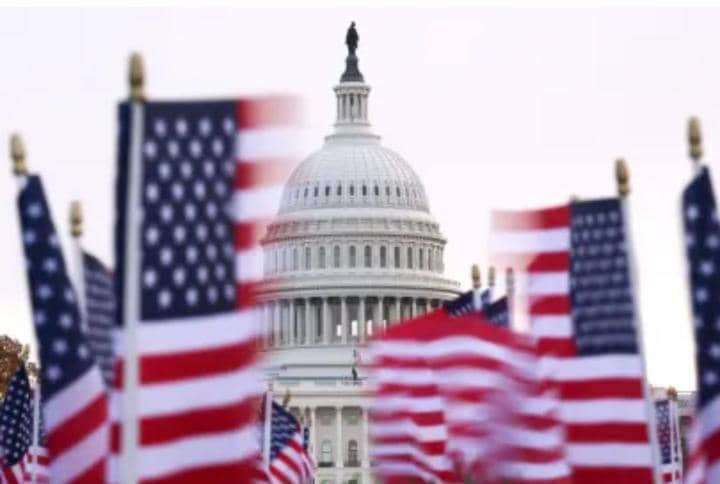
(DDM) – The United States is once again approaching a partial federal government shutdown as Congress remains locked in a political standoff over funding for key government agencies.
Federal funding for several departments is set to expire after January 30, raising the prospect of disruptions if lawmakers fail to reach an agreement.
The immediate flashpoint is funding for the Department of Homeland Security, which has become entangled in broader disputes over immigration enforcement and border policy.
Senate Democrats blocked the advancement of a multi-bill funding package this week, seeking concessions from Republicans and the White House before allowing the legislation to move forward.

Negotiators from both parties say talks are ongoing, but key disagreements remain unresolved.
Why DHS funding is at the center of the fight
The Department of Homeland Security oversees some of the most visible and sensitive federal agencies, including Customs and Border Protection, Immigration and Customs Enforcement, the Coast Guard, and the Secret Service.
Disputes over DHS funding often extend beyond budget numbers and into policy debates, particularly around immigration enforcement practices.
According to lawmakers involved in the talks, the final sticking point is how long to temporarily extend DHS funding while negotiations continue on a longer-term deal.
Which parts of government would be affected
A shutdown would be partial, not total.
Several federal agencies are already fully funded for the remainder of the fiscal year and would continue normal operations.
Those unaffected include the Departments of Agriculture, Veterans Affairs, Interior, Energy, Justice, and Commerce.
Other departments, including Homeland Security, Defense, Transportation, Treasury, State, Labor, and Health and Human Services, could face funding lapses.
What a shutdown could mean for Americans
Many federal employees would be furloughed, while others classified as essential workers would be required to keep working without immediate pay.
Air travel could experience delays if staffing pressures affect TSA screening or air traffic control operations.
Tax-related services could slow, potentially delaying processing and refunds during the upcoming filing season.
Some federal loan and grant programs for housing, agriculture, and small businesses could be temporarily paused.
Social Security and Medicare payments would continue, though customer service and administrative support could be limited.
Court proceedings, regulatory enforcement, and government research activities could also be disrupted.
Why shutdowns matter beyond Washington
Even short shutdowns can ripple across the economy, affecting consumer confidence, financial markets, and business planning.
Economists warn that repeated funding crises can undermine trust in government stability and increase uncertainty for workers and investors.
What happens next
Congress and the White House continue last-minute negotiations aimed at avoiding a shutdown.
Lawmakers say a deal is still possible, but time is running out.
If no agreement is reached, a partial shutdown would begin early January 31, marking yet another chapter in Washington’s recurring budget battles.




