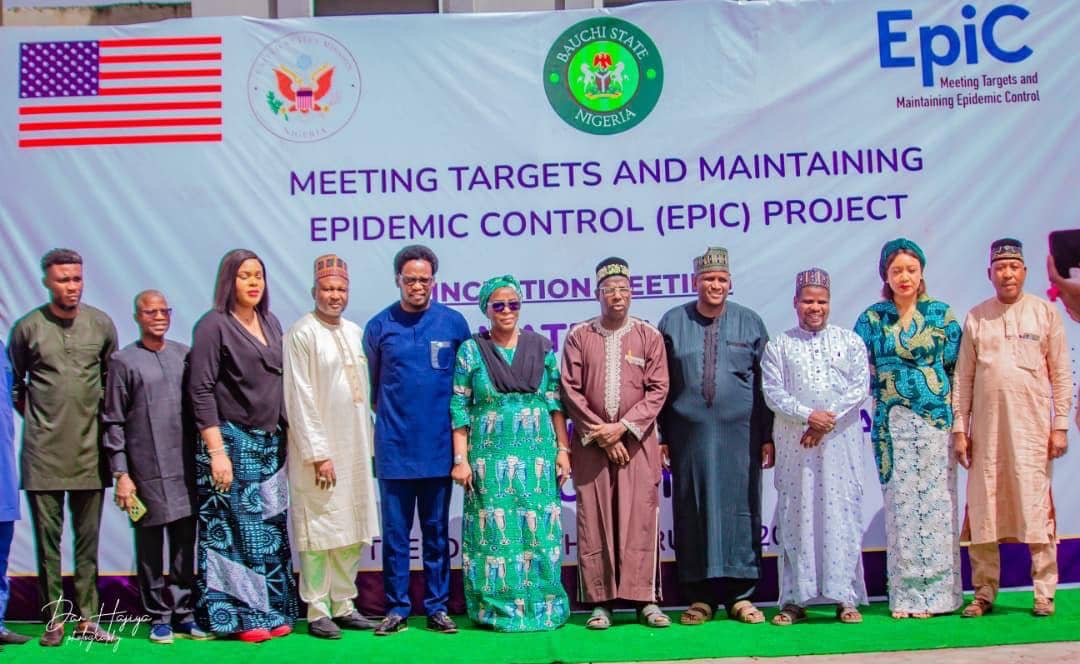
The United States-backed Meeting Targets and Maintaining Epidemic Control (EpiC) Project, implemented by a consortium led by FHI 360, has officially launched a comprehensive Maternal, Newborn and Child Health (MNCH), nutrition, and global health security intervention in the state, marking a new phase in efforts to strengthen healthcare delivery and disease response systems.
The inauguration meeting convened key stakeholders, including officials from the Bauchi State Primary Health Care Development Board, development partners, programme coordinators, and technical teams, to harmonise strategies and establish a coordinated implementation framework.
Representing the Commissioner for Health, Dr. Rilwanu Muhammad, who spoke on behalf of Dr. Sanni Mohammed Dambam, described the intervention as timely and critical to improving health outcomes. He noted that previous support from FHI 360 through funding from the United States has already strengthened HIV, malaria, and maternal health programmes in the state, adding that the expanded initiative would further reinforce the health system.
According to him, the current phase of the project will run for one year and cover 11 MAMI local government areas, with planned activities including healthcare worker training, oxygen system upgrades, distribution of essential medical commodities, and expanded maternal and child health services.

He expressed concern about persistent maternal and child mortality trends in some local government areas but voiced optimism that the intervention would complement existing support from partners such as UNICEF and the World Health Organization, stressing that effective coordination among stakeholders is vital to success.
Project Director Dr. Hadiza Khamofu said the initiative is funded by the United States Department of State as part of an eight-year global award running from 2019 to 2027. She explained that the programme initially focused on tuberculosis and HIV interventions but has since expanded to include COVID-19 response, malaria, nutrition, maternal and child health, and broader global health security strengthening.
She added that the project’s mandate includes supporting HIV/AIDS services, strengthening disease surveillance and laboratory systems, building healthcare worker capacity, and fostering collaboration between government institutions and communities.
Dr. Khamofu further stated that the initiative would help improve integrated case management for childhood illnesses such as diarrhoea, pneumonia, malaria, and malnutrition. It will also enhance maternal and newborn services, strengthen data collection and utilisation, improve supply chains for essential MNCH commodities, and promote community engagement and risk communication.
Earlier, State MNCH Coordinator Jummai Inuwa said the meeting aimed to sensitise stakeholders on the project’s objectives, assess baseline conditions, and identify priority actions. She explained that participants would validate health facility coverage and determine implementation scope across the 11 target local government areas and other high-burden communities.
She added that stakeholders would also develop local government-level rollout plans for MNCH and nutrition activities in line with SWAp DLIS provisions to guide execution.
In goodwill messages, Sulaiman Abdu Kirfi of the Association of Local Governments of Nigeria, Dr Muhammad Sambo Alkali of the Hospital Management Board, and pharmacist Rabiu Fagge of the Gate Foundation commended the initiative and pledged collaboration to strengthen health systems, improve service delivery, and promote healthy practices such as exclusive breastfeeding and proper maternal care.