



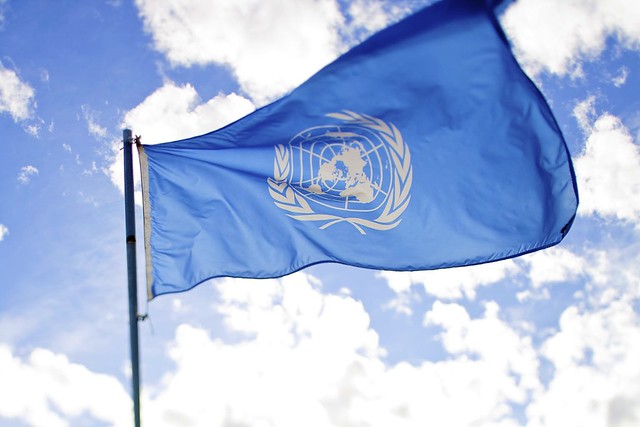
Nigeria joined 106 other member states of the United Nations General Assembly in supporting a resolution backing Ukraine on Tuesday, marking the fourth anniversary of Russia’s invasion launched on February 24, 2022.
Meeting in an emergency special session, the assembly adopted a resolution titled “Support for Lasting Peace in Ukraine.”
The measure passed with 107 votes in favour, 12 against, and 51 abstentions, including the United States.
The resolution called for a comprehensive, just and lasting peace, an immediate and unconditional ceasefire, prisoner-of-war exchanges, and the return of forcibly transferred civilians, including children.

It reaffirmed commitment to Ukraine’s sovereignty, independence, unity, and territorial integrity within its internationally recognised borders.
President of the General Assembly Annalena Baerbock said the full-scale invasion shattered Europe’s peaceful aspirations, warning that “war must never be the new normal.”
António Guterres, Secretary-General of the United Nations, described the conflict as a violation of the UN Charter and international law, calling it “a stain on our collective consciousness” and a continuing threat to global peace and security.
He warned that civilians continue to bear the brunt of the war, noting that 2025 recorded the highest number of civilian deaths in Ukraine since the conflict began.
Guterres reiterated his call for an immediate ceasefire as a first step toward a just and lasting peace.
At a Security Council debate, Ukraine’s Deputy Foreign Minister Mariana Betsa described the invasion as a war against the rules-based international order, citing civilian strikes, nuclear risks, and deportations of children as potential war crimes.
She urged stronger sanctions, enhanced air defence, and binding security guarantees while rejecting territorial concessions.
Russia’s representative dismissed the meeting as unrelated to maintaining international peace and security, accusing European states of prolonging the war and ignoring negotiations.
Moscow reiterated that diplomacy remains preferable but insisted any settlement must address what it called the conflict’s “root causes” and reflect “new territorial realities.”




