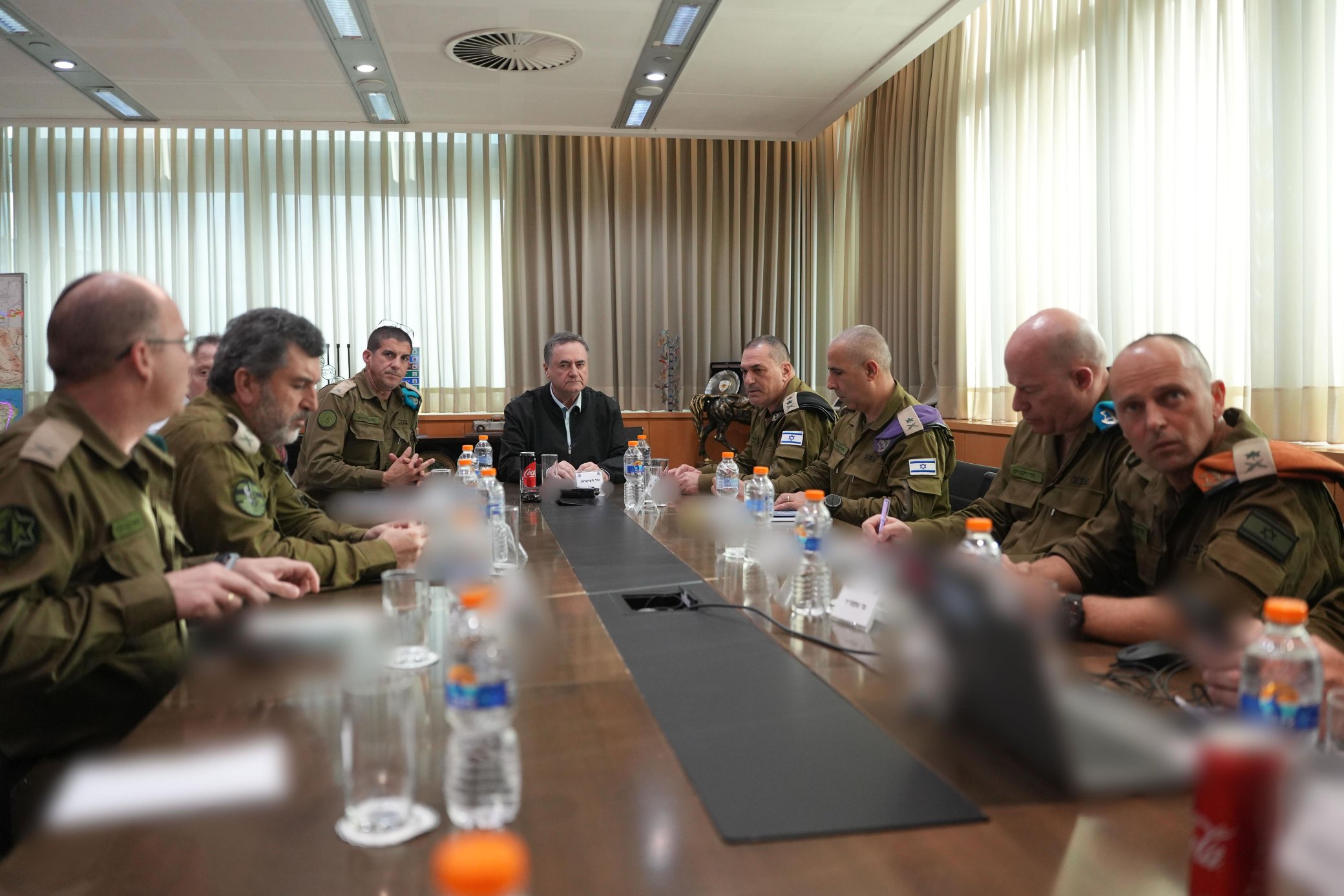
(DDM) – Israeli Defence Minister Israel Katz announced that the Israel Air Force will shift into a sustained 24/7 combat posture over Iranian airspace, maintaining continuous operations against what the military describes as “regime targets” in and around Tehran.
Katz’s statement comes as the IDF and its US counterparts press offensive action against Iranian military infrastructure in the ongoing conflict sparked by last week’s joint US‑Israeli campaign that hit hundreds of targets deep inside Iran.
The multination strikes, dubbed Operation Lion’s Roar, have reportedly involved more than 1,200 munitions on over 1,000 Iranian targets, with the Israeli air force asserting it has achieved aerial superiority in parts of Iranian airspace.
In his address, Katz made clear that the IAF’s role would not be limited to isolated raids but would instead encompass a near‑continuous “stand‑in” presence, effectively bomber and fighter patrols cycling through Iranian skies around the clock.

This posture, senior Israeli military officials say, is designed to ensure sustained pressure on regime military and command infrastructure while disrupting any attempt by Tehran to regroup its air defenses or launch further attacks.
The move follows catastrophic initial strikes that targeted Iranian air defense systems, missile launch sites and strategic facilities, including areas around the capital, in a massive aerial offensive involving hundreds of aircraft.
Israeli military officials have stated that establishing air dominance enables persistent operations and targeted reconnaissance deep within Iran’s borders.
The announcement marks a notable escalation of air operations, as Israel transitions from a series of coordinated strikes into what senior commanders define as prolonged aerial campaign action.
The strategy reflects confidence within the Israeli high command that its aircraft and long‑range munitions can operate with significantly reduced risk from Iranian air defenses, which have been heavily degraded by sustained bombardment.
Israel’s continuous aerial posture also aims to deter any further Iranian retaliation by maintaining a permanent combat air presence, something rarely seen in the country’s modern military history. Officials describe the step as necessary to prevent Tehran from reconstituting its offensive capabilities or coordinating further missile and drone barrages against Israeli territory and allied positions.
International reactions to the evolving conflict have been sharply divided. Some Western allies have expressed measured support for decisive action aimed at crippling Iran’s military reach, even as global diplomatic voices call urgently for restraint and efforts to prevent wider regional war.
Meanwhile, Tehran has condemned the strikes as unlawful aggression and vowed unrelenting retaliation, citing civilian casualties and damage to essential infrastructure.
The continuous air campaign underscores how deeply the conflict has evolved beyond isolated strikes, raising fears that the Middle East could be engulfed in a broader confrontation that involves multiple nations and prolonged combat operations.
As the Israel Air Force maintains its near‑round‑the‑clock offensive posture over Tehran and beyond, analysts warn that both the strategic and humanitarian stakes are escalating with every flight sortie and missile impact, leaving a region already on edge bracing for the next chapter of a rapidly intensifying crisis.