



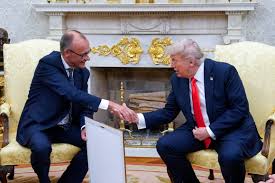
German Chancellor Friedrich Merz travels to Washington on Tuesday for high-stakes talks with United States President Donald Trump, as escalating conflict in Iran casts a shadow over transatlantic relations and global security.
The visit comes just days after a joint US-Israeli military operation targeting Iran resulted in the death of Supreme Leader Ayatollah Ali Khamenei, an event that has intensified instability across the Middle East, disrupted global oil routes and caused widespread air travel disruptions.
Merz will become the first European leader to meet Trump since the start of the military operation, placing Germany at the centre of diplomatic efforts to maintain unity among Western allies while avoiding deeper divisions over the conflict.
Speaking on Sunday after returning from an official trip to China, Merz avoided direct criticism of the strikes but also stopped short of offering full endorsement, reflecting Europe’s cautious stance toward the operation.
“We recognise the dilemma,” the German leader said, noting that decades of diplomatic efforts had failed to deter Iran’s nuclear ambitions or address concerns about its domestic policies.
“So we’re not going to be lecturing our partners on their military strikes against Iran,” he added, while acknowledging that Germany shares several strategic objectives with Washington.
The measured response highlights Berlin’s attempt to preserve strong relations with the United States while navigating domestic and European concerns about legality and escalation risks surrounding the military action.
The conflict has renewed debate within Europe over its limited role in major geopolitical decisions led by Washington, despite the direct economic and security consequences for European nations.
Merz joined French President Emmanuel Macron and British Prime Minister Keir Starmer over the weekend in declaring readiness to cooperate with the United States in defending allied interests in the region.
The Washington meeting had originally been expected to focus on repairing strained transatlantic ties following repeated criticism from the Trump administration over European defence spending, trade imbalances and immigration policies.




