


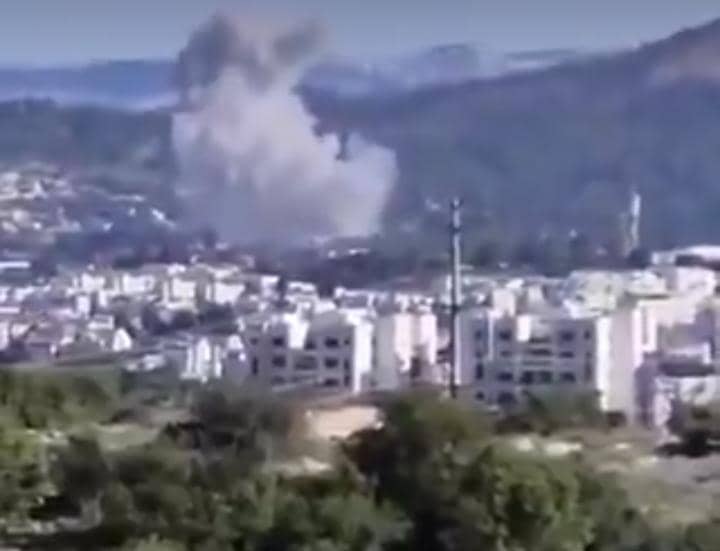
(DDM) – Smoke and explosions filled the skies over southern Beirut on Tuesday morning, signaling a dramatic escalation in the ongoing Middle East conflict, with Lebanon’s capital bearing the brunt of Israeli air operations.
Diaspora Digital Media (DDM) gathered that the Israeli military issued evacuation orders for dozens of southern villages and suburban settlements, citing operations targeting Hezbollah positions. These areas, long considered strongholds for the Iran-backed militia group, were evacuated as residents scrambled to seek safety amid intensifying air raids.
Video footage captured by Reuters showed thick black plumes of smoke rising above residential neighborhoods, while a series of loud explosions rattled buildings and sent residents fleeing in panic. The footage underscored the growing risk to civilian populations, as airstrikes struck near schools, hospitals, and densely populated housing areas.
In a swift response, Hezbollah announced it had launched multiple drones into Israeli territory, framing the strikes as retaliation for the attacks on Lebanese towns. The group described the operation as defensive, warning Israel against further bombardments and signaling its readiness for continued confrontation. The Israeli Air Force confirmed the interception of two drones that crossed into its airspace from southern Lebanon, though no immediate casualties were reported.

The escalation in Beirut is part of a broader regional crisis that has involved Israel, Iran, and the United States. In recent days, US and Israeli strikes on Iranian military facilities triggered retaliatory attacks across the Middle East, including missile and drone strikes on Gulf nations such as the UAE, Kuwait, and Saudi Arabia. Lebanon’s proximity to Israel and its historic role as a base for Hezbollah make it particularly vulnerable to spillover effects from the wider conflict.
Hezbollah’s southern suburbs have historically been fortified with underground tunnels, weapons depots, and densely populated residential zones, complicating Israeli operations. Analysts warn that urban warfare in these neighborhoods carries a high risk of civilian casualties and infrastructure damage. The situation is further exacerbated by Lebanon’s ongoing economic crisis, where widespread shortages of electricity, fuel, and basic services leave residents ill-prepared for sudden evacuation.
International observers have raised alarms over the potential for escalation into a larger regional war. Israel’s recent operations in Lebanon follow retaliatory strikes on Iran-backed militias elsewhere, creating a volatile environment where miscalculations could rapidly spiral into a broader conflict. Humanitarian organizations have called for restraint, warning that continued hostilities could worsen displacement, disrupt supply chains, and strain an already fragile health system in Lebanon.
The Beirut attacks highlight the risks of modern urban warfare, where advanced airpower collides with militia groups embedded in civilian areas. As Hezbollah continues retaliatory strikes and Israel maintains its campaign, the conflict appears poised to intensify, with implications for regional stability, international diplomacy, and the safety of thousands of civilians caught in the crossfire.
Observers note that the current confrontation is likely to continue as both sides consolidate positions, signaling a period of prolonged instability across the Levant and the wider Middle East.
The situation in Beirut serves as a stark reminder of how regional conflicts can quickly escalate, drawing in multiple countries, affecting civilian populations, and straining diplomatic efforts aimed at de-escalation.
This developing crisis underscores the fragility of security in Lebanon and the broader Middle East, as geopolitical rivalries and military actions intersect in a densely populated urban environment.




