


(DDM) – Escalating tensions involving the United States, Israel and Iran have rattled global energy markets, pushing crude oil prices upward and triggering anxiety over potential fuel supply disruptions worldwide.
The rising hostilities have intensified fears that shipments could be affected through the Strait of Hormuz, one of the world’s most strategic oil transit routes.
Roughly a fifth of global crude oil supply passes through the narrow waterway daily, making it a critical artery for international energy trade.
Whenever instability grips the region, oil traders react swiftly, pricing in the risk of supply shortages.

That pattern is unfolding again.
Brent crude prices have climbed sharply as investors hedge against the possibility of blocked routes or retaliatory strikes that could cripple oil infrastructure.
Energy analysts warn that even the perception of risk in the Gulf region can sustain elevated prices for weeks, especially if diplomatic solutions appear distant.
For oil-importing countries, rising crude prices translate into immediate fiscal and inflationary pressure.
Nigeria, despite being Africa’s largest crude oil producer, remains heavily exposed to international price swings due to its long-standing dependence on imported refined petroleum products.
Although Nigeria exports crude oil, the country historically imported most of its refined petrol due to limited domestic refining capacity.
That dependency has meant that global crude price spikes often push pump prices higher at home.
On Wednesday, fuel marketers in Nigeria began adjusting pump prices upward in response to the latest international surge.
The development has revived public debate about energy security and the long-term impact of global geopolitical conflicts on domestic living costs.
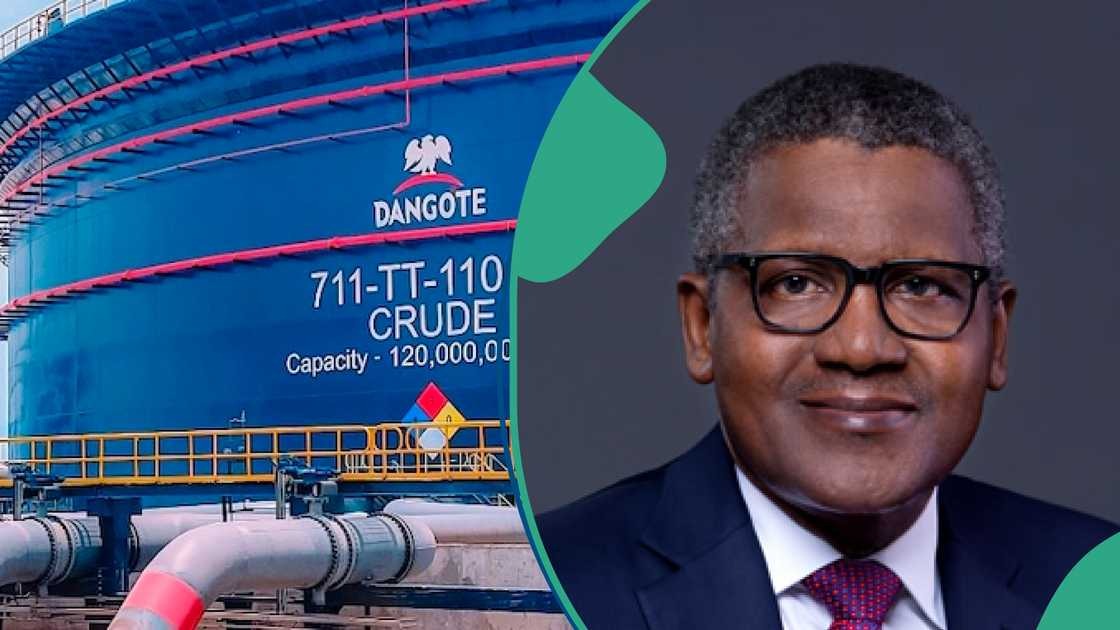
Amid the uncertainty, many Nigerians have taken to social media to express gratitude that the Dangote Refinery is now operational.
The refinery, owned by industrialist Aliko Dangote, is widely regarded as Africa’s largest single-train refinery.
Located in Lagos, the facility was designed to reduce Nigeria’s reliance on imported refined fuel and conserve scarce foreign exchange.
Several online commentators argued that without the refinery, Nigeria’s exposure to global supply disruptions would be even more severe.
One user wrote that blocking the Strait of Hormuz would have spelled deeper trouble for Nigeria if domestic refining capacity were still absent.
Another observer said the current crisis highlights the strategic importance of investing in critical national infrastructure.
Energy economists, however, caution that while domestic refining improves supply security, it does not fully shield Nigeria from global price dynamics.
Crude oil remains the primary input in petrol production.
If global crude prices surge, production costs rise accordingly, even when refining takes place locally.
What domestic refining can reduce is exposure to foreign exchange volatility and shipping bottlenecks.
Previously, Nigeria’s fuel imports required large volumes of dollar payments, adding pressure on the naira.
With local refining, that burden may be moderated, though not eliminated.
The broader concern is inflation.
Higher fuel prices typically translate into increased transportation fares and elevated costs for goods and services.
Nigeria is already grappling with inflationary pressures driven by currency weakness, subsidy removal reforms and supply chain constraints.
A prolonged Middle East crisis could compound those challenges.
Global oil markets are now closely monitoring diplomatic and military developments in the Gulf.
Any confirmed disruption to oil flows through the Strait of Hormuz would likely trigger sharper price spikes.
For Nigerians, the unfolding geopolitical drama underscores a familiar reality.
In a globally interconnected energy market, distant conflicts can have immediate local consequences.
While many are relieved that domestic refining capacity has improved, the ultimate direction of petrol prices will depend on how long tensions between the United States, Israel and Iran persist.
Until stability returns to the Middle East, oil markets, and Nigerian consumers, remain on edge.




