


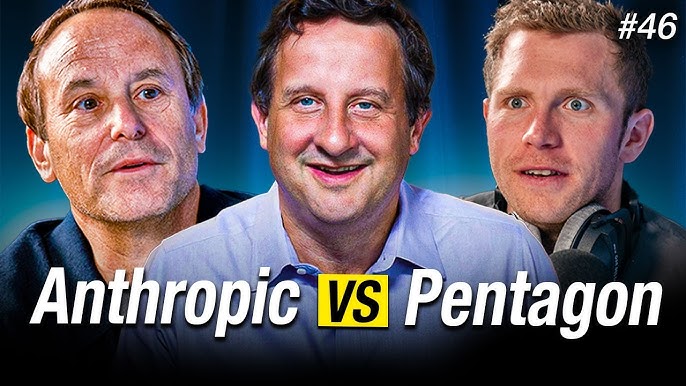
The artificial intelligence startup Anthropic says the U.S. Department of Defence has designated the company a “supply-chain risk to national security,” a dramatic move that would bar the firm from doing business with the U.S. military and potentially reshape the competitive landscape of the AI industry.
The designation, which Anthropic says it received on Wednesday, requires the Pentagon and its contractors to stop using the company’s AI services across defence operations. The decision effectively cuts off one of the leading AI developers from a fast-growing source of government demand.
U.S. Defence Secretary Pete Hegseth first signalled the decision in a post on X on Friday evening, marking a sharp escalation in an ongoing dispute between the Pentagon and the AI company over how military agencies should be allowed to use advanced AI systems.
A clash over how AI should be used in war
The dispute centers on how generative AI tools, such as Anthropic’s Claude models, can be deployed by the military.

Over the past several months, the Pentagon has been negotiating expanded contracts with leading American AI developers, including Anthropic and OpenAI, to enable broader military applications of their systems. Officials have pushed for the ability to deploy the technology for “any lawful use” in defense operations.
Anthropic CEO Dario Amodei, however, sought stricter assurances that the company’s models would not be used for lethal autonomous weapons systems or large-scale domestic surveillance.
Amodei confirmed the Pentagon’s designation Thursday night and said the company plans to challenge it in court.
“We do not believe this action is legally sound, and we see no choice but to challenge it,” Amodei said in a statement.
Despite the escalating conflict, Amodei emphasized that the company still sees itself as aligned with the U.S. government on broader national security goals.
“Anthropic has much more in common with the Department of War than we have differences,” he wrote. “We are both committed to advancing U.S. national security and defending the American people.”
Rivals move quickly to fill the gap
Anthropic’s potential exclusion from Pentagon work could create an opening for its competitors.
Until recently, the company’s systems were the only AI models cleared to operate on the Defense Department’s classified networks. But the situation changed rapidly after the Pentagon signaled its concerns.
Shortly after Hegseth announced he would pursue the supply-chain risk designation, Sam Altman, CEO of OpenAI, revealed that the company had reached an agreement allowing its AI systems to be deployed in classified government environments.
The deal could allow OpenAI to replace much of Anthropic’s existing Pentagon work.
At the same time, Elon Musk’s AI company xAI also secured a contract allowing its Grok models to operate on classified networks.
Anthropic said the Pentagon’s decision would not affect its commercial partnerships with major tech companies including Amazon and Microsoft—both of which maintain significant defense contracts of their own.
A senior Defense Department official confirmed the designation took effect immediately, framing the decision as a matter of military authority.
“From the very beginning, this has been about one fundamental principle,” the official told reporters. “The military must be able to use technology for all lawful purposes.”
Hegseth said Anthropic would be allowed to continue providing services for up to six months while the Pentagon transitions to alternative providers.
Industry warns of a dangerous precedent
The move has already stirred concern across the technology sector.
Amodei noted that the “supply-chain risk” designation is typically used against foreign adversaries, making its application to a major American technology company highly unusual.
Legal analysts say the decision may face significant court challenges, and some believe it is meant more as a warning to technology firms negotiating with the government.
Industry groups representing companies including Nvidia and Apple urged the Pentagon not to apply the label, warning it could discourage investment in the U.S. AI sector.
The tensions escalated further after President Donald Trump suggested the administration might extend restrictions on Anthropic to other federal agencies.
Strategic concerns in the AI race
Some experts say the decision could undermine the United States’ position in the global race to develop advanced AI.
Critics have pointed out that the U.S. government has not applied the same designation to foreign AI competitors such as China’s DeepSeek, despite ongoing concerns about its ties to the Chinese government.
Michael Sobolik, a senior fellow at the Hudson Institute, said the move risks weakening one of America’s most advanced AI companies at a critical moment.
“We cannot hobble the most innovative American companies for asking legitimate questions about military use and privacy,” Sobolik said.
Others echoed similar concerns. Tim Fist of the Institute for Progress argued that the designation could backfire by discouraging AI companies from working with the federal government altogether.
“The designation hurts the AI industry and thus U.S. national security for essentially no gain,” he said




