



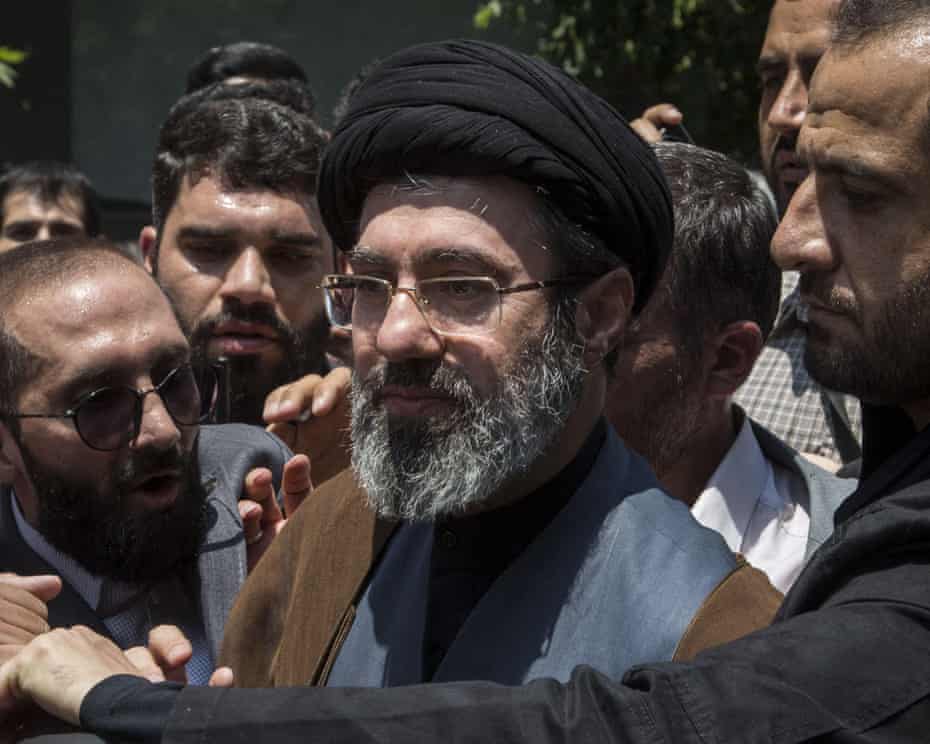
Iran’s newly appointed Supreme Leader, Mojtaba Khamenei, has issued his first public message since assuming office, declaring that the strategic Strait of Hormuz will remain closed as a “tool of pressure” amid the ongoing conflict involving Iran, the United States and Israel.
The message, read on Iranian state television on Thursday, marked Khamenei’s first official communication since he succeeded his father, Ali Khamenei, who was killed in the opening wave of U.S.–Israeli strikes on February 28.
Khamenei, who has not appeared publicly since his appointment, said the closure of the key maritime corridor would continue to be used to exert pressure on Iran’s adversaries.
Threats Against US Bases
In the statement, the Iranian leader warned that American military bases across the Middle East should be shut down or face continued attacks.

He said Iran maintained friendly relations with neighbouring countries but would keep targeting U.S. military installations in those territories.
“We have had good relations with neighbouring countries, but we will continue targeting these bases,” the message said, urging regional governments to close American military facilities operating on their soil.
Demand for Compensation
Khamenei also warned that the countries he referred to as Iran’s “enemies” would be required to pay compensation for the damage caused by the ongoing war.
“We will ask for compensation from the enemy. If we cannot obtain it, we will destroy their properties as much as they have destroyed ours,” the message stated.
The Iranian leader further vowed that Tehran would avenge the deaths of its citizens killed during the conflict.
Massive Oil Market Disruption
The war has already caused major disruptions to global energy markets.
The International Energy Agency warned that the world may be facing the “largest supply disruption in the history of the global oil market” as Iran escalates attacks on ships and energy infrastructure across the Gulf region.
The Strait of Hormuz a narrow waterway between Iran and Oman is one of the world’s most critical oil transit routes, handling roughly 20 per cent of global oil shipments.
Meanwhile, Iranian officials have warned that the conflict could escalate further if key infrastructure is targeted.
A senior Iranian security official, Ali Larijani, said the entire region could face widespread power disruptions if Iran’s electricity facilities were attacked.
“If they target our electricity infrastructure, the whole region will go dark in less than half an hour,” he said.
The humanitarian impact of the war is also growing. The United Nations has warned that as many as 3.2 million people in Iran have been displaced following continuous airstrikes by U.S. and Israeli forces.
At the same time, tensions have spread beyond Iran, with Israel reportedly preparing for wider operations against Hezbollah in Lebanon.
The war has already triggered missile and drone exchanges across several countries in the region, raising fears of a broader Middle East conflict that could significantly impact global energy supply and economic stability.




