



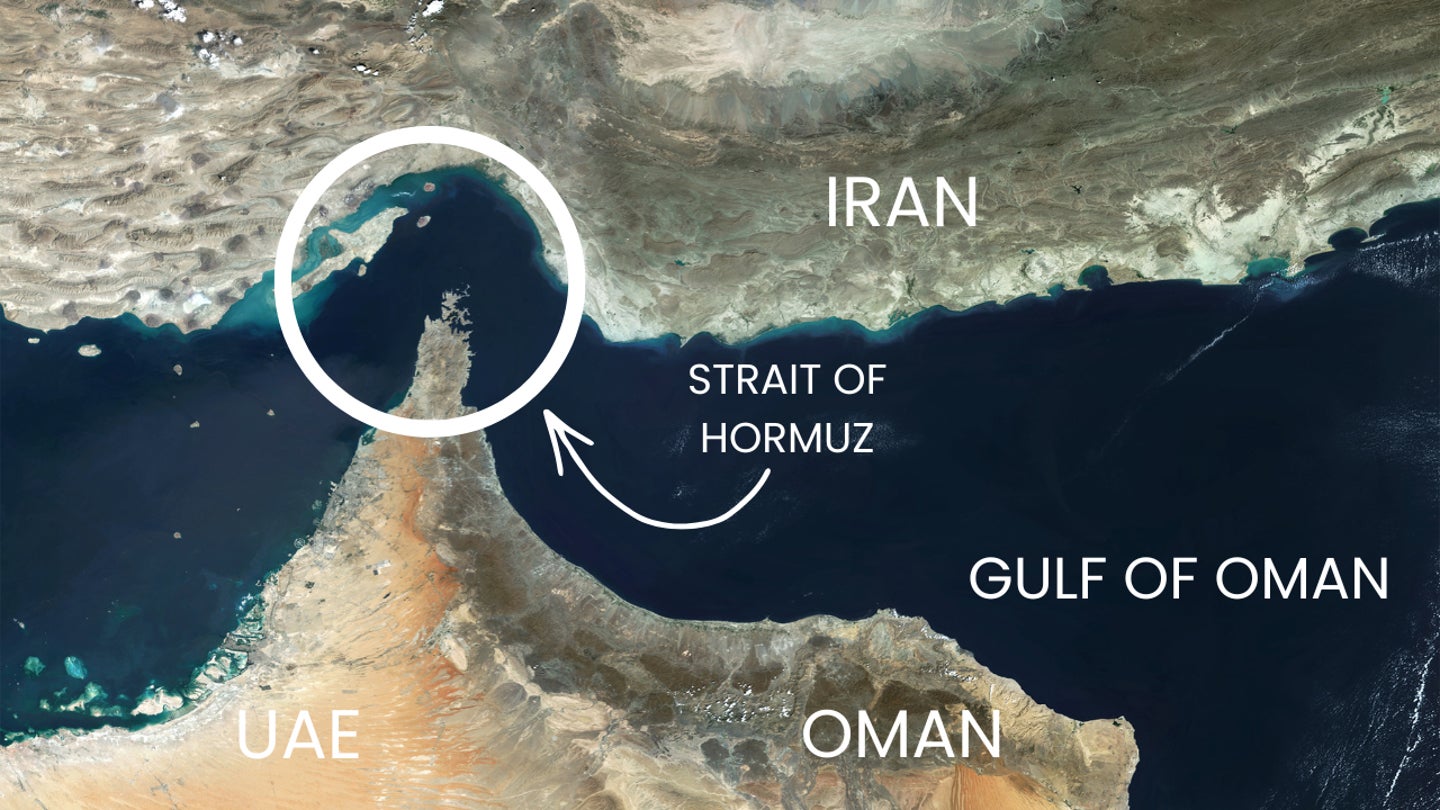
The United States has taken a dramatic step to secure one of the world’s most strategically important oil routes by deploying thousands of Marines to the Middle East in a move aimed at reopening the vital shipping corridor of the Strait of Hormuz, which Iran has threatened to shut amid intensifying military confrontation with Western powers. The decision, reportedly authorized by U.S. President Donald Trump, signals a major escalation in the ongoing crisis and raises fears of a broader conflict that could disrupt global energy supplies and trigger a worldwide economic shock.
According to U.S. defence officials, the deployment involves roughly 5,000 American sailors and Marines aboard a powerful amphibious naval task force that includes the warship USS Tripoli (LHA-7) along with elements of the 31st Marine Expeditionary Unit. The forces departed from Okinawa, Japan, where they are normally stationed as part of the U.S. military’s forward presence in the Indo-Pacific region. Their mission is to move toward the Middle East and prepare for operations that could involve reopening the Strait of Hormuz by force if necessary.
The move follows growing international alarm after Iran declared the narrow maritime corridor closed shortly after hostilities intensified between Tehran and its adversaries in late February. Iranian leaders have argued that the closure is a defensive response to military attacks on the country and have warned that the waterway will remain blocked until those strikes stop. However, the shutdown of the Strait of Hormuz carries enormous global implications, as the route handles nearly 20 percent of the world’s oil shipments, making it one of the most critical energy chokepoints on the planet.
DDM News gathered that several commercial oil tankers navigating the region have already come under attack in recent days, allegedly by Iranian forces or affiliated naval units. These incidents have sent oil prices climbing sharply on global markets and raised fears that prolonged disruption of shipping traffic could spark a worldwide recession by driving energy costs dramatically higher.
Speaking to reporters, U.S. Defence Secretary Pete Hegseth confirmed that American military planners were actively addressing the situation and were determined to ensure freedom of navigation in the critical waterway. While he sought to reassure markets and allies by stating that there was no immediate cause for panic, he acknowledged that the U.S. military was preparing for a range of possible responses to the crisis.
The deployment of the amphibious force is widely seen by military analysts as a clear signal that Washington is prepared to escalate if diplomatic efforts fail to reopen the strait. Amphibious ready groups such as the one accompanying the USS Tripoli are specifically designed to project military power close to shorelines. They carry landing craft, helicopters, fighter aircraft, and thousands of Marines capable of conducting rapid assaults, evacuations, or security operations along coastal areas.
Experts say the presence of the 31st Marine Expeditionary Unit means the United States now has a force in transit that could conduct amphibious landings, special operations raids, or maritime security missions if ordered to do so. Such units are typically used in crisis zones because of their ability to respond quickly and operate independently without relying heavily on local infrastructure.
Reports indicate that the USS Tripoli was recently observed moving through the Bashi Channel as it began its long voyage toward the Middle East. The journey is expected to take roughly two weeks before the task force reaches operational waters near the Gulf region. Once in place, the Marines could join other U.S. naval forces already stationed nearby under the command of United States Central Command.
Meanwhile, intelligence reports suggest that Iran may be preparing to further reinforce its blockade of the Strait of Hormuz. U.S. officials have reportedly detected activity consistent with the laying of naval mines in parts of the Gulf channel, a move that could make navigation extremely dangerous for civilian shipping vessels. Mines are considered one of the most effective ways to deny access to narrow maritime routes, and clearing them can require extensive and time-consuming naval operations.
DDM News understands that the escalating standoff comes amid broader hostilities between Iran and a coalition of countries aligned against Tehran. Since late February, several rounds of military strikes and retaliatory attacks have been reported across the region, raising fears that the conflict could spiral into a full-scale regional war.
President Trump has adopted a particularly aggressive tone regarding the crisis, reportedly warning that U.S. forces would strike the Iranian regime “very hard” if Tehran continues to threaten international shipping. In remarks cited by American media outlets, the president indicated that the confrontation with Iran could continue until he personally feels confident that the threat has been neutralized.
The Strait of Hormuz itself has long been viewed as one of the most sensitive geopolitical flashpoints in the world. The narrow waterway separates Iran from the Arabian Peninsula and serves as the primary export route for oil produced by Gulf states such as Saudi Arabia, Kuwait, Iraq, and the United Arab Emirates. Any disruption to traffic through the strait can immediately ripple across global energy markets.
Over the years, tensions in the region have frequently led to threats by Iran to close the strait, particularly during periods of heightened confrontation with the United States and its allies. However, an actual sustained closure would represent one of the most serious disruptions to global trade in modern history.
Military strategists warn that attempting to reopen the strait by force could carry significant risks, as Iran possesses a range of asymmetric capabilities designed to challenge larger naval powers. These include fast attack boats, coastal missile batteries, underwater mines, and drone systems capable of targeting shipping vessels.
Despite these risks, Washington appears determined to ensure that the strategic waterway remains open. Analysts say the deployment of thousands of Marines and advanced amphibious warships signals that the United States is preparing for a prolonged military presence in the region as tensions continue to escalate.
As the USS Tripoli and its accompanying Marine forces move closer to the Middle East, the world will be watching closely to see whether the crisis in the Strait of Hormuz can be resolved through diplomacy or whether it will escalate into a larger military confrontation that could reshape the global security landscape and energy markets for years to come.




