


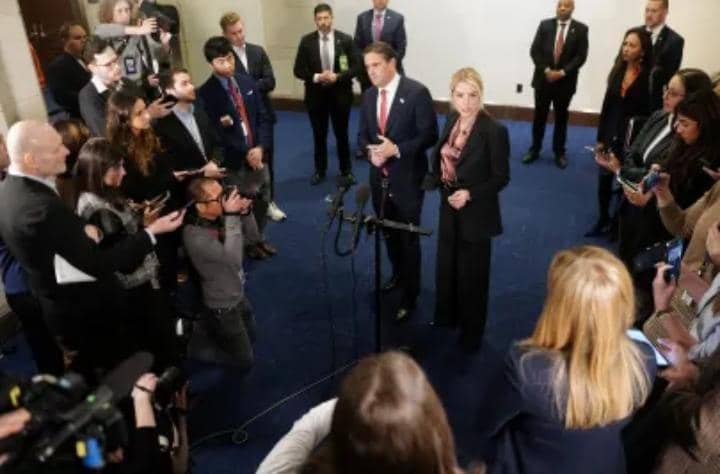
(DDM) – A closed-door briefing on the investigation into disgraced financier Jeffrey Epstein ended in dramatic fashion on Capitol Hill after Democratic lawmakers abruptly walked out of the meeting with top officials from the US Justice Department.
The tense meeting was attended by US Attorney General Pam Bondi and Deputy Attorney General Todd Blanche, who had arrived hoping to reassure members of Congress about the department’s handling of the Epstein case.
However, within roughly thirty minutes of the briefing beginning, several Democratic lawmakers reportedly left the room, signaling deep frustration over what they described as unsatisfactory explanations about the investigation.
The closed-door session was organized for members of the House Committee on Oversight and Government Reform following mounting criticism about how federal authorities reviewed and disclosed materials linked to Epstein.

The Justice Department had requested the meeting as part of efforts to rebuild trust with lawmakers who have questioned whether the government handled the case with sufficient transparency.
The Epstein case has remained one of the most controversial criminal investigations in the United States over the past decade.
Jeffrey Epstein, a wealthy financier with powerful social connections, was arrested in 2019 on federal charges involving the trafficking and sexual abuse of underage girls.
He died in a New York jail while awaiting trial, an event that triggered intense scrutiny, conspiracy theories, and calls for deeper investigations into potential accomplices.
Since Epstein’s death, lawmakers and activists have demanded the release of more documents related to the case, including information about individuals who may have been connected to his activities.
Officials from the Justice Department reportedly used the briefing to defend their work and push back against allegations that the agency mishandled the investigation.
The department has spent the past year confronting criticism from lawmakers who argue that prosecutors conducted a disorganized review of Epstein-related materials.
Some critics have also accused officials of improperly redacting documents and withholding key information from the public.
The dispute has become a flashpoint in Washington as lawmakers continue to seek greater transparency about the investigation and its findings.
Congressional oversight hearings and briefings are often used by lawmakers to question executive branch officials about how federal investigations are conducted.
These meetings can occur behind closed doors when sensitive information or ongoing legal matters are involved.
However, such briefings can also become politically charged when lawmakers feel the responses they receive are incomplete or evasive.
The situation surrounding the Epstein investigation has intensified further because Attorney General Pam Bondi has been subpoenaed by the oversight committee.
The Republican-led panel has ordered her to appear for a formal deposition next month, where she will be required to answer questions under oath regarding the Justice Department’s handling of the case.
Legal experts say the upcoming deposition could reveal additional details about how the government reviewed Epstein-related evidence and what information may still remain undisclosed.
The walkout by Democratic lawmakers highlights the growing tension between Congress and the Justice Department over one of the most controversial criminal cases in recent American history.
Political analysts note that disputes like this often reflect broader struggles between legislative oversight powers and the executive branch’s control over sensitive investigations.
With the committee preparing to question Bondi under oath in the coming weeks, the confrontation on Capitol Hill may represent only the beginning of a longer political and legal battle over the full story behind the Epstein investigation.




