


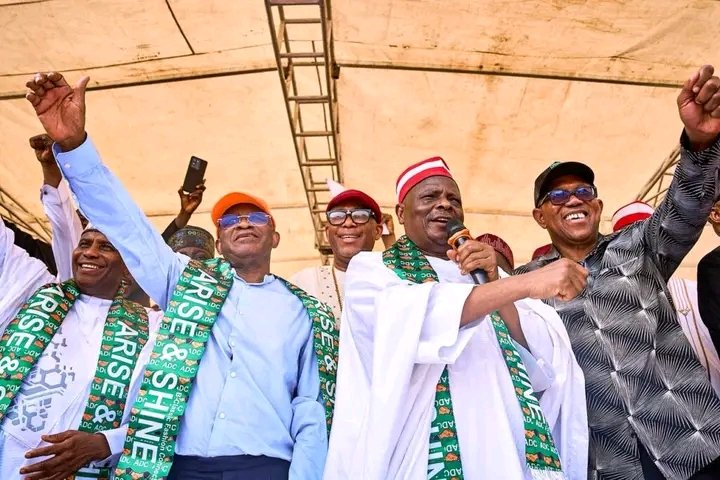
ABUJA, NIGERIA — A fresh political conversation has emerged after former Kano State governor and prominent northern political figure Rabiu Musa Kwankwaso reportedly explained why sections of the North are increasingly viewing former Labour Party presidential candidate Peter Obi as a capable political ally ahead of the 2027 general elections.
Kwankwaso said the assessment reflects what he described as a combination of competence, experience, and shifting political calculations among northern stakeholders preparing for the next electoral cycle.
He noted that political alignments in Nigeria are often shaped by performance perception, regional interests, and strategic partnerships rather than party loyalty alone.
According to him, some northern political actors believe that building alliances with credible figures across other regions is essential for electoral success and national stability.

The remarks have sparked renewed debate within Nigeria’s political space, where early discussions around 2027 are already gaining momentum despite being years away.
Political observers say the statement reflects ongoing realignments within major political blocs as parties and leaders begin positioning themselves for future contests.
Kwankwaso’s comments also highlight the growing attention being paid to coalition-building efforts involving opposition figures and political heavyweights across the country.
Peter Obi, who remains a prominent figure in national politics, continues to attract strong support among younger voters and reform-oriented groups advocating governance changes.
Analysts argue that discussions around possible alliances are part of broader political negotiations that often shape Nigeria’s electoral outcomes.
However, some political stakeholders caution that such statements should not be interpreted as formal endorsements but rather as reflections of evolving political opinions.
The North remains a key voting bloc in Nigeria’s elections, making any perceived shift in political alignment highly significant in national calculations.
Observers say early political narratives like this often influence party strategies, media discourse, and voter expectations long before official campaigns begin.
Kwankwaso’s remarks have also triggered discussions on leadership quality, national unity, and the importance of cross-regional collaboration in governance.
Political commentators note that Nigeria’s electoral history shows that alliances between major regional figures often play decisive roles in presidential contests.
Supporters of Obi see the statement as validation of his growing national appeal, while critics urge caution against overinterpreting political speculation.
As 2027 approaches, analysts expect more conversations around possible alliances, coalition formations, and strategic partnerships among Nigeria’s major political actors.
For now, attention remains on how these early political signals may influence future alignments within the country’s evolving democratic landscape.




