


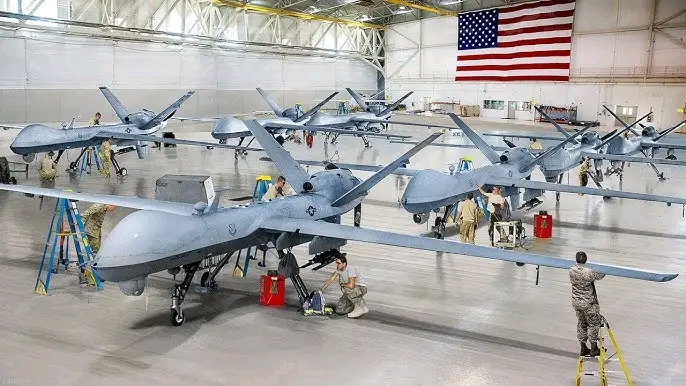
(DDM) — The United States has reportedly deployed surveillance drones and about 200 military personnel to Nigeria as part of efforts to strengthen intelligence support in the fight against insurgency in the country’s northern region.
According to reports, the deployment includes advanced MQ-9 drones, known for their intelligence, surveillance, and reconnaissance capabilities, which are expected to enhance real-time monitoring of insurgent activities.
Sources indicate that the US troops will primarily focus on providing intelligence sharing, technical assistance, and training to Nigerian security forces, rather than engaging directly in combat operations.
The move is seen as part of ongoing military cooperation between both nations aimed at combating extremist groups operating in northern Nigeria and the wider Lake Chad Basin.

Security analysts say the deployment could significantly improve Nigeria’s capacity to track and respond to insurgent movements, particularly in remote and hard-to-reach areas.
The region has faced persistent threats from militant groups, including Boko Haram and its offshoot, the Islamic State West Africa Province, which have carried out attacks on civilians, military targets, and infrastructure over the years.
Officials familiar with the development note that the partnership is designed to boost Nigeria’s counter-terrorism efforts through improved intelligence gathering and operational coordination.
While the presence of foreign troops on Nigerian soil may raise concerns among some observers, proponents argue that such collaboration is necessary to address complex security challenges that require advanced technology and expertise.
The Nigerian government has yet to issue a detailed official statement on the reported deployment, but previous engagements between both countries have included joint training exercises and intelligence cooperation.
Experts emphasize that beyond military support, addressing insurgency in Nigeria will also require tackling underlying issues such as poverty, unemployment, and governance challenges.
The deployment comes amid renewed efforts by regional and international partners to stabilize areas affected by insurgency and restore normalcy for communities impacted by years of conflict.
Observers say the effectiveness of the initiative will depend on sustained cooperation, clear operational frameworks, and respect for Nigeria’s sovereignty.
As the situation develops, the reported US involvement highlights the increasing international dimension of Nigeria’s security challenges and the continued search for lasting solutions to insurgency in the region.




