



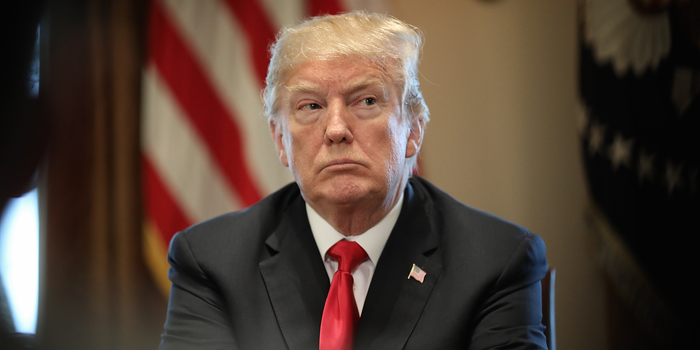
A growing chorus of concern is emerging within international policy and security circles as questions intensify over the direction and effectiveness of the United States’ military engagement with Iran, with a prominent former official now suggesting that the situation may not be unfolding according to expectations inside Washington. In a striking assessment that has captured global attention, Karen von Hippel has openly stated that Donald J. Trump appears to be operating under mounting pressure and uncertainty, describing the U.S. president as being “in a panic” as the conflict with Iran drags on without the swift resolution many had anticipated.
The remarks come at a critical moment in the escalating standoff, particularly as tensions surrounding the Strait of Hormuz continue to dominate global headlines. The narrow but vital waterway, through which nearly a fifth of the world’s oil supply flows, has become a focal point of confrontation, with Iranian forces reportedly targeting oil tankers and disrupting shipping routes. These actions have not only heightened military tensions but have also triggered significant volatility in global energy markets, raising fears of a broader economic fallout.
DDM News gathered that the latest concerns about U.S. strategy were sparked by a series of seemingly contradictory statements from Donald J. Trump. On one hand, the president had indicated that American operations in the region might soon be scaled back, suggesting a possible de-escalation. On the other hand, within a matter of hours, he issued a stark ultimatum threatening to “obliterate” Iranian power plants if the Strait of Hormuz was not fully reopened within 48 hours. This abrupt shift in tone has fueled speculation that the administration may be struggling to maintain a coherent strategy in the face of evolving realities on the ground.
According to Karen von Hippel, such inconsistencies are indicative of deeper challenges within the U.S. approach to the conflict. Speaking during a widely viewed broadcast interview, she questioned whether the president’s threats would translate into concrete action, noting that similar ultimatums in the past have not always been followed through. Her analysis suggests that the current posture may be driven more by frustration than by a carefully calibrated military or diplomatic plan.

DDM News understands that the situation is further complicated by parallel developments involving U.S. allies, particularly Israel, which has reportedly signaled its intention to intensify military operations against Iranian targets in the coming weeks. At the same time, the United States has been deploying additional forces to the region, including thousands of Marines, a move that appears at odds with earlier suggestions of winding down involvement. This dual-track approach—hinting at de-escalation while simultaneously reinforcing military presence—has left analysts and observers struggling to interpret Washington’s true intentions.
The stakes of this unfolding crisis extend far beyond the immediate region. The continued disruption of shipping through the Strait of Hormuz has already led to a sharp increase in oil prices, placing additional strain on global economies still recovering from previous shocks. Energy-dependent nations are particularly vulnerable, as rising fuel costs ripple through transportation, manufacturing, and consumer markets. Economists warn that if the situation persists or worsens, it could tip fragile economies into recession, underscoring the interconnected nature of geopolitical conflict and economic stability.
Within the United States, the unfolding developments are also generating political and strategic debate. Critics argue that the administration’s approach risks escalating the conflict without a clear endgame, while supporters maintain that strong measures are necessary to counter Iranian aggression and protect global shipping lanes. The absence of a unified narrative has only deepened the sense of uncertainty, both domestically and internationally.
Meanwhile, allies of the United States have been cautious in their public responses. When asked to comment on the situation, senior officials in the United Kingdom declined to directly endorse or criticize the American position, emphasizing instead the need for dialogue and restraint. This measured response reflects a broader reluctance among U.S. partners to be drawn into a rapidly escalating confrontation that carries significant risks.
As the situation continues to evolve, the question of whether the conflict is unfolding as anticipated remains at the forefront of global discourse. The assessment by Karen von Hippel has added a new dimension to this debate, highlighting concerns that the gap between expectations and reality may be widening. Whether this perception proves accurate or not, it underscores the complexity of the current الأزمة and the challenges inherent in navigating a conflict with far-reaching implications.
For now, the world watches closely as events unfold, with the Strait of Hormuz remaining both a symbol and a flashpoint of the War. The coming days and weeks will likely prove decisive in determining whether tensions can be contained or whether the situation will escalate further, with consequences that could reshape not only the Middle East but the global order as a whole.




