



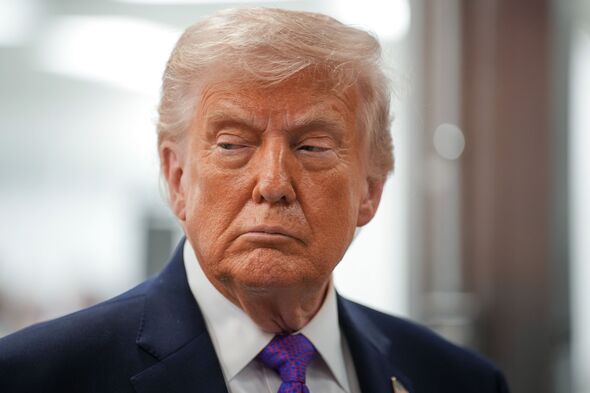
President Donald Trump on Monday ordered a five-day postponement of planned U.S. military strikes on Iranian power plants, stepping back from a looming deadline that had threatened to sharply escalate the Middle East conflict now in its fourth week.
The decision came just hours before the expiration of a 48-hour ultimatum tied to the reopening of the Strait of Hormuz a vital global shipping lane.
In a post on Truth Social, Trump said US and Tehran had engaged in “VERY GOOD AND PRODUCTIVE” discussions over the past two days, raising hopes for a “COMPLETE AND TOTAL RESOLUTION OF HOSTILITIES IN THE MIDDLE EAST.”
He added that he had instructed the U.S. Defense Department to hold off on any strikes pending the outcome of ongoing negotiations.
Over the weekend, Trump had issued a stark warning: Iran’s energy infrastructure would be “obliterated” if Tehran failed to fully reopen the Strait of Hormuz to all shipping within 48 hours.

The threat triggered swift retaliation warnings from Iran’s powerful Revolutionary Guards, who said any U.S. attack would prompt strikes on Israeli power facilities and energy infrastructure supplying American bases across the Gulf region.
The exchange of threats heightened fears of a broader regional war involving key Gulf states and critical infrastructure.
Global markets showed early signs of relief following Trump’s announcement.
The price of Brent crude — the international oil benchmark — fell about 7% to around $104 per barrel, reversing some of the sharp gains recorded in recent weeks as the conflict disrupted energy flows.
The Strait of Hormuz, through which roughly 20% of the world’s oil supply passes, has been partially restricted since hostilities began, sending shockwaves through global energy markets.
The conflict, which began on February 28 following U.S. and Israeli strikes on Iranian targets, has already had devastating consequences.
More than 2,000 people have been killed, while the war has:
- Disrupted global markets
- Driven up fuel prices
- Intensified inflation concerns worldwide
- Strained Western alliances
Military activity continued on Monday, with interception attempts lighting up the skies over Tel Aviv as air defenses responded to incoming threats.
Beyond electricity outages, strikes on power grids could disrupt desalination plants, which are essential for producing drinking water across much of the Gulf region.
Such a scenario could trigger a cascading crisis affecting millions of civilians, alongside further destabilizing global oil supplies.
While Trump’s decision offers a temporary reprieve, the situation remains highly volatile.
The next five days are expected to be critical, with diplomatic efforts intensifying behind the scenes.
Whether talks succeed or collapse could determine if the region steps back from the brink or slides into a deeper, more destructive conflict.
For now, the pause has bought time but not certainty.

