



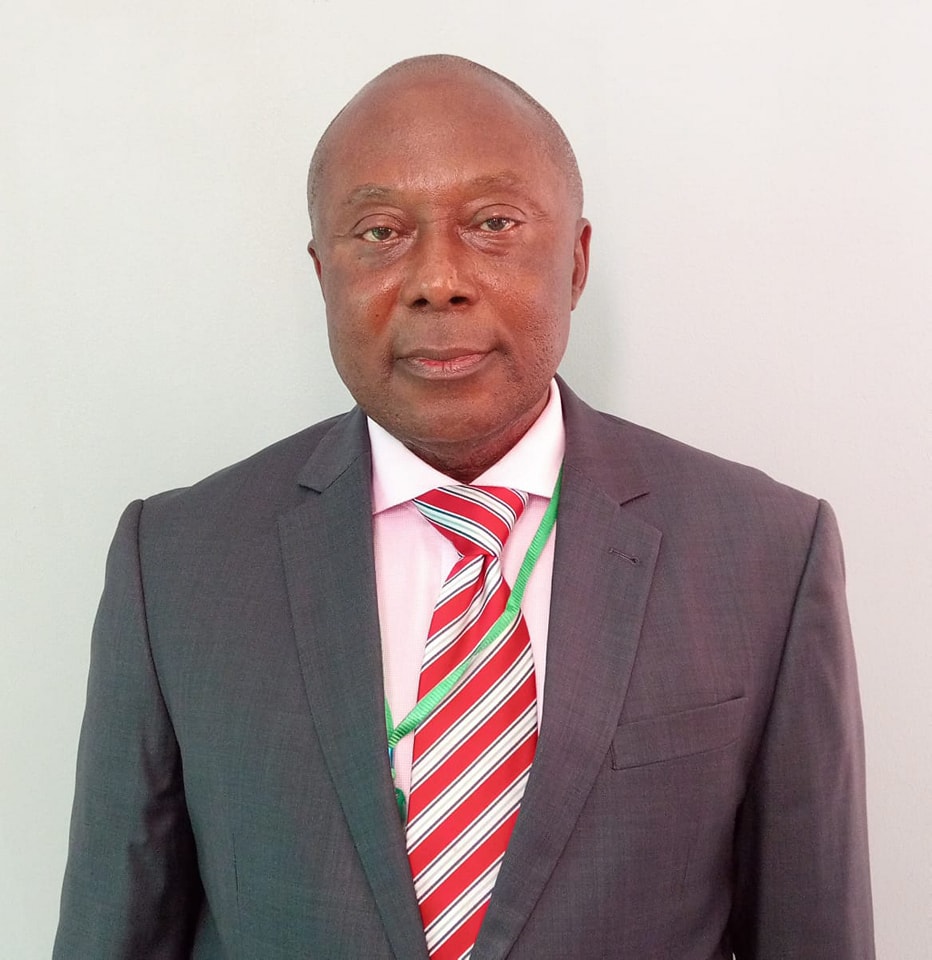
In a landmark ruling that underscores Nigeria’s intensifying battle against financial crimes, a Federal High Court sitting in Abuja has sentenced former acting Accountant-General of the Federation, Anamekwe Nwabuoku, to a cumulative 72 years in prison over a high-profile money laundering case involving hundreds of millions of naira. The judgment, delivered by Justice James Omotosho, marks one of the most significant convictions in recent times involving a senior public official entrusted with managing the nation’s finances.
The court found that the Economic and Financial Crimes Commission had successfully established its case beyond reasonable doubt, proving that Nwabuoku engaged in a complex web of financial misconduct during his tenure in public office. The charges against him stemmed from a nine-count amended indictment bordering on money laundering, fraud, and conspiracy involving a total sum of N868.4 million—funds believed to be proceeds of unlawful activities.
According to the prosecution, Nwabuoku orchestrated the diversion and laundering of public funds in collaboration with several corporate entities, including Temeeo Synergy Concept Limited, Turge Global Investment Limited, Laptev Bridge Limited, and Arafura Transnational Afro Limited. These companies were allegedly used as conduits to disguise the origin of illicit funds, thereby violating provisions of Nigeria’s Money Laundering (Prohibition) Act, 2011, as amended. The offences, as outlined in the charge sheet marked FHC/ABJ/CR/240/2024, carry severe penalties under the law, reflecting the gravity of financial crimes against the state.
The court proceedings revealed that the offences were committed between 2019 and 2021, during which Nwabuoku served as Director of Finance and Accounts in the Ministry of Defence. It was within this sensitive role—one that demanded the highest level of integrity and accountability—that he allegedly abused his position to siphon and conceal public funds. The prosecution painstakingly laid out evidence detailing how the transactions were structured to evade detection, painting a picture of deliberate and calculated misconduct.
Earlier in the trial, Nwabuoku had attempted to challenge the charges through a no-case submission, arguing that the prosecution had failed to establish sufficient evidence to warrant a defence. However, in November 2025, the court dismissed this application, ruling that there was indeed a prima facie case requiring him to answer. This decision set the stage for the full trial, which ultimately culminated in Monday’s sentencing.

In delivering the judgment, Justice Omotosho emphasized the importance of accountability in public office, noting that individuals entrusted with managing public resources must be held to the highest standards. The cumulative 72-year sentence, though symbolic in nature as it may run concurrently, sends a strong message about the consequences of financial impropriety in Nigeria’s public sector.
DDM News gathered that the conviction has reignited public discourse around corruption in government institutions, particularly within agencies responsible for financial oversight. Many observers see the ruling as a step in the right direction, signaling a renewed commitment by the judiciary and anti-corruption agencies to hold even the most powerful individuals accountable.
Nwabuoku’s rise and fall within Nigeria’s public service has been as dramatic as it is cautionary. On May 20, 2022, he was appointed acting Accountant-General of the Federation by former President Muhammadu Buhari, following the suspension of his predecessor, Ahmed Idris, who was himself under investigation for an alleged N80 billion fraud. At the time, Nwabuoku’s appointment was seen as a move to stabilize the nation’s financial management system amid a growing corruption scandal.
However, his tenure was short-lived. Barely two months after assuming office, he was removed in July 2022 as investigations by the EFCC began to close in on his own alleged misconduct. What initially appeared to be a temporary appointment quickly turned into a prelude to one of the most consequential legal battles of his career.
The case has also drawn attention to systemic issues within Nigeria’s financial governance framework. Analysts argue that the recurrence of corruption scandals involving top financial officials points to deeper institutional weaknesses, including inadequate checks and balances, poor enforcement of existing laws, and a culture of impunity that has persisted for decades. DDM News understands that while individual prosecutions are important, there is a growing consensus that broader structural reforms are needed to prevent such abuses from occurring in the first place.
For the EFCC, the conviction represents a significant victory in its ongoing efforts to combat economic and financial crimes. The agency has, in recent years, intensified its crackdown on high-profile offenders, leveraging both legal and investigative tools to pursue cases that were once considered untouchable. This case, in particular, demonstrates the agency’s capacity to follow through on complex financial investigations and secure convictions in court.
Public reaction to the sentencing has been mixed but largely supportive. While many Nigerians have welcomed the judgment as a sign of progress, others remain skeptical, questioning whether similar cases will be pursued with the same vigor or whether this will remain an isolated example. There are also concerns about the recovery of the stolen funds and whether they will be fully returned to the public coffers.
As Nigeria continues to grapple with the challenges of corruption and economic management, the conviction of Anamekwe Nwabuoku stands as both a warning and a precedent. It highlights the risks associated with the abuse of public trust and reinforces the principle that no one, regardless of position or influence, is above the law. Whether this case will mark a turning point in the country’s fight against corruption remains to be seen, but for now, it has undoubtedly set a new benchmark in the pursuit of justice and accountability.



 and then