


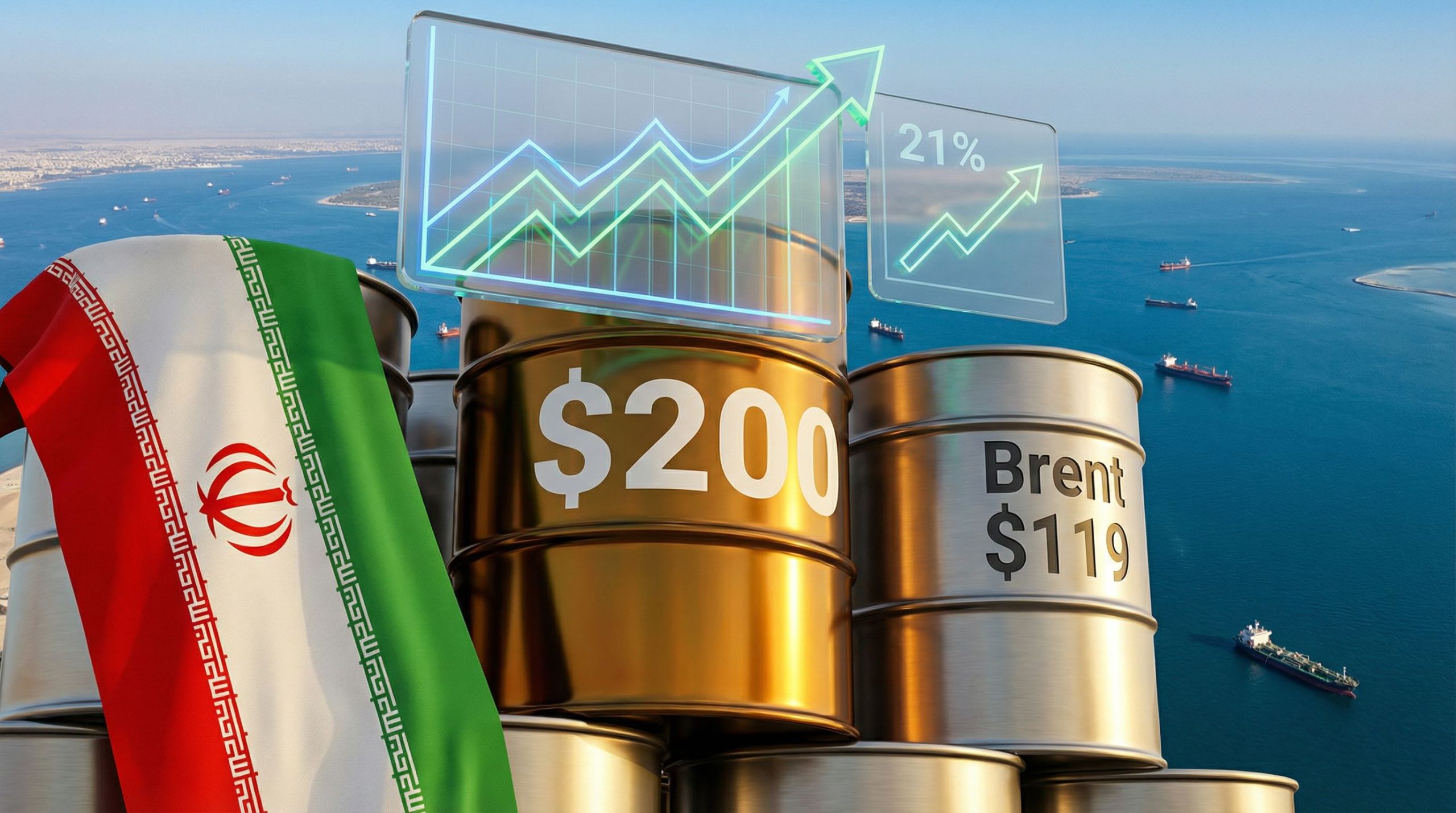
Global financial markets were thrown into fresh turmoil as oil prices surged sharply while stock markets across major economies declined, reflecting growing uncertainty surrounding ongoing tensions between the United States and Iran. The spike in crude oil prices, which saw benchmarks climb above critical levels, has intensified concerns about the stability of global energy supply and the broader implications for economic growth, inflation, and investor confidence worldwide.
The sudden shift in market sentiment comes after initial optimism earlier in the week had suggested a possible de-escalation of tensions between the two nations. Investors had briefly been reassured by comments from Donald Trump, who indicated that planned military strikes targeting Iran’s energy infrastructure would be delayed, hinting at the possibility of diplomatic engagement and peace negotiations. That announcement had sparked hope across global markets, leading to temporary gains in equities and easing concerns over energy supply disruptions.
However, that optimism quickly faded as conflicting signals emerged from both Washington and Tehran. Iran reportedly rejected key elements of a proposed peace framework, casting doubt on whether meaningful negotiations could take place in the immediate future. As uncertainty deepened, markets reacted swiftly, with oil prices rallying and equities retreating in response to fears of prolonged conflict.
One of the central factors driving the surge in oil prices is the strategic importance of the Strait of Hormuz, a critical maritime chokepoint through which approximately 20 percent of the world’s oil and liquefied natural gas supply is transported. Reports of disruptions and near-closure of this vital route have significantly heightened concerns about global energy supply, pushing crude prices upward as traders anticipate potential shortages.
By mid-session on Thursday, Brent crude had climbed above $106 per barrel, marking a gain of over four percent, while West Texas Intermediate hovered around $93 per barrel after rising more than three percent. These increases underscore the sensitivity of energy markets to geopolitical developments, particularly in regions that play a pivotal role in global oil distribution.

The surge in oil prices was accompanied by a strengthening of the US dollar against major global currencies, further reflecting investor caution and a shift toward safer assets. At the same time, equity markets across Europe and Asia experienced notable declines. Major indices in cities such as London and Frankfurt fell by more than one percent, while markets in Paris also recorded losses. Similar downward trends were observed across Asian markets, including declines in Tokyo, Hong Kong, and Shanghai, signaling a widespread retreat from riskier investments.
Market analysts have described the situation as a volatile and unpredictable environment, where investor sentiment is being shaped by rapidly changing geopolitical developments. According to Joshua Mahony, a chief market analyst at Scope Markets, the current conditions reflect a “rollercoaster” scenario in which markets swing sharply based on emerging news and shifting expectations.
Further complicating the outlook are conflicting reports regarding diplomatic efforts between the United States and Iran. While sources in Washington suggest that a comprehensive 15-point proposal aimed at ending the conflict has been presented, Iranian officials have reportedly put forward a separate set of conditions. Iran’s Foreign Minister, Abbas Araghchi, has publicly stated that Tehran does not intend to engage in direct negotiations with the current US administration, adding another layer of uncertainty to the situation.
Despite this, there are indications that indirect discussions may still be ongoing. Ishaq Dar, the Foreign Minister of Pakistan, confirmed that his country is acting as an intermediary in facilitating communication between the two parties. This development suggests that while direct talks may be stalled, diplomatic channels remain partially open.
The ongoing conflict and its impact on energy markets are already having broader economic repercussions. The Organisation for Economic Co-operation and Development (OECD) has revised its growth outlook for the eurozone downward, citing the surge in energy prices as a key factor. The organization also warned of higher inflation levels in 2026, highlighting the ripple effects that elevated oil prices can have on global economies.
In Europe, the economic strain is becoming increasingly evident. Consumer sentiment in Germany has weakened as households brace for higher energy costs and economic uncertainty. The situation has added to existing challenges facing Europe’s largest economy, raising concerns about its ability to maintain stable growth in the coming months.
Meanwhile, global policymakers are preparing to address the unfolding crisis. France, which currently holds the presidency of the G7, is set to host a high-level meeting bringing together finance ministers, energy ministers, and central bank governors. The discussions are expected to focus on strategies for managing energy market volatility and mitigating the economic impact of rising oil prices.
Financial analysts have also pointed out that Iran may be leveraging its influence over energy markets as part of its broader negotiation strategy. By exerting pressure on global oil supply and contributing to market instability, Tehran could strengthen its bargaining position in any future talks. As noted by market strategist Charu Chanana of Saxo Markets, energy prices and shipping flows remain one of the few significant sources of leverage available to Iran, reducing its incentive to de-escalate tensions prematurely.
Adding to the global concern, Ngozi Okonjo-Iweala, Director-General of the World Trade Organization, warned that the current disruptions to the global trading system are among the most severe seen in the past 80 years. Her statement underscores the far-reaching implications of the conflict, extending beyond energy markets to affect international trade, supply chains, and economic stability worldwide.
DDM News reports that the combination of rising oil prices, declining stock markets, and geopolitical uncertainty is creating a challenging environment for investors, businesses, and governments alike. As markets continue to react to developments in the US-Iran situation, volatility is expected to remain a defining feature of the global financial landscape.
DDM News understands that the coming days will be critical in determining whether diplomatic efforts can gain traction or if tensions will escalate further, potentially driving oil prices even higher and deepening the strain on global economies. For now, the world watches closely as two major geopolitical forces navigate a fragile and uncertain path that could shape the direction of markets and economic stability in the months ahead.



 and then