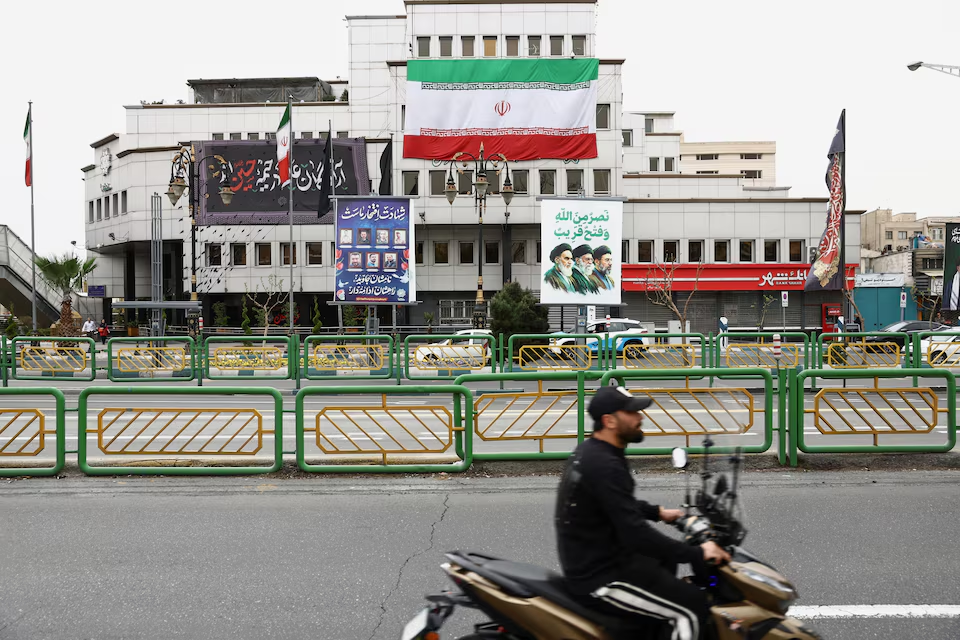
Iran’s leadership has been shaken after a wave of U.S.-Israeli strikes killed several top figures, including the country’s long-time Supreme Leader.
Despite these heavy losses, the country’s ruling system is still functioning and directing the ongoing war that began on February 28.
Iran’s political system, built after the 1979 Islamic Revolution, was designed to survive situations like this.
Power is spread across multiple institutions, rather than resting in the hands of just one person, helping the system stay in control even after losing key leaders.

At the center of attention is the new Supreme Leader, Mojtaba Khamenei, who stepped into the role after his father’s death.
While he now holds the same formal powers, he does not yet command the same level of authority.
DDM reported that he was injured during the strikes, and his absence from public appearances has raised concerns about his condition.
Meanwhile, the Islamic Revolutionary Guard Corps (IRGC) has become even more influential.
The group has long played a major role in Iran’s military and political decisions, but the current crisis has pushed it further to the forefront.
Despite losing several senior commanders, the Guards have quickly replaced them, thanks to a well-prepared chain of command that allows operations to continue without disruption.
Iran’s political leadership including the president, parliament, and judiciary is still active, though the balance of power appears to be shifting toward more hardline figures.
The death of key adviser Ali Larijani has created a gap, especially in dealing with foreign relations.
Several powerful figures remain in place.
These include Revolutionary Guards chief Ahmad Vahidi, Qods Force commander Esmail Qaani, Parliament Speaker Mohammad Baqer Qalibaf, and President Masoud Pezeshkian.
Others, like judiciary head Gholamhossein Mohseni-Ejei and senior cleric Alireza Arafi, continue to play important roles behind the scenes.
Foreign Minister Abbas Araqchi is also still active, handling sensitive negotiations with global powers and regional rivals.
While Iran’s leadership has taken a serious hit, its structure built over decades is proving resilient, allowing the country to continue operating and managing the conflict despite the loss of some of its most powerful figures.