


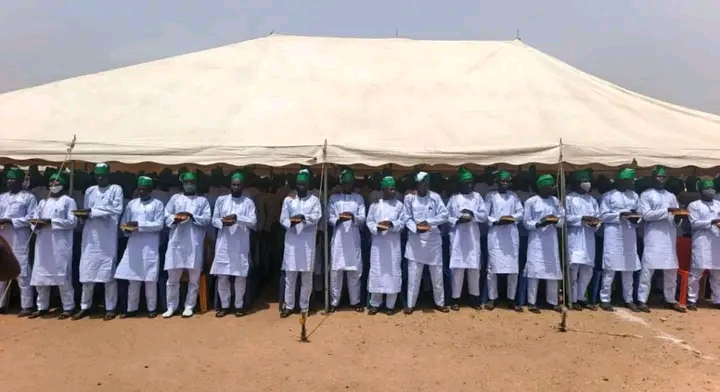
ABUJA — Nigeria’s military has announced the graduation of 744 former terrorists from its deradicalization and rehabilitation initiative, marking another milestone in the country’s efforts to address insurgency through non-kinetic strategies.
The development highlights the ongoing implementation of Operation Safe Corridor, a federal government-backed programme designed to rehabilitate and reintegrate repentant insurgents into society after they renounce violent extremism.
Diaspora Digital Media (DDM) gathered that the latest batch underwent months of structured deradicalization, psychological counselling, and vocational training aimed at equipping them with skills for civilian life.
Operation Safe Corridor was established as part of Nigeria’s broader counterterrorism framework, particularly in response to the prolonged insurgency in the North-East driven by extremist groups such as Boko Haram and its splinter factions.

The programme focuses on individuals who voluntarily surrender to the military, offering them an alternative pathway away from violence through reorientation and skills acquisition.
According to officials, participants in the scheme receive training in trades such as tailoring, carpentry, welding, agriculture, and other forms of entrepreneurship to improve their chances of economic independence upon reintegration.
Security authorities say the initiative is intended to reduce the likelihood of recidivism by addressing the root causes of radicalization, including poverty, lack of education, and ideological indoctrination.
The graduation of 744 individuals represents one of the largest single cohorts to complete the programme, underscoring the scale at which the government is pursuing deradicalization alongside military operations.
However, the initiative has continued to generate debate among Nigerians, particularly among communities affected by insurgent violence, where concerns persist about safety, justice, and the reintegration of former fighters.
Critics argue that insufficient transparency and monitoring mechanisms could pose risks if rehabilitated individuals return to communities without adequate supervision.
Supporters, on the other hand, maintain that purely military approaches are insufficient to end insurgency, emphasizing the need for rehabilitation programmes that address long-term stability and peacebuilding.
The Nigerian government has repeatedly stated that Operation Safe Corridor is aligned with international best practices in counter-extremism, combining security, psychological, and socio-economic interventions.
As the country continues to grapple with security challenges, the success or failure of such programmes is expected to play a critical role in shaping future counterterrorism strategies.
The reintegration phase for the graduates will involve coordination with state governments and local communities, as authorities aim to ensure that the transition from rehabilitation centers to civilian life is carefully managed.
With hundreds of former insurgents now returning to society, attention is shifting toward long-term monitoring, community acceptance, and the overall impact of deradicalization efforts on national security.




