


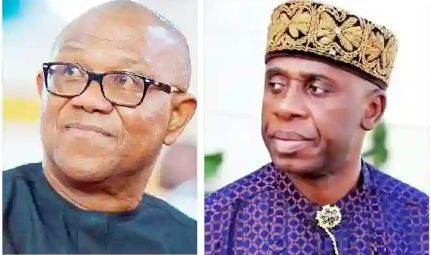
Former Minister of Transportation, Rotimi Amaechi, has reportedly dismissed calls attributed to Labour Party presidential candidate, Peter Obi, urging him to withdraw from the 2027 presidential race, insisting that he remains firmly committed to his political ambition.
The development, which has stirred fresh political debate ahead of the 2027 general elections, is said to have further intensified discussions around opposition alignment, coalition building, and internal negotiations among key political figures in Nigeria.
According to reports circulating on Nairaland and other political discussion platforms, Peter Obi was alleged to have made a private appeal to Amaechi, encouraging him to reconsider his presidential ambition in favour of a broader opposition consensus. However, Amaechi is said to have rejected the request outright, maintaining that stepping down is not part of his current political strategy.
The meeting or interaction where the alleged request was made was not formally detailed in terms of exact venue and time, though it is believed to have taken place within political consultation circles involving key stakeholders discussing the 2027 electoral landscape. No official confirmation has been provided regarding the specific date, and political observers say details remain unclear.

Amaechi, a former Governor of Rivers State and a prominent figure in Nigeria’s opposition politics, is widely expected to be positioning himself for a presidential run, although he has yet to formally declare under any political party platform for the 2027 election cycle.
Political analysts note that the reported disagreement highlights growing tensions within opposition blocs, as various figures seek to consolidate support ahead of what is expected to be a highly competitive election. Calls for unity among opposition leaders have increased in recent months, with some stakeholders advocating for a single candidate capable of challenging the ruling party’s dominance.
Peter Obi, who came third in the 2023 presidential election under the Labour Party, has continued to maintain a strong support base among younger voters and urban populations. His political influence has made him a central figure in discussions around potential alliances and mergers within the opposition.
Amaechi’s rejection of the reported plea is seen by observers as a signal that major opposition figures may struggle to reach a consensus ahead of 2027, potentially leading to multiple strong contenders in the race.
As political activities gradually intensify across the country, attention is now shifting toward how opposition leaders will navigate negotiations, party alignments, and personal ambitions in the coming months, especially as early groundwork for 2027 continues to take shape.




