


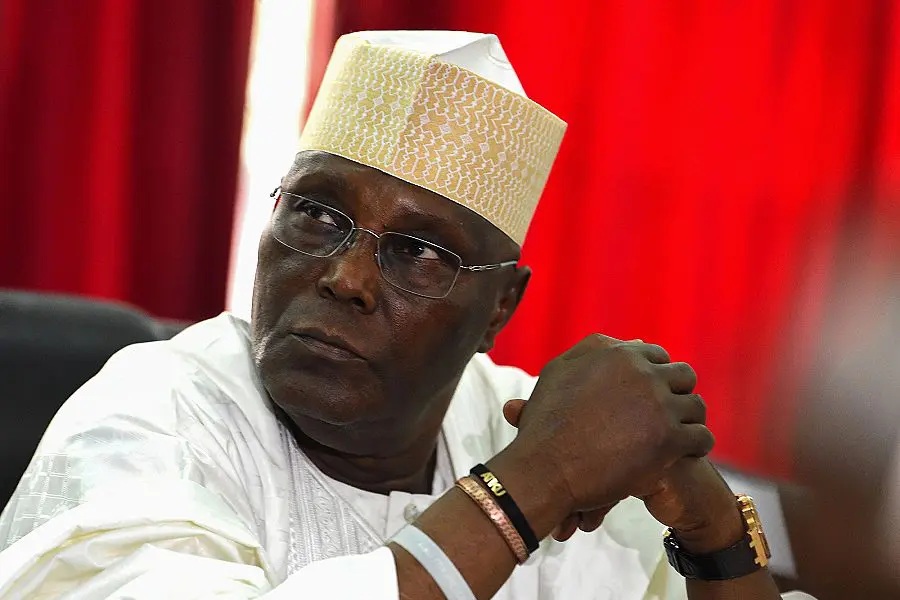
Alhaji Atiku Abubakar has called for an urgent amendment of Nigeria’s electoral law, warning over what he described as a “dangerous loophole” in the Electoral Act.
He said these flaws poses a serious threat to the credibility of future elections.
The former Vice President in a terse statement issued on Wednesday by his spokesman, Phrank Shaibu, urged the National Assembly to urgently review provisions of the law that allow discretion in the validation of ballot papers by electoral officials.
He pointedly raised concerns about Section 63 of the Electoral Act, which he said permits ballot papers without official markings to be accepted or rejected at the discretion of returning officers.

According to the Adamawa born politician, such discretion introduces ambiguity into a process that should be strictly defined, warning that it could open the door to manipulation and disputes during elections.
“This is not a minor technical issue—it is a direct threat to electoral integrity,” he said.
Also, Atiku argued that any provision that leaves room for subjective judgment in determining the validity of ballot papers risks undermining the will of voters and weakening public confidence in the electoral process.
He noted that democracy depends on clarity and certainty, insisting that electoral rules must be unambiguous and uniformly applied.
“A democracy cannot survive on ambiguity. A ballot must either meet the standard or it does not,” he said. “The moment you leave such a critical decision to subjective judgment, you invite manipulation, dispute, and ultimately, chaos.”
He acknowledged that the provision may have been intended to prevent voter disenfranchisement but argued that its current wording is overly broad and vulnerable to abuse.
“At a time when Nigerians are demanding transparency and credibility, it is reckless to retain a clause that weakens confidence in the very foundation of democracy—the vote,” he added.
Atiku called on lawmakers to immediately amend the Electoral Act to remove discretionary interpretation in ballot validation and replace it with clear, enforceable standards.
He also urged the Independent National Electoral Commission (INEC) to tighten its operational guidelines to ensure that electoral officers are not placed in positions where personal judgment could override established rules.
Mr Atiku further appealed to international observers and democratic partners to closely monitor Nigeria’s electoral framework, stressing that legal clarity is as important as procedural integrity in ensuring credible elections.
He expressed disappointment that the provision had survived multiple legislative reviews, describing it as a recurring weakness in Nigeria’s electoral reforms.
According to him, the National Assembly should have exercised greater caution in handling provisions that directly affect the credibility of elections.
He also pointed to the role of the executive, noting that President Bola Ahmed Tinubu bears responsibility for ensuring that only robust and credible legislation is signed into law.
“Leadership demands vigilance. The document he assented to ought to have passed the most stringent integrity test,” he said.
Mr Atiku stressed that addressing the issue was not about assigning blame but about strengthening democratic institutions.
“This is not about blame—it is about responsibility. And this provision must be corrected to restore public confidence and protect the sanctity of the vote,” he said.
He concluded with a warning that Nigeria cannot afford electoral uncertainty, insisting that democracy must be anchored on certainty rather than discretion.
“This loophole must be corrected. Democracy thrives on certainty, not discretion—and Nigeria cannot afford anything less,” he said.




