


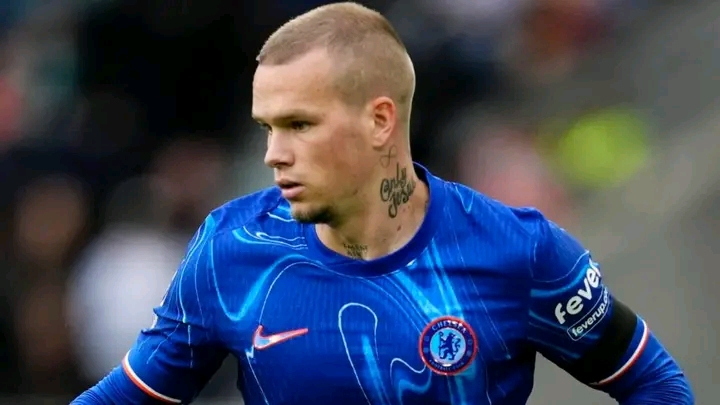
LONDON, ENGLAND — Mykhailo Mudryk has formally appealed a four-year doping ban to the Court of Arbitration for Sport (CAS), seeking to overturn or reduce the sanction and accelerate his return to professional football with Chelsea.
The appeal marks a critical step in the winger’s attempt to revive his career after being handed a lengthy suspension that threatens to sideline him during some of his peak playing years.
Mudryk’s legal team is expected to challenge both the length of the ban and the circumstances surrounding the alleged anti-doping violation, arguing for a reassessment of the evidence and possible mitigation.
The Court of Arbitration for Sport serves as the highest legal authority in global sports disputes, with the power to uphold, reduce, or overturn disciplinary sanctions imposed by governing bodies.

A successful appeal could significantly shorten Mudryk’s suspension, while an unsuccessful outcome would confirm the four-year ban and delay any potential return to competitive football.
The case has drawn attention within the football community, as doping-related bans remain relatively rare in elite football compared to other sports, making each case highly scrutinised.
For Chelsea, the situation adds another layer of complexity to an already challenging period marked by inconsistent performances, managerial uncertainty, and ongoing squad restructuring.
Mudryk was signed as a high-profile attacking talent and was expected to play a key role in the club’s long-term project, making his absence a significant setback both on and off the pitch.
The club is likely to monitor the appeal process closely, as the outcome will influence future squad planning, particularly in attacking positions where depth and consistency have been issues.
Legal proceedings at CAS can take time, with both parties presenting detailed arguments before a final ruling is issued, meaning uncertainty around Mudryk’s future could persist in the short term.
Analysts note that CAS decisions often hinge on technical details, including the nature of the substance involved, testing procedures, and whether intent or negligence can be established.
The appeal also raises broader questions about athlete responsibility, anti-doping compliance, and the balance between strict enforcement and fair adjudication in professional sports.
As the case progresses, attention will remain on whether Mudryk can successfully challenge the ruling and secure an earlier return, or whether the original sanction will stand, forcing a prolonged absence from the game.
The outcome is expected to have significant implications not only for the player’s career but also for Chelsea’s planning and the wider conversation around anti-doping regulations in football.

