


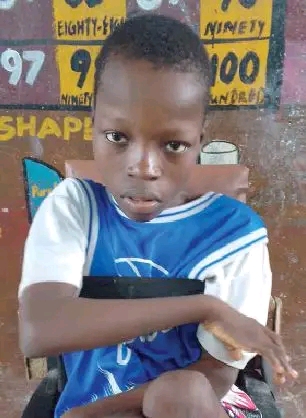
LAGOS, NIGERIA — Fifteen-year-old Emmanuel Adeyemi, a teenager living with cerebral palsy, has expressed emotional distress over his inability to attend school like his peers, as his family appeals for urgent medical and financial support.
Emmanuel’s condition, which affects movement and coordination, has made it difficult for him to access formal education, leaving him dependent on home care and family support.
In an emotional appeal, the teenager said it pains him to watch other children go to school daily while he remains at home due to mobility and financial challenges.
His family explained that despite their efforts, the cost of therapy, assistive care, and transportation has made it difficult to enroll him in a specialised learning environment.

Cerebral palsy is a neurological condition that affects muscle control, posture, and movement, and often requires long-term therapy and specialised educational support.
Emmanuel’s parents say they have been exploring options for inclusive education but have been unable to secure adequate assistance due to financial constraints.
They are now calling on well-meaning individuals, government agencies, and non-governmental organisations to support the teenager’s education and medical care.
According to the family, Emmanuel is intelligent and eager to learn, but lacks access to the tools and environment needed to fully participate in classroom learning.
Disability rights advocates have highlighted cases like Emmanuel’s as evidence of the need for stronger inclusive education policies in Nigeria.
They argue that many children with disabilities are still excluded from mainstream education due to inadequate infrastructure and lack of support services.
Health professionals note that early intervention, therapy, and specialised schooling can significantly improve the quality of life and learning outcomes for children with cerebral palsy.
The family is also seeking assistance for physiotherapy sessions and mobility support equipment that could help improve Emmanuel’s independence.
Community members have begun sharing his story on social media in hopes of attracting support and raising awareness about his condition.
Activists say Nigeria must do more to ensure equal access to education for children with disabilities, in line with global inclusion standards.
They also stress the importance of government investment in special needs education centres and trained personnel.
Emmanuel’s situation reflects broader challenges faced by many families across the country who struggle to provide care for children with special needs.
The family remains hopeful that support will come in time to help Emmanuel achieve his dream of going to school and building a better future.
Attention now shifts to possible interventions from public institutions and private donors who may step in to assist the teenager’s education and healthcare needs.


