


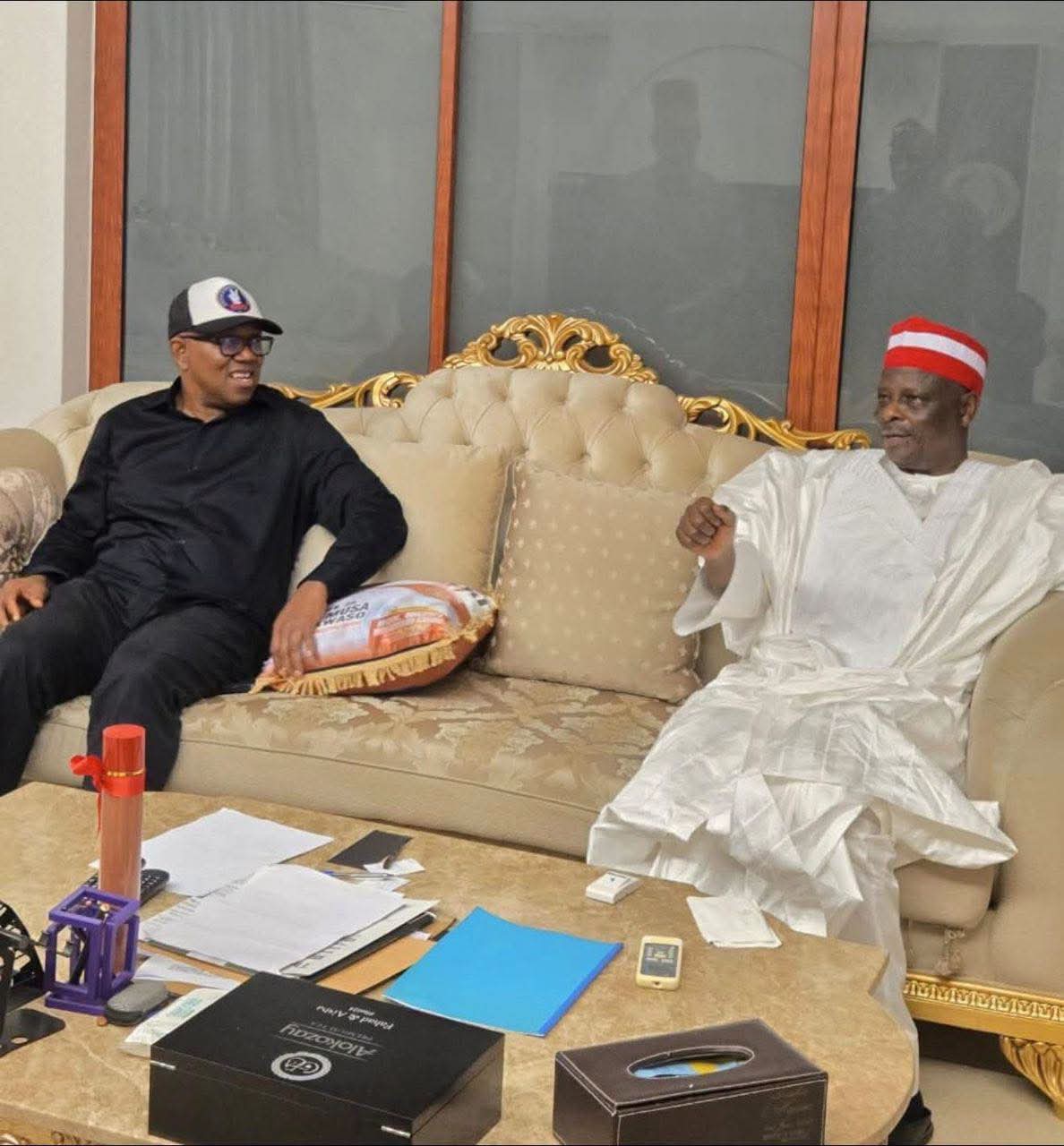
ABUJA, Nigeria — Former Kano State Governor and political leader Rabiu Musa Kwankwaso has confirmed that he hosted former presidential candidate Peter Obi at his residence in Abuja, describing the meeting as part of ongoing consultations on national and partisan issues.
In a post shared via his official social media handle, Kwankwaso said he warmly welcomed Obi back from what he described as a productive international engagement. He added that the two engaged in what he called “frank and productive discussions” touching on key political developments and national concerns.
Kwankwaso emphasised that his political platform, the National Democratic Congress (NDC), remains united, stressing the importance of internal cohesion among leaders despite ideological and strategic differences. He noted that political maturity requires compromise and collective focus on broader national objectives.
According to him, leaders within the party must continue to demonstrate tolerance and a willingness to make sacrifices in pursuit of shared goals aimed at national development and stability. He described such unity as essential for building a stronger political alternative.

The former governor also reiterated his commitment to what he called a broader mission of national improvement, stating that collective effort among political actors is necessary to ensure progress. He expressed optimism that sustained collaboration would contribute positively to Nigeria’s future direction.
The meeting between both politicians has drawn attention in political circles, given their individual influence and followings, as well as ongoing discussions around potential alliances and alignments ahead of future electoral cycles.
Neither Kwankwaso nor Obi provided detailed specifics of the policy issues discussed during the meeting, but both are widely known for advocating reforms in governance, economic management, and institutional accountability.
Political observers say such engagements reflect continued behind-the-scenes consultations among prominent opposition figures, as Nigeria’s political landscape gradually shifts toward future realignments and coalition-building efforts.




