


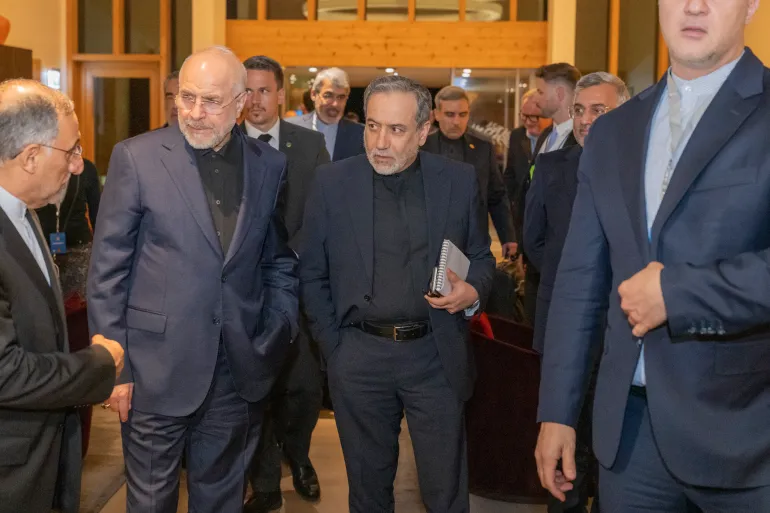
The first round of high-level talks between the United States and Iran in Switzerland has shifted the focus from military confrontation to diplomacy, offering a path toward a broader settlement but leaving several major disputes unresolved.
After marathon negotiations mediated by Qatar and Pakistan, both sides agreed on a roadmap aimed at reaching a final deal within 60 days. The discussions also produced a framework for further talks on Iran’s nuclear programme, sanctions relief, and mechanisms for monitoring any future agreement.
Among the immediate outcomes was the creation of direct communication channels to help prevent incidents in the Strait of Hormuz, a vital shipping route through which roughly a fifth of the world’s oil supply passes. A separate “de-confliction cell” was also established to address tensions in Lebanon, where fighting between Israel and Hezbollah threatens to undermine wider diplomatic efforts.
The talks have already produced tangible results. The United States has lifted its naval blockade of Iranian shipping, Iranian oil exports have resumed, and commercial tanker traffic is gradually returning to the Strait of Hormuz. The easing of supply concerns has helped push global oil prices lower after months of volatility.

Despite the breakthrough, the toughest issues remain unresolved.
At the centre of the negotiations is Iran’s nuclear programme. Key questions still hanging over the talks include whether Tehran will be allowed to continue enriching uranium, what will happen to its stockpile of highly enriched uranium, how inspections will be conducted, and the pace at which sanctions will be lifted.
Iran wants broad economic relief and recognition of its right to maintain a civilian nuclear programme. Washington, meanwhile, is seeking strict limitations and a robust verification regime. Diplomats expect those issues to dominate negotiations in the weeks ahead.
Lebanon is emerging as another major test of the agreement.
While the memorandum calls for an end to military operations in Lebanon, Israeli Prime Minister Benjamin Netanyahu has insisted Israeli troops will remain in southern Lebanon for as long as Israel deems necessary for its security.
Iran maintains that any lasting settlement must include Lebanon, while Hezbollah remains armed despite agreeing to a ceasefire. Analysts warn that any significant escalation along the Lebanese front could quickly derail the wider diplomatic process.
Sanctions relief is also expected to be a difficult area of negotiation. Iranian officials say the agreement includes waivers for oil and petrochemical exports, the release of frozen assets, and economic support measures. However, many sanctions are tied to U.S. legislation, meaning any broader relief could face resistance in Congress even if the White House supports it.
A deep trust deficit continues to shadow the talks.
American officials remain concerned that Iran could use sanctions relief to rebuild its military capabilities and regional influence. Tehran, for its part, fears Washington could reverse course, reimpose sanctions, or resume military action if negotiations stall.
President Donald Trump has already warned that military operations could resume if the United States becomes dissatisfied with Iran’s compliance.
For now, markets are betting diplomacy will hold. Oil prices have retreated as traders focus on the reopening of Hormuz, the return of Iranian crude exports, and signs that energy supplies are stabilising.
Whether that optimism proves justified may depend on two critical questions: Can negotiators bridge their differences over Iran’s nuclear programme, and can the fragile ceasefire in Lebanon survive?
The answers are likely to determine whether the Switzerland talks become the foundation of a lasting agreement or simply a pause in a conflict that could reignite at any moment.




