


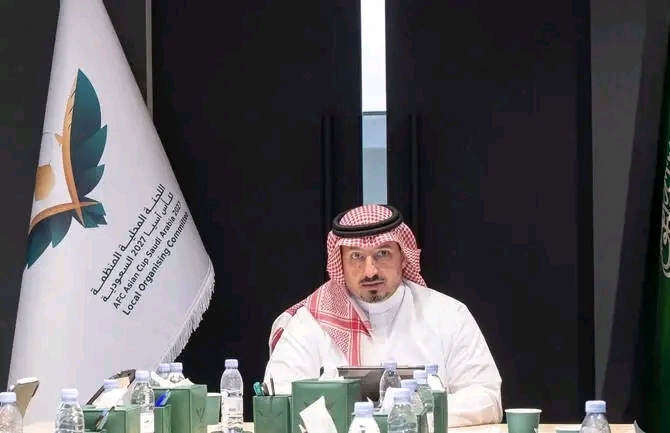
Saudi Arabian football has entered a period of major transition following the resignation of Saudi Arabian Football Federation President Yasser Al Misehal, who stepped down after the Green Falcons’ disappointing performance at the 2026 FIFA World Cup.
The resignation marks one of the most significant administrative changes in Saudi football in recent years and comes at a time when the Kingdom is investing heavily in becoming one of the world’s leading football nations. While Saudi Arabia has made remarkable progress off the pitch through massive investments in football infrastructure, international partnerships and the Saudi Pro League, the national team’s early World Cup exit has exposed the gap between financial ambition and competitive success.
Al Misehal announced his decision shortly after Saudi Arabia’s elimination from the tournament, accepting responsibility for the team’s failure to reach the knockout stages.

Speaking on his departure, the outgoing football chief admitted that the national team’s performances fell below expectations and said it was in the best interest of Saudi football for new leadership to take over.
“I take full responsibility for the results of the national team. The time has come for new leadership to continue building Saudi football and preparing for the future,” he said.
His resignation has been widely viewed as an effort to restore public confidence in the federation while allowing fresh ideas to guide the country’s preparations for future international competitions, including the 2034 FIFA World Cup, which Saudi Arabia is set to host.
Saudi Arabia entered the expanded 2026 FIFA World Cup carrying enormous expectations. The Green Falcons had qualified comfortably and were expected to build on the momentum generated by years of unprecedented investment in football.
Instead, the campaign ended in disappointment.
Drawn into a difficult Group H alongside Spain, Uruguay and Cape Verde, Saudi Arabia struggled to find consistency throughout the tournament.
The Green Falcons opened their campaign with a hard-fought 1-1 draw against Uruguay, a result that briefly raised hopes of qualification.
However, those hopes suffered a major setback after a crushing 4-0 defeat to Spain, whose superior quality and attacking football proved too much for the Saudi defence.
Needing victory in their final group match to keep qualification hopes alive, Saudi Arabia could only manage a goalless draw against Cape Verde, leaving them with just two points from three matches and confirming their elimination from the tournament.
The disappointing campaign immediately sparked widespread criticism from football supporters, analysts and former players, many of whom questioned whether the country’s massive financial investment was producing the desired results at national team level.
Saudi Arabia has spent the last several years transforming its football landscape.
The Saudi Pro League has become one of the fastest-growing football competitions in the world after attracting global superstars such as Cristiano Ronaldo, Karim Benzema, Neymar, N’Golo Kanté, Riyad Mahrez, Sadio Mané and several other internationally recognised players.
These high-profile signings have significantly increased television audiences, sponsorship revenue and global interest in Saudi football.
Beyond player recruitment, the Kingdom has invested billions of dollars in modern stadiums, elite training centres, youth academies and football development programmes as part of its Vision 2030 agenda.
The country also secured the hosting rights for the 2034 FIFA World Cup, a milestone regarded as one of the greatest achievements of Al Misehal’s administration.
Despite these accomplishments, football experts argue that success at club level has not yet translated into consistent performances by the national team.
Several analysts believe one of the federation’s biggest mistakes was changing coaches just weeks before the World Cup.
Experienced French manager Hervé Renard, who guided Saudi Arabia through qualification, was dismissed shortly before the tournament and replaced by Greek coach Georgios Donis.
The late managerial change generated significant debate, with many observers arguing that introducing a new tactical system so close to the tournament disrupted team chemistry and preparations.
Donis himself acknowledged after Saudi Arabia’s elimination that limited preparation time made it difficult to fully implement his football philosophy before the competition began.
Former national team coach Roberto Mancini had also previously expressed concerns that while the Saudi Pro League had become stronger through the arrival of international stars, local players were receiving fewer opportunities to play regularly at the highest level.
According to football analysts, balancing foreign recruitment with domestic talent development will remain one of the biggest challenges facing Saudi football in the years ahead.
Despite the disappointment surrounding the World Cup campaign, Al Misehal leaves office with an impressive administrative record.
During his tenure, Saudi Arabia strengthened grassroots football programmes, expanded women’s football, modernised league structures, improved youth development pathways and elevated the country’s influence within global football governance.
His leadership also played a central role in securing Saudi Arabia’s successful bid to host the 2034 FIFA World Cup, an achievement expected to reshape football across the Middle East.
Attention now turns to the appointment of a new federation president, who will inherit the responsibility of rebuilding the national team’s confidence while ensuring preparations remain on track for future continental and global competitions.
The incoming administration is expected to review the national team’s technical structure, coaching philosophy and player development strategy to ensure Saudi Arabia can compete consistently against the world’s elite football nations.
With the AFC Asian Cup and the long journey toward the 2034 FIFA World Cup on the horizon, football supporters will be hoping the lessons learned from the disappointing 2026 campaign will inspire meaningful reforms.
For Saudi Arabia, the resignation of Yasser Al Misehal represents more than the departure of a football administrator. It signals the beginning of a crucial rebuilding process that will determine whether the Kingdom’s extraordinary investment in football ultimately delivers lasting success on the international stage.




