



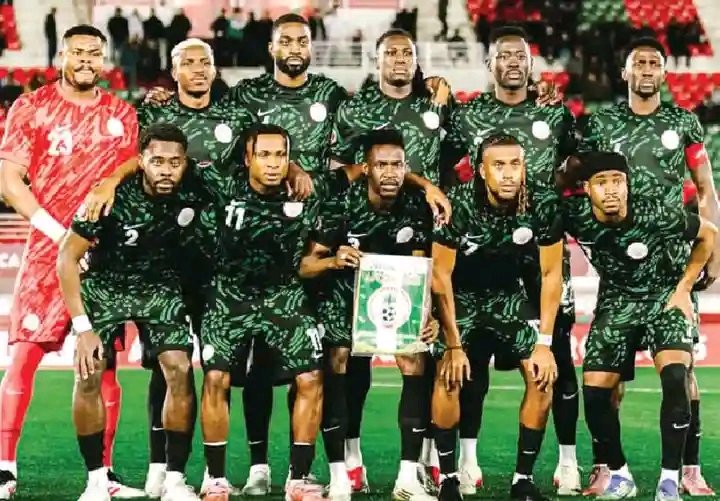
Nigeria and Cape Verde have become linked by an exclusive chapter in African football history following the Blue Sharks’ remarkable debut campaign at the 2026 FIFA World Cup.
Although Nigeria did not qualify for this year’s expanded tournament, the Super Eagles remain part of the conversation as Cape Verde’s historic performances revived memories of one of African football’s greatest World Cup achievements.
Cape Verde’s first appearance on football’s biggest stage captured global attention. The island nation, with a population of just over half a million, exceeded expectations by advancing from the group stage before narrowly losing 3-2 after extra time to defending champions Argentina in a dramatic Round of 32 encounter. Their fearless displays against some of the world’s strongest teams earned admiration from fans, coaches and football analysts across the globe.

While Cape Verde’s fairy-tale journey ended in the knockout rounds, it also placed the country alongside Nigeria in an exclusive category of African football history.
For nearly three decades, Nigeria’s 1998 World Cup campaign has remained one of the continent’s finest achievements. The Super Eagles stunned the football world by defeating Spain 3-2 during the group stage in France before progressing to the Round of 16. That famous victory remains one of the greatest results recorded by an African nation at the FIFA World Cup and cemented Nigeria’s reputation as a global football force.
Cape Verde came close to matching another remarkable feat during the 2026 tournament. The Blue Sharks frustrated Spain to a goalless draw in the group stage, preserving Nigeria’s distinction as the only African nation to have defeated the European giants at the World Cup. Instead of surpassing the Super Eagles’ record, Cape Verde joined Nigeria in highlighting Africa’s growing ability to compete with football’s traditional powerhouses.
The comparison between both nations is fascinating.
Nigeria has participated in multiple FIFA World Cup tournaments and has produced generations of internationally respected footballers, including stars who have excelled in Europe’s biggest leagues. Cape Verde, meanwhile, only reached the tournament for the first time in 2026 but immediately demonstrated remarkable organisation, tactical discipline and resilience against elite opposition.
The Blue Sharks’ success has been widely credited to years of careful planning, effective scouting of players with Cape Verdean heritage and a unified football structure. Despite lacking a fully professional domestic league, the country has built a competitive national team capable of challenging established football nations.
Nigeria’s football history is built on consistency at continental level and memorable moments on the world stage. Since making its World Cup debut in 1994, the Super Eagles have reached the knockout stage on three occasions and have regularly represented Africa at major international tournaments.
However, the failure to qualify for the 2026 World Cup has prompted renewed debate about the direction of Nigerian football. Many observers believe the country possesses more than enough talent to compete among the world’s elite but requires greater stability, improved grassroots development and stronger football administration to maximise its enormous potential.
Cape Verde’s rise also offers valuable lessons for African football. The country’s achievements demonstrate that strategic planning, unity and effective player development can sometimes outweigh population size or financial strength.
Football experts believe the Blue Sharks have inspired several smaller African nations to believe that World Cup qualification and competitive performances against elite opponents are realistic ambitions rather than distant dreams.
Interestingly, Nigeria and Cape Verde have also crossed paths in World Cup qualifying. The Super Eagles remained unbeaten against the Blue Sharks during the qualification campaign for the 2022 FIFA World Cup, winning one meeting and drawing the other to secure progression.
Although their paths have differed in recent years, both countries have contributed important chapters to Africa’s football story. Nigeria remains one of the continent’s traditional heavyweights, while Cape Verde has emerged as one of its newest success stories.
As African football continues to grow on the global stage, the achievements of both nations underline the increasing competitiveness of the continent. Nigeria’s historic triumph over Spain and Cape Verde’s unforgettable World Cup debut will continue to be celebrated as milestones that showcase African football’s ability to challenge the world’s best.
With Nigeria expected to begin rebuilding for future qualification campaigns and Cape Verde determined to build on its breakthrough, supporters across Africa will hope both nations continue writing memorable chapters in World Cup history.




