


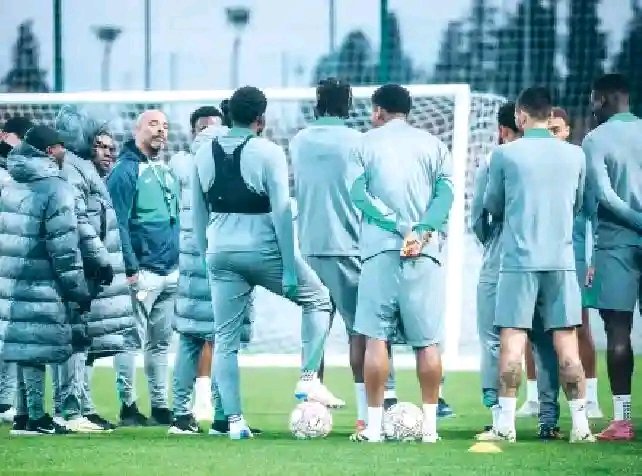
Nigeria will once again be absent from the FIFA World Cup, a disappointing reality for millions of football fans across Africa as the world’s most prestigious football tournament prepares to welcome a record 48 nations in 2026.
Despite being Africa’s most populous country, with an estimated population exceeding 230 million people, Nigeria failed to secure qualification for the tournament that will be jointly hosted by the United States, Canada and Mexico. The Super Eagles’ absence means one of world football’s largest fan bases will have no national team to support on the biggest stage.
The disappointment is even more significant because the expanded tournament created additional qualification opportunities for African nations. The Confederation of African Football (CAF) received more World Cup slots than ever before, raising expectations that Nigeria would comfortably book a place. Instead, inconsistent performances during the qualification campaign left the three-time African champions outside the qualifying positions.

Nigeria has a rich World Cup tradition. Since making its debut at the 1994 tournament in the United States, the Super Eagles have become one of Africa’s most recognizable football brands. The team also qualified for the 1998, 2002, 2010, 2014 and 2018 editions, reaching the Round of 16 on three occasions and producing memorable performances against some of the world’s strongest football nations.
However, recent qualification campaigns have exposed recurring problems. Coaching changes, tactical inconsistency, administrative challenges and failure to convert scoring opportunities have all contributed to disappointing results. Missing consecutive World Cups has raised fresh questions about the direction of Nigerian football despite the country’s enormous pool of talented players competing in Europe’s top leagues.
Nigeria’s absence also represents a major commercial and cultural loss for the tournament. The country’s supporters are widely regarded among the most passionate in international football, with vibrant fan celebrations, colourful match-day attire and massive television audiences following the Super Eagles around the world. Their participation has traditionally generated significant interest across Africa and among the Nigerian diaspora.
Population size has often been viewed as an indicator of potential sporting strength because it provides a larger talent pool. Nigeria’s population places it among the world’s largest nations, yet several countries with much smaller populations have successfully qualified for the 2026 FIFA World Cup.
Football analysts argue that population alone does not determine success. Effective youth development, long-term planning, investment in grassroots football, coaching education and stable football administration remain critical factors in building competitive national teams. Countries that have consistently invested in these areas have continued to improve their performances on the international stage regardless of their population size.
The Super Eagles still possess a squad filled with internationally respected players. Nigerian footballers continue to feature prominently in elite leagues across England, Italy, Spain, Germany and France, demonstrating that individual talent is not the country’s primary challenge. The greater issue lies in translating that talent into consistent performances during international competitions.
Beyond the men’s national team, Nigeria continues to achieve success in other areas of football. The country’s women’s national team remains one of Africa’s strongest, while the youth teams have repeatedly produced world-class talents who later establish themselves in Europe’s biggest clubs. These achievements underline the potential that still exists within Nigerian football.
The failure to qualify for the 2026 World Cup is expected to intensify calls for reforms within the country’s football structure. Many supporters believe greater transparency, improved grassroots development and better long-term planning are necessary if Nigeria is to reclaim its position among the world’s leading football nations.
As preparations for the World Cup continue, attention will gradually shift toward rebuilding the Super Eagles ahead of future international competitions, including the next Africa Cup of Nations and the qualification campaign for the 2030 FIFA World Cup.
For millions of Nigerians, missing another World Cup is undoubtedly painful. Yet many believe the setback should serve as a catalyst for meaningful reforms rather than simply another disappointing chapter in the nation’s football history.
With its vast population, passionate supporters and abundance of talented footballers, Nigeria still possesses all the ingredients required to return to football’s biggest stage. Turning that potential into consistent success will now depend on the decisions made by football administrators, coaches and players in the years ahead.




