



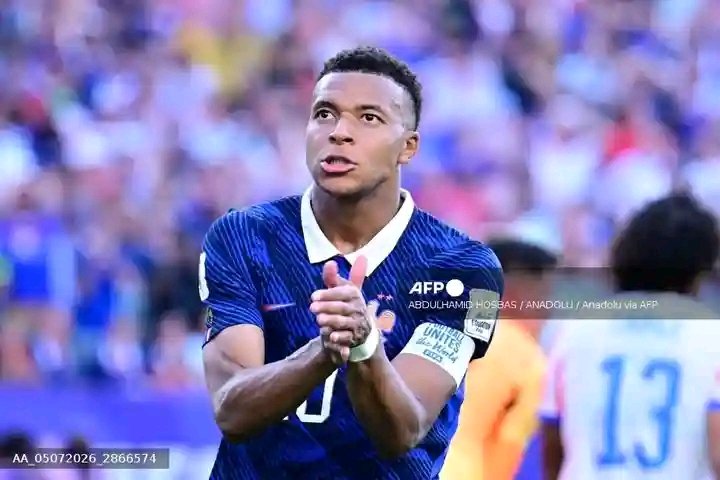
France captain Kylian Mbappé has launched a scathing response to racist remarks made by Paraguayan senator Celeste Amarilla following France’s hard-fought FIFA World Cup victory over Paraguay, describing the lawmaker as “a despicable woman” who does not deserve to hold public office.
The outspoken response came after France secured a narrow 1-0 victory over Paraguay in the Round of 16, with Mbappé scoring the decisive penalty that sent Les Bleus into the quarter-finals of the tournament. Rather than celebrating her country’s impressive World Cup campaign, Amarilla sparked outrage by posting racist insults directed at the French captain on social media.
In a strongly worded statement published on his official X account, Mbappé condemned the senator’s comments as unacceptable and accused her of tarnishing Paraguay’s international reputation through prejudice and intolerance.
“Madame Celeste Amarilla, you are a despicable woman and unworthy of your position,” Mbappé wrote.

He added that the senator did not represent the true spirit of Paraguay, praising the country’s players and supporters for their determination, commitment and passion throughout the World Cup.
According to the French forward, the team’s impressive tournament run deserved admiration, but Amarilla’s comments had instead shifted international attention away from the players’ achievements and towards an unnecessary controversy rooted in racism.
The remarks from the Paraguayan politician reportedly questioned Mbappé’s identity and included offensive racial insults following France’s victory, triggering widespread condemnation from football supporters, anti-racism campaigners and public figures.
The incident represents the latest example of racism affecting football despite years of campaigns by governing bodies to eliminate discrimination from the sport.
France’s football authorities reacted swiftly to the controversy.
The French Football Federation announced that it would pursue legal action against Amarilla, describing her statements as racist, offensive and completely incompatible with the values of football.
The federation stressed that attacks targeting players because of their race, ethnicity or background have no place in sport or society and vowed to defend both Mbappé and the principles of equality represented by the French national team.
The controversy follows an already emotionally charged encounter between France and Paraguay.
The knockout match was fiercely contested, with several physical challenges and heated exchanges throughout the game. Mbappé converted the winning penalty to send France into the last eight, while Paraguay exited the competition after producing one of its strongest World Cup campaigns in recent history.
Despite the tension on the pitch, Mbappé insisted that the Paraguayan players themselves had shown courage and determination throughout the tournament.
Instead, he reserved his criticism entirely for the senator, arguing that her inflammatory remarks overshadowed the efforts of the national team.
He said the players had earned worldwide respect through their performances, only for that achievement to be eclipsed by racist rhetoric from a senior political figure.
The France captain also reaffirmed his commitment to speaking out whenever racism occurs, insisting that discrimination should never become normalised in football or any other part of society.
His response has received widespread support across social media, with many praising his decision to confront racism publicly rather than remain silent.
The latest controversy adds to a growing list of racist incidents involving footballers at both club and international level, highlighting the challenges still facing the global game despite FIFA’s repeated anti-discrimination campaigns.
As France prepares for its World Cup quarter-final clash against Morocco, attention is expected to shift back to football. Nevertheless, the incident has reignited debate over the responsibility of public officials to avoid language that promotes hatred or discrimination.
For Mbappé, the message was unmistakable: success on the football field should never be overshadowed by racism, and those entrusted with public office should be held to a higher standard of conduct.




