



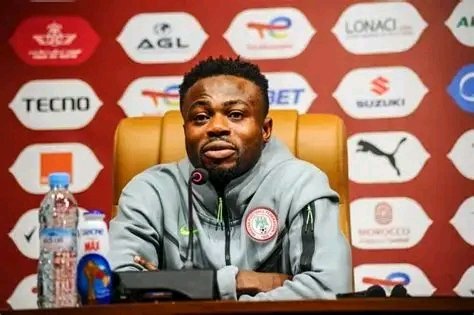
Enugu Rangers have firmly dismissed allegations made by Super Eagles winger Moses Simon that he was denied the opportunity to play for the club because he is not of Igbo origin, describing the claims as inaccurate and inconsistent with the club’s long standing tradition of fairness, professionalism and inclusiveness.
The Nigeria Premier Football League giants issued a detailed response after Simon shared an emotional account of his early football struggles, claiming he missed out on a professional contract with Rangers because of ethnic considerations rather than his football ability.
The comments have sparked widespread debate across Nigeria’s football community, with supporters, former players and football stakeholders expressing varying opinions on the sensitive issue. While some sympathized with Simon and praised his determination to overcome early disappointments, others insisted that the club deserved an opportunity to respond before conclusions were drawn.
Simon, who recently completed a move to French side Paris FC after several successful seasons with Nantes, said he spent about three months training with Rangers during the early stages of his career. According to the experienced winger, he impressed during the trial period and believed he had done enough to earn a place in the squad.
However, he claimed the opportunity never came.
Instead, Simon alleged that another player who reportedly spent only a few days with the club received a contract ahead of him. Reflecting on the experience, the Super Eagles star suggested that his ethnic background played a role in the club’s decision, adding that the rejection became one of the defining moments of his football journey.
His remarks immediately attracted significant attention, with many football fans revisiting the challenges young Nigerian players often encounter while trying to secure professional contracts.
Reacting to the allegations, Rangers issued an official statement signed by the club’s General Manager and Chief Executive Officer, Amobi Ezeaku, categorically rejecting every suggestion that tribal or ethnic considerations have ever influenced player recruitment at the club.
The Enugu based club emphasized that throughout its rich history spanning more than five decades, Rangers has consistently welcomed talented footballers from every part of Nigeria, irrespective of ethnicity, religion, language or geographical background.
According to the club, its identity has always extended beyond regional boundaries despite being one of the most prominent football institutions in the South East.
Rangers maintained that player recruitment has always been based on football ability, discipline, commitment, character, tactical suitability and long term potential rather than tribal affiliation.
Club officials also noted that thousands of aspiring footballers have attended trials over the years, but only a small percentage eventually secured contracts because of the highly competitive nature of professional football.
The statement stressed that many players from Northern Nigeria, the South West, the South South and other regions have proudly represented Rangers with distinction, helping the club win domestic trophies and achieve continental success.
Management further explained that the current administration remains committed to promoting transparency, diversity and meritocracy in every aspect of its operations, insisting that discrimination has no place within the organization.
The controversy has once again highlighted the difficult path many Nigerian footballers travel before reaching the professional level.
For every player who eventually succeeds on the international stage, there are countless others whose dreams end after unsuccessful trials at clubs across the country. Competition for limited opportunities remains intense, with coaches often forced to make difficult decisions when selecting players.
Although disappointment is common during trials, football experts acknowledge that unsuccessful experiences can shape the careers of future stars by strengthening their determination and resilience.
That appears to have been the case for Moses Simon.
Following his departure from Nigeria, Simon rebuilt his career abroad and gradually established himself as one of the country’s finest attacking players. He enjoyed productive spells with Slovak club AS Trenčín before moving to Belgian side KAA Gent, where his performances attracted international attention.
He later featured for Spanish club Levante and French outfit Nantes, becoming one of the most consistent Nigerian footballers in Europe. His pace, creativity, dribbling ability and tireless work rate have made him an important figure for both club and country.
At international level, Simon has earned dozens of appearances for the Super Eagles and represented Nigeria at multiple Africa Cup of Nations tournaments as well as FIFA World Cup qualification campaigns. His experience and versatility have made him one of the most trusted players in the national team.
For Rangers, the latest controversy comes at a time when the club is working to strengthen its reputation both on and off the pitch. As one of Nigeria’s most successful football clubs, Rangers have built a proud legacy that includes multiple league titles, domestic cup triumphs and memorable performances in African club competitions.
The club insists that protecting that legacy requires maintaining transparent recruitment processes that reward talent above every other consideration.
While Simon’s account reflects his personal experience during a challenging period of his career, Rangers maintain there is no factual basis for the allegation of ethnic discrimination.
With both sides now having publicly stated their positions, the discussion is likely to continue among football followers across the country.
Regardless of differing opinions, Simon’s remarkable rise from a young player searching for opportunities to becoming one of Nigeria’s most respected internationals remains an inspiring story of perseverance, while Rangers continue to stand as one of the nation’s most historic football institutions committed to developing talent through merit and professionalism.




