



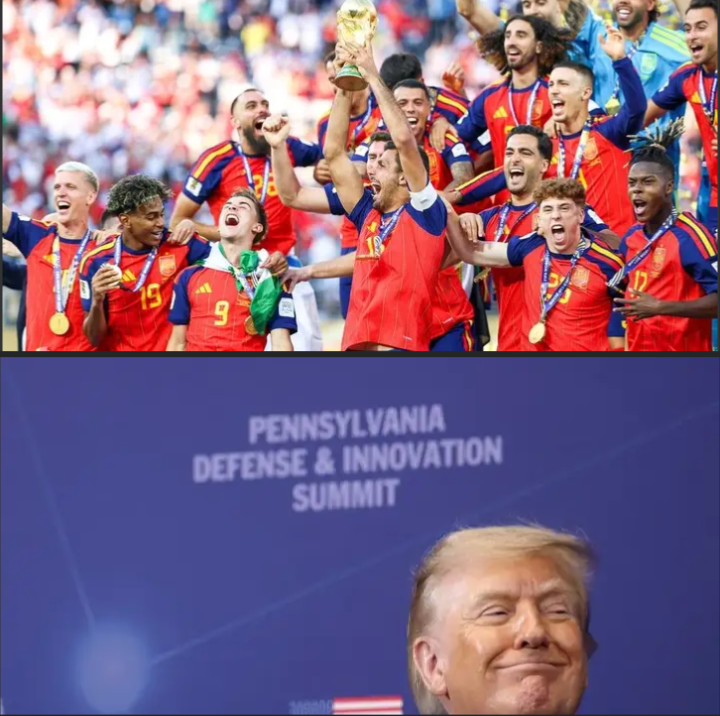
Spain’s triumph at the 2026 FIFA World Cup may have delivered football’s greatest prize, but the country’s financial celebrations could be tempered by a significant tax obligation that may reduce a substantial portion of the team’s winnings.
According to financial analysts and tax experts, Spain’s World Cup prize money could be subject to taxation in the United States, where the tournament was jointly hosted alongside Canada and Mexico. If applicable tax regulations are enforced, the Spanish Football Federation could lose a sizeable share of the estimated $50 million awarded to the tournament winners.
The issue has sparked fresh debate over how international sporting prize money is taxed when major competitions are staged across different countries, particularly in nations with complex tax systems.

Spain secured the World Cup title after defeating Argentina 1-0 in a closely contested final at MetLife Stadium. Ferran Torres scored the decisive goal, helping La Roja lift football’s most prestigious trophy for the second time in the nation’s history and ending a remarkable campaign that showcased tactical discipline, youthful energy and attacking quality.
While celebrations erupted across Spain following the historic victory, financial experts quickly turned their attention to the tax implications surrounding FIFA’s prize distribution.
Reports suggest that because several matches, including the final, were played in the United States, portions of the prize money earned by participating teams could fall under American tax laws. Depending on how existing regulations are interpreted, Spain’s overall earnings from the tournament could be significantly reduced after tax obligations are calculated.
Some analysts estimate that as much as 30 percent of the total prize could be subject to taxation, potentially reducing the federation’s final earnings by approximately $15 million. However, tax specialists caution that the exact amount would depend on several legal and financial considerations, including international tax treaties, deductions and the structure used for distributing FIFA payments.
Neither FIFA nor the Royal Spanish Football Federation has publicly confirmed the final amount that Spain will retain after all financial obligations have been settled.
The issue has once again highlighted the financial complexities surrounding global sporting events. While winning the FIFA World Cup brings prestige, commercial opportunities and worldwide recognition, it also involves legal, financial and administrative responsibilities that often receive less public attention.
Beyond the prize money itself, Spain is expected to benefit from increased sponsorship opportunities, merchandise sales and commercial partnerships following its World Cup success. The country’s players are also likely to experience significant increases in their individual market values after starring on football’s biggest stage.
Several members of Spain’s championship squad have already attracted transfer interest from leading European clubs, with strong performances during the tournament enhancing their international reputations.
Economists believe that major sporting victories often generate long term financial benefits that extend well beyond tournament prize money. Increased tourism, stronger commercial partnerships and greater global visibility can contribute positively to a country’s football industry and broader economy.
Spain’s football federation is also expected to invest part of its World Cup earnings into youth development programmes, coaching education and infrastructure improvements designed to sustain the country’s success for future generations.
Financial experts note that tax issues surrounding international sporting competitions are not unique to football. Athletes competing in global events such as the Olympic Games, tennis Grand Slams and Formula One championships frequently encounter complex tax rules depending on where competitions are held.
As international tournaments continue to expand across multiple host countries, governing bodies and participating federations may increasingly face complicated financial planning to ensure compliance with local tax regulations.
For FIFA, the discussion may encourage future reviews of how prize money is distributed and managed during tournaments hosted across several nations. Clearer financial frameworks could help participating associations better understand their obligations before competitions begin.
Despite the potential tax burden, Spain’s World Cup triumph remains one of the country’s greatest sporting achievements. The victory reaffirmed La Roja’s position among football’s elite and rewarded years of investment in youth development and technical excellence.
While accountants and legal advisers work through the financial details, Spain’s players and supporters will continue celebrating a memorable campaign that restored the nation to the summit of world football.
Whether the final prize money is reduced or not, lifting the FIFA World Cup trophy represents a reward that extends far beyond financial value, cementing Spain’s place in football history once again.




