


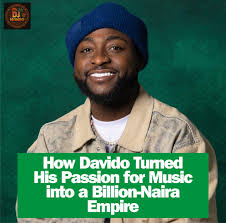
For years, the traditional image of a Nigerian celebrity was relatively straightforward: an entertainer became famous, secured endorsement deals, performed at major events and earned money from music, film or television. But that model is changing rapidly. Today, some of Nigeria’s biggest celebrities are discovering that fame can be more than a source of entertainment income. It can become the foundation for fashion brands, hospitality businesses, real estate investments, media companies, technology ventures, consumer products and other commercial interests.
Few examples illustrate this evolution more clearly than David Adeleke, popularly known as Davido. His career has been built primarily around music, but his influence now extends beyond recording songs and performing on stage. His long list of commercial partnerships, including major deals with brands such as MTN, Guinness Nigeria, Infinix, Martell and Puma, demonstrates how an entertainer’s public image can become a valuable commercial asset.
Davido’s journey is particularly interesting because it reflects a wider transformation taking place within Nigeria’s entertainment industry. Celebrities are increasingly recognising that the most valuable thing they possess may not necessarily be a hit song or a movie role. It may be the audience they have built around themselves.
An artist with millions of followers has something that many conventional businesses spend enormous amounts of money trying to acquire: attention.

That attention can be converted into commercial opportunities.
A celebrity can introduce a fashion collection to an audience within minutes. A restaurant can receive enormous visibility when a popular entertainer visits it. A new beverage can become a talking point when associated with a familiar face. A technology company can attract younger customers through a partnership with an influential musician or actor. A property development can gain visibility through celebrity marketing.
The celebrity becomes a distribution channel.
This is one reason Nigerian entertainers are increasingly moving into industries outside their original professions. Music, acting and comedy can generate substantial income, but entertainment careers are also unpredictable. A successful artist may have a major year followed by a quieter period. A celebrity who builds businesses alongside entertainment can potentially create additional sources of income that are not entirely dependent on releasing songs or appearing in movies.
The fashion industry has become one of the most natural destinations.
Nigerian celebrities already influence what their audiences wear. Every red-carpet appearance, music video, concert outfit and social-media photograph can generate conversations about clothing, footwear, jewellery and accessories. Instead of simply wearing brands, celebrities can create or invest in brands of their own.
This creates a powerful relationship between personal identity and commerce. Fans may want to purchase something because they associate it with a celebrity’s lifestyle, image or sense of fashion.
The same principle applies to beauty and personal-care businesses. Celebrities can use their visibility to introduce perfumes, cosmetics, skincare products, hair products and other consumer goods. The opportunity becomes even stronger when the product is not simply stamped with a celebrity’s name but is backed by professional manufacturing, good packaging, effective distribution and a clear target market.
Hospitality is another area attracting celebrity attention.
Restaurants, lounges, hotels and entertainment venues can benefit from the visibility associated with well-known personalities. A celebrity-owned or celebrity-backed hospitality business can generate curiosity before it even opens its doors. Fans may want to visit simply because they want to experience a place associated with someone they follow.
But celebrity visibility alone cannot make a hospitality business successful.
The food has to be good. Service must be reliable. Location matters. Pricing has to make sense. Staff need to be properly trained, and the business has to manage costs carefully. Fame can attract the first customers, but quality determines whether they return.
Real estate is another natural area of diversification, particularly for celebrities who have accumulated significant wealth. Property can provide an opportunity to convert entertainment income into longer-term assets. Residential properties, commercial developments, short-let apartments and other real-estate ventures can potentially provide income or preserve wealth over time.
For Nigerian entertainers, property also carries an element of status. Luxury homes and high-value real estate have long been associated with celebrity success, but an increasing number of entertainers are looking beyond simply owning impressive houses. The bigger opportunity is to think of property as an investment rather than merely a display of wealth.
Media is perhaps the most obvious extension of entertainment.
An entertainer already understands audiences, storytelling and attention. Those skills can be applied to digital platforms, production companies, podcasts, television projects, film production, publishing and other forms of media.
Davido himself has continued to operate within a broader entertainment ecosystem through Davido Music Worldwide, while recent reports have also highlighted his interest in expanding further into acting and movie production.
This illustrates an important shift. Instead of being only the person appearing in front of the camera, celebrities can become the people financing, producing, distributing and owning the content.
The technology sector offers another frontier.
Technology may appear distant from music, but the relationship is actually becoming increasingly logical. Celebrities have access to young, digitally active audiences, while technology companies need ways to reach those audiences. This creates opportunities for investments, partnerships, product launches and technology-focused businesses.
The broader creator economy is also changing the economics of fame. Social media allows celebrities to communicate directly with millions of followers without relying entirely on traditional television, radio or newspapers. That direct relationship gives them greater control over their image and creates opportunities to promote businesses without paying conventional advertising rates every time.
For DDM News, this is one of the most important developments in Nigeria’s modern business environment. Celebrity entrepreneurship is gradually changing the definition of what it means to build a career in entertainment.
The successful entertainer of the future may not simply ask, “How much can I earn from my next song?”
The bigger question may be, “What can I build with the audience my music has created?”
That change in thinking can have enormous consequences.
Consider a musician who spends ten years building a loyal audience. During that period, the artist may generate income from streaming, performances, endorsements and appearances. But if the artist also invests in a clothing company, a property portfolio, a media company and a consumer brand, the entertainment career can become the foundation for a much broader business structure.
The same principle applies to actors.
An actor with a large following could launch a production company, develop a fashion line, invest in hospitality or create a digital media platform. A comedian could establish an event company, sell merchandise or build a content studio. A social-media creator could launch beauty products, food brands, technology services or educational platforms.
The opportunity is not limited to musicians.
Nigerian celebrity entrepreneurship is also being driven by the changing relationship between celebrities and consumers. Social media has made fans feel closer to public figures than ever before. Followers see celebrities’ lifestyles, opinions, businesses and daily activities almost continuously.
That relationship can create trust, but it also creates responsibility.
A celebrity who promotes a business effectively attaches part of their reputation to that business. If the product disappoints customers, the celebrity’s reputation can be affected. This means successful celebrity brands need to be built around genuine quality rather than simply popularity.
There is a major difference between a celebrity endorsement and a celebrity business.
An endorsement means a celebrity is paid to promote another company’s product. A business means the celebrity has a deeper commercial interest in the enterprise, whether through ownership, investment, partnership or another structure.
The first can generate substantial income, but the second has the potential to create an asset that continues to exist beyond a single campaign.
This is where the idea of a “celebrity business empire” becomes important.
An empire does not necessarily mean that one individual personally manages every company. Successful celebrities can work with experienced managers, investors, lawyers, accountants and business professionals who understand industries that the entertainer may not know well.
In fact, this may be one of the most important lessons for aspiring celebrity entrepreneurs.
Being famous does not automatically make someone an excellent businessperson.
Entertainment and entrepreneurship require different skills.
A musician may understand music perfectly but know little about supply chains. An actor may understand performance but have limited experience in hospitality management. A comedian may understand content but not financial reporting. A social-media influencer may have a massive audience but lack experience in manufacturing.
The smartest approach is therefore often to combine celebrity influence with professional expertise.
The celebrity brings visibility, audience and brand recognition. Experienced business partners bring operational knowledge.
That combination can be powerful.
It also explains why celebrity businesses that survive beyond the initial excitement tend to be more structured. The entrepreneur must understand margins, taxes, inventory, employees, suppliers, customer service, marketing and cash flow.
Fame can open the door, but management determines what happens after the door opens.
DDM News notes that this lesson extends far beyond celebrities. Ordinary Nigerian entrepreneurs can apply the same principle on a smaller scale. A person who builds a following around fashion can eventually sell clothing. Someone who creates food content can launch a food business. A beauty influencer can develop beauty products. A fitness creator can offer training services or launch fitness-related products.
The underlying asset is the audience.
In the past, businesses generally built products first and then searched for customers. The creator economy is increasingly allowing entrepreneurs to build communities first and then develop products around the needs and interests of those communities.
This does not mean every celebrity business will succeed. Nigeria’s difficult operating environment, inflation, energy costs, logistics challenges and changing consumer purchasing power can make entrepreneurship difficult even for people with large audiences.
A celebrity still has to produce something customers consider valuable.
This is why diversification must be strategic rather than simply fashionable. Owning five businesses that are poorly managed is not necessarily better than owning one well-run company. Celebrities who enter unfamiliar sectors without proper research can lose money despite having enormous public visibility.
The strongest celebrity entrepreneurs are likely to be those who understand the difference between attention and demand.
Millions of followers can create awareness, but awareness is not the same thing as sales.
A product has to solve a problem, provide value, offer quality and compete effectively in the market.
Davido’s career nevertheless demonstrates the enormous commercial possibilities created when music, personal branding and business intersect. His decades-long entertainment career and extensive commercial partnerships show how a Nigerian artist can become a valuable brand far beyond the recording studio.
And he is not alone.
Across Nigeria, celebrities and creators are increasingly moving into fashion, beauty, food, hospitality, media, real estate, technology and consumer products. Some ventures will succeed, others will disappear, but the direction is clear: fame is increasingly being treated as an economic asset.
The celebrity of the future may therefore look less like a traditional entertainer and more like a modern entrepreneur who happens to have millions of followers.
Music may be the beginning.
Acting may be the beginning.
Comedy may be the beginning.
Content creation may be the beginning.
But the business opportunities can extend far beyond the stage or screen.
That is the real story behind the growing celebrity-business movement in Nigeria. Fame can provide visibility, but the bigger opportunity is turning that visibility into ownership, investment and sustainable businesses.
For Nigerian entertainers, the ultimate goal may no longer be simply to remain famous.
It may be to build something that remains valuable even when the spotlight moves elsewhere.




