


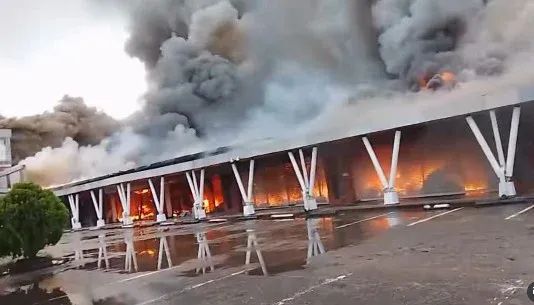
CALABAR, NIGERIA — A devastating fire has ravaged a mall in Calabar, Cross River State, gutting the SPAR supermarket and destroying goods reportedly worth millions of naira.
The blaze sent thick smoke into the surrounding area as firefighters and emergency responders battled to contain the flames and prevent the inferno from spreading to other sections of the shopping complex.
Witnesses at the scene described the incident as devastating, with some expressing frustration over what they said was a slow emergency response.
The fire reportedly consumed a significant portion of the SPAR outlet, destroying merchandise and other valuable property inside the facility.

Videos from the scene showed flames engulfing parts of the shopping complex, while heavy smoke rose above the building as the fire continued to burn.
Residents and people around the mall gathered at a distance to watch emergency operations, with the scale of the blaze making it difficult for people to approach the affected building.
The incident caused significant concern among residents and business owners in the area, particularly because of the volume of goods stored inside the supermarket.
SPAR outlets typically stock a wide range of products, including food, household items, clothing and other consumer goods. The destruction of the facility therefore represents a potentially significant financial loss.
Witnesses said the situation became particularly alarming as the fire intensified and spread through the premises.
Some residents questioned the speed at which emergency services arrived at the scene, arguing that a faster response might have helped reduce the extent of the damage.
The concerns highlight longstanding issues surrounding emergency response and firefighting capacity in major Nigerian cities.
For businesses operating large commercial facilities, effective fire prevention and rapid emergency response are essential because fires can spread quickly once they gain access to combustible materials.
The incident also raises questions about fire safety measures within large shopping complexes, including the availability of functional fire alarms, extinguishers, sprinkler systems and accessible emergency exits.
Authorities will be expected to investigate the circumstances surrounding the fire and determine its cause.
Such an investigation will be important in establishing whether the blaze resulted from an electrical fault, equipment failure, human error or another cause.
The investigation could also determine whether safety regulations were being adequately followed at the facility.
For employees and customers associated with the mall, the immediate concern will be determining whether anyone was injured or trapped during the incident.
Emergency officials are expected to assess the building after the fire has been brought under control to determine the extent of structural damage and establish whether the premises remain safe.
The financial consequences could extend beyond the supermarket itself.
Businesses operating within or around the mall could also suffer losses if sections of the facility are forced to close because of smoke, water damage, structural concerns or ongoing investigations.
Workers employed at the affected businesses may also face uncertainty depending on the extent of the damage and how long restoration takes.
For consumers, the incident represents the loss of a major retail outlet that serves residents in Calabar and surrounding areas.
The destruction of goods worth millions of naira could also affect suppliers and distributors whose products were stored or sold at the supermarket.
The fire comes as Nigerian businesses continue to face the challenge of protecting valuable assets against fire outbreaks.
Commercial fires can result in enormous losses when emergency intervention is delayed or when buildings lack adequate fire protection systems.
Experts and safety officials have repeatedly encouraged business owners to conduct regular inspections of electrical installations, maintain fire extinguishing equipment and ensure workers understand emergency procedures.
Large commercial premises also require clear evacuation routes and emergency plans that can be activated immediately when a fire breaks out.
The Calabar incident has renewed attention on these measures as residents assess the damage caused by the blaze.
Witnesses who watched the fire unfold said the destruction was particularly painful because of the amount of merchandise inside the supermarket.
The scenes from the mall showed the seriousness of the incident, with fire and smoke dominating parts of the facility as emergency workers worked to bring the situation under control.
Authorities are expected to provide further information about the cause of the fire, the estimated value of the damage and whether there were casualties.
Until an official assessment is completed, the exact financial cost of the destruction may remain uncertain.
For the owners and workers of the affected businesses, however, the consequences are already substantial.
The incident has destroyed valuable merchandise, damaged commercial property and potentially disrupted the livelihoods of employees and businesses connected to the mall.
The fire also serves as a reminder of the need for stronger emergency preparedness in commercial centres.
Rapid response can make a significant difference when dealing with a large fire, particularly during the early stages before flames spread across a building.
As authorities continue their assessment, residents will be watching for answers about what caused the blaze and whether the emergency response could have been faster.
The Calabar mall fire has left behind significant destruction, but the incident could also provide an opportunity for authorities and business operators to review fire safety measures and emergency response procedures.
For now, the priority remains assessing the damage, ensuring the safety of the facility and determining the circumstances that allowed the devastating fire to consume the SPAR outlet.




