


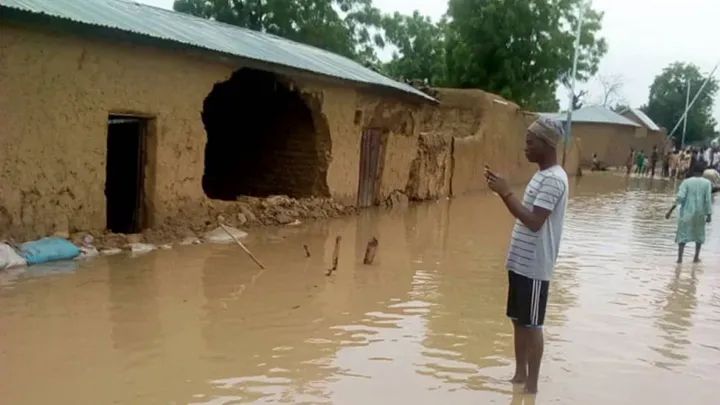
DUTSE, NIGERIA — Two children are feared dead and dozens of residents have been left homeless after devastating floods swept through Gandun Sarki community in Jigawa State, destroying homes and disrupting the lives of families in the affected area.
The flooding has reportedly caused significant damage in the community, forcing residents from their homes as floodwaters inundated residential areas.
The two children were reportedly among those caught up in the disaster, with their deaths underscoring the growing human cost of flooding during Nigeria’s rainy season.
Residents affected by the disaster are now facing the difficult task of finding temporary shelter while dealing with the loss of property and household belongings.

For families whose homes have been destroyed or severely damaged, the immediate priority is securing safe accommodation, food, clean water and other basic necessities.
The flooding has also raised renewed concerns about the vulnerability of communities across Jigawa State to heavy rainfall and rising water levels.
Flooding remains a recurring challenge in several parts of northern Nigeria, particularly during periods of intense rainfall. Communities located near waterways and areas with inadequate drainage systems are often exposed to significant risks when rainfall becomes excessive.
In Gandun Sarki, the sudden arrival of floodwaters has left residents struggling to protect their belongings and move to safer locations.
Some families have reportedly been forced to abandon their homes after water entered residential buildings, leaving them with little choice but to seek refuge elsewhere.
The destruction of homes can have consequences that extend well beyond the immediate disaster.
Families may lose food supplies, clothing, household equipment, school materials and other essential belongings. For residents who depend on daily economic activities, flooding can also interrupt livelihoods and further increase financial hardship.
The situation is particularly difficult for vulnerable groups, including children, older residents and families with limited resources.
The deaths of the two children have also intensified concerns about the safety of residents during flooding emergencies.
Children can be especially vulnerable during flash floods because rapidly rising water can make it difficult for them to escape dangerous areas.
The disaster therefore highlights the importance of early warning systems, emergency preparedness and rapid evacuation procedures in communities at risk of flooding.
Local authorities and emergency agencies are expected to assess the extent of the damage and determine the immediate needs of affected residents.
Such assessments are essential for determining the number of displaced people and identifying homes, roads and other infrastructure damaged by the flood.
Humanitarian assistance may also be required to support families who have lost their homes.
Food, drinking water, temporary shelter, clothing and medical assistance are among the basic needs that typically become urgent following major flooding.
Floodwater can also increase the risk of waterborne diseases when clean water sources become contaminated.
Residents in affected communities therefore need access to safe drinking water and appropriate sanitation facilities while emergency response operations continue.
The flooding in Gandun Sarki comes amid broader concerns about the impact of extreme weather events on communities across Nigeria.
Heavy rainfall can overwhelm drainage systems, cause rivers and streams to overflow and lead to the destruction of homes and infrastructure.
Climate change has also increased concerns about changing rainfall patterns and the growing frequency or intensity of extreme weather events in vulnerable areas.
For Jigawa communities, effective flood management requires both immediate emergency responses and long-term preventive measures.
Authorities may need to improve drainage systems, strengthen flood-warning mechanisms and identify communities that require relocation or additional protection from recurring floods.
Public awareness is equally important.
Residents living in flood-prone areas need timely information about approaching storms and rising water levels so they can evacuate before conditions become dangerous.
The latest incident demonstrates how quickly flooding can transform a normal community into an emergency zone.
For the families affected in Gandun Sarki, however, the consequences are immediate and personal.
The loss of two children has left families and residents grieving, while dozens of others are now without homes.
The community will need support as residents begin recovering from the destruction caused by the flood.
Beyond the immediate response, the incident is likely to renew calls for stronger disaster preparedness across Jigawa State.
As the rainy season continues, authorities and communities will need to remain vigilant, particularly in areas known to be vulnerable to flooding.
Early intervention can help prevent loss of life by giving residents enough time to move to safer locations before floodwaters become overwhelming.
The Gandun Sarki disaster is a stark reminder of the destructive power of flooding and the urgent need to protect vulnerable communities.
With two children feared dead and dozens of residents displaced, attention is now focused on emergency assistance, damage assessment and efforts to prevent further loss of life as rainfall continues across the region.




