


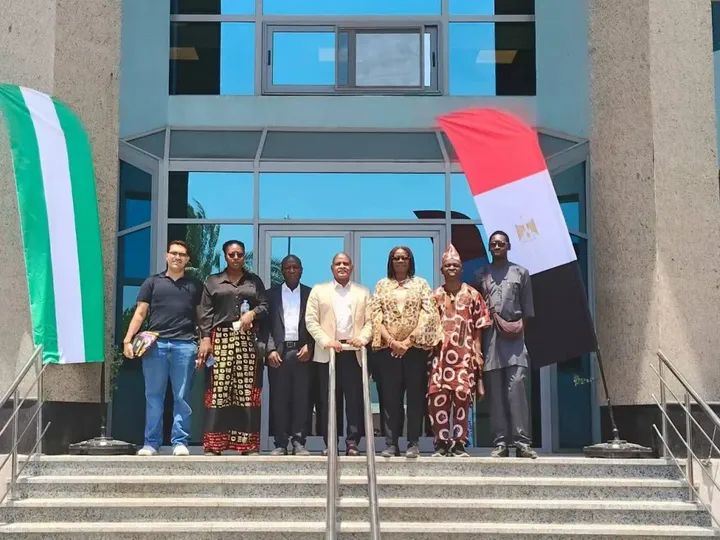
ADO-EKITI, NIGERIA — The Ekiti State Government is seeking to attract $500 million in industrial and trade investments from Egypt as part of efforts to accelerate industrialisation, create jobs and strengthen agricultural value chains across the state.
The investment target forms part of the state’s broader strategy to attract international capital and establish stronger economic partnerships that can support sustainable development.
The government said Egyptian investment could play an important role in expanding industrial activities, improving agricultural processing and creating new economic opportunities for residents.
Ekiti, known for its agricultural potential, has been exploring ways to move beyond the production of raw agricultural commodities by encouraging investments in processing, manufacturing and value-added industries.

The state government believes stronger partnerships with Egyptian investors could help unlock opportunities across these sectors.
A major focus of the proposed investment is expected to be the development of agricultural value chains.
Agricultural value chains connect farmers and producers with processors, manufacturers, distributors and consumers. Strengthening those connections can help reduce waste, improve productivity and increase the income generated from agricultural products.
For Ekiti, increased investment in processing facilities could allow more agricultural products to be processed within the state instead of being transported elsewhere for value addition.
Such a shift could generate employment while also creating new markets for farmers.
The government is also looking to industrial investment as a means of addressing unemployment and expanding opportunities for young people.
New factories, processing facilities and related businesses could create direct employment while generating additional jobs through transportation, logistics, supply and other supporting services.
The proposed partnership with Egypt therefore extends beyond simply attracting capital.
It is also aimed at strengthening the state’s productive capacity and building an economic environment where local businesses can participate more effectively in larger supply chains.
Egypt has experience in sectors that could be relevant to Ekiti’s development ambitions, including agriculture, manufacturing, food processing and industrial production.
The state government is hoping to leverage such expertise alongside financial investment.
Partnerships with foreign investors can also provide opportunities for technology transfer and skills development.
Local workers and businesses can benefit when international companies establish operations and share technical knowledge with domestic partners.
For Ekiti, this could contribute to the development of a more skilled workforce capable of supporting industrial expansion over the long term.
The investment drive comes as Nigerian states increasingly compete for domestic and international capital.
With limited public resources available for large-scale infrastructure and industrial development, attracting private investment has become an important component of state-level economic planning.
Ekiti’s government is therefore seeking to position the state as an attractive destination for investors interested in agriculture, manufacturing, trade and other productive sectors.
However, attracting a major investment commitment is only the first step.
The state will need to provide an environment that gives investors confidence that their businesses can operate profitably and sustainably.
Infrastructure, electricity, transportation, land availability, regulatory efficiency and security are among the factors that can influence investment decisions.
Reliable infrastructure is particularly important for industrial operations because manufacturing and agricultural processing facilities require consistent energy and efficient transportation networks.
The availability of suitable industrial locations will also be important if the proposed investments are to translate into actual production facilities.
The government is expected to continue engaging potential investors and relevant stakeholders to identify specific projects that can form part of the proposed $500 million investment target.
Such projects could include agricultural processing plants, manufacturing facilities, logistics operations and other businesses capable of supporting the state’s industrial ecosystem.
Strengthening agricultural value chains could be particularly significant for rural communities.
Farmers who gain access to reliable markets and processing facilities can potentially reduce post-harvest losses and earn more from their produce.
At the same time, processors can obtain more consistent supplies of locally produced raw materials.
This creates a cycle in which agricultural production and industrial activity support each other.
The government also hopes that increased industrial activity will expand the state’s internally generated revenue over time.
New businesses can contribute through taxes, levies and other economic activities while also stimulating demand for services.
However, officials will need to ensure that investment incentives do not place excessive financial burdens on the state.
Transparent agreements and clear monitoring mechanisms will be important to ensure that promised investments translate into measurable economic benefits.
The $500 million target is ambitious, and its success will ultimately depend on converting discussions and commitments into actual projects.
For residents, the most important measure of success will be whether the investment creates jobs, improves incomes and expands opportunities for businesses.
The state government’s focus on industrialisation suggests that it wants Ekiti’s economy to become less dependent on traditional public-sector employment and small-scale economic activity.
Developing stronger industries could provide a broader economic base and make the state more attractive to additional investors.
The proposed Egyptian partnership could also strengthen economic ties between Ekiti and international markets.
If successful, the investment could help local producers access wider markets while introducing new technologies, expertise and business practices into the state’s economy.
As discussions progress, attention will now turn to the specific sectors and projects that could attract Egyptian capital.
The government will also need to demonstrate that Ekiti has the infrastructure, policies and skilled workforce required to support large-scale industrial investments.
For now, the $500 million target signals the state’s determination to pursue foreign investment as a tool for economic transformation.
By combining international capital with local agricultural resources and entrepreneurial capacity, Ekiti hopes to build stronger value chains, generate employment and accelerate industrial development.
The proposed Egyptian investment could therefore become an important component of the state’s economic strategy if negotiations result in concrete commitments and successfully implemented projects.
For Ekiti residents, the ultimate expectation is clear: more industries, more jobs, stronger agricultural markets and a more diversified state economy.




