


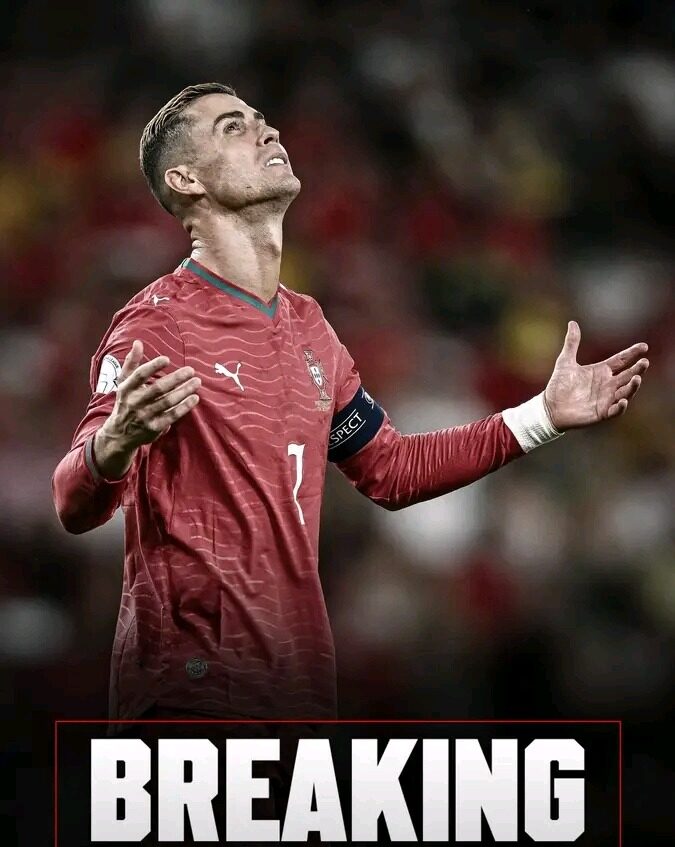
Cristiano Ronaldo has been provisionally suspended by the Portuguese Football Federation (FPF) following his controversial departure from the national team camp, adding another dramatic chapter to the growing tension surrounding the country’s most celebrated footballer.
The decision, announced on Saturday, October 10, 2026, came after the federation opened disciplinary proceedings against the 41-year-old forward over circumstances surrounding his departure from Portugal’s training camp. Football journalist Fabrizio Romano brought the development to wider attention, sparking fresh debate about the future of the Al-Nassr captain’s relationship with his national team.
For a player who has devoted more than two decades to representing Portugal, the latest development represents a significant moment in an international career defined by extraordinary achievements, fierce competitiveness and an enduring desire to lead his country.

However, the suspension is provisional, meaning the disciplinary process is still underway and the final punishment, if any, has yet to be determined.
The controversy dates back to Portugal’s recent international campaign, when Ronaldo’s relationship with head coach Jorge Jesus became a subject of intense discussion following his reduced involvement in the team’s matches.
Tensions reportedly intensified after Ronaldo remained on the bench during Portugal’s 2-1 Nations League victory over Norway on September 27. The forward subsequently left the national team camp in Copenhagen ahead of Portugal’s next fixture against Denmark.
Ronaldo later publicly explained his decision, alleging that Jesus had broken promises concerning his participation and the explanation that would be given about his situation. According to the Portuguese captain, an agreement had been reached regarding how the circumstances would be addressed, but the coach’s subsequent comments did not match their understanding.
Jesus, however, disputed Ronaldo’s account of their discussions, leaving the disagreement at the centre of the controversy.
The departure attracted widespread attention because Ronaldo is not simply another player in the Portuguese squad. He is the national team’s all-time leading scorer, an experienced captain and a figure whose influence has shaped Portuguese football for an entire generation.
His decision to leave camp therefore raised questions extending beyond his personal disagreement with the coach. At stake were the expectations attached to national-team duty, the authority of the manager and the responsibility that comes with wearing the captain’s armband.
The Portuguese Football Federation has now taken formal action.
In its statement, the federation confirmed that disciplinary proceedings had been initiated following a decision taken on October 9. It also announced a non-automatic preventive suspension and classified the case as urgent.
The matter was subsequently referred to the federation’s disciplinary investigation committee on October 10. The federation stated that the proceedings would remain confidential until the investigation was concluded.
This means Ronaldo’s case has entered a formal disciplinary process, but the announcement should not be interpreted as confirmation that he has received a definitive long-term ban from international football.
The eventual outcome will depend on the findings of the investigation and the applicable disciplinary regulations.
Ronaldo has also acknowledged that his actions could carry consequences. In his public response to the controversy, the Portugal captain apologised and accepted that his conduct should be assessed by the federation. He further recognised that his position as captain could make the matter more serious.
That admission adds another dimension to the dispute. While Ronaldo has defended his account of the disagreement with Jesus, he has also acknowledged the importance of accountability, particularly for a player expected to set an example for his teammates.
Nevertheless, the suspension does not automatically mean that Portugal’s long association with their captain has reached its conclusion.
Jesus had previously indicated that Ronaldo could return to the national team, leaving open the possibility of reconciliation despite the disagreement. Ronaldo has likewise expressed his willingness to continue representing Portugal after serving whatever punishment is ultimately imposed, provided he remains physically fit and performs well at club level.
The immediate question is therefore not simply whether Ronaldo will return, but how the federation will resolve a dispute involving one of the most influential figures in the country’s football history.
Portugal must balance the contribution of a legendary player against the need to maintain discipline and consistency within the national team. Ronaldo, meanwhile, faces the challenge of demonstrating that his commitment to the country remains greater than any disagreement with the coaching staff.
His achievements cannot be erased by one controversy, but neither can his status as a national icon automatically exempt him from the rules governing international football.
For millions of supporters, Ronaldo remains the player who helped Portugal win Euro 2016 and established himself as the country’s greatest international goalscorer. Yet this latest episode highlights a difficult reality: even the most celebrated footballers can find themselves at the centre of disciplinary disputes.
The investigation will determine the formal consequences of his departure, while the wider question of his relationship with the national team remains unresolved.
For now, Portugal’s captain finds himself facing an uncertain international future, with the next chapter of his remarkable career dependent not only on what happens on the pitch, but also on the outcome of the disciplinary proceedings.




