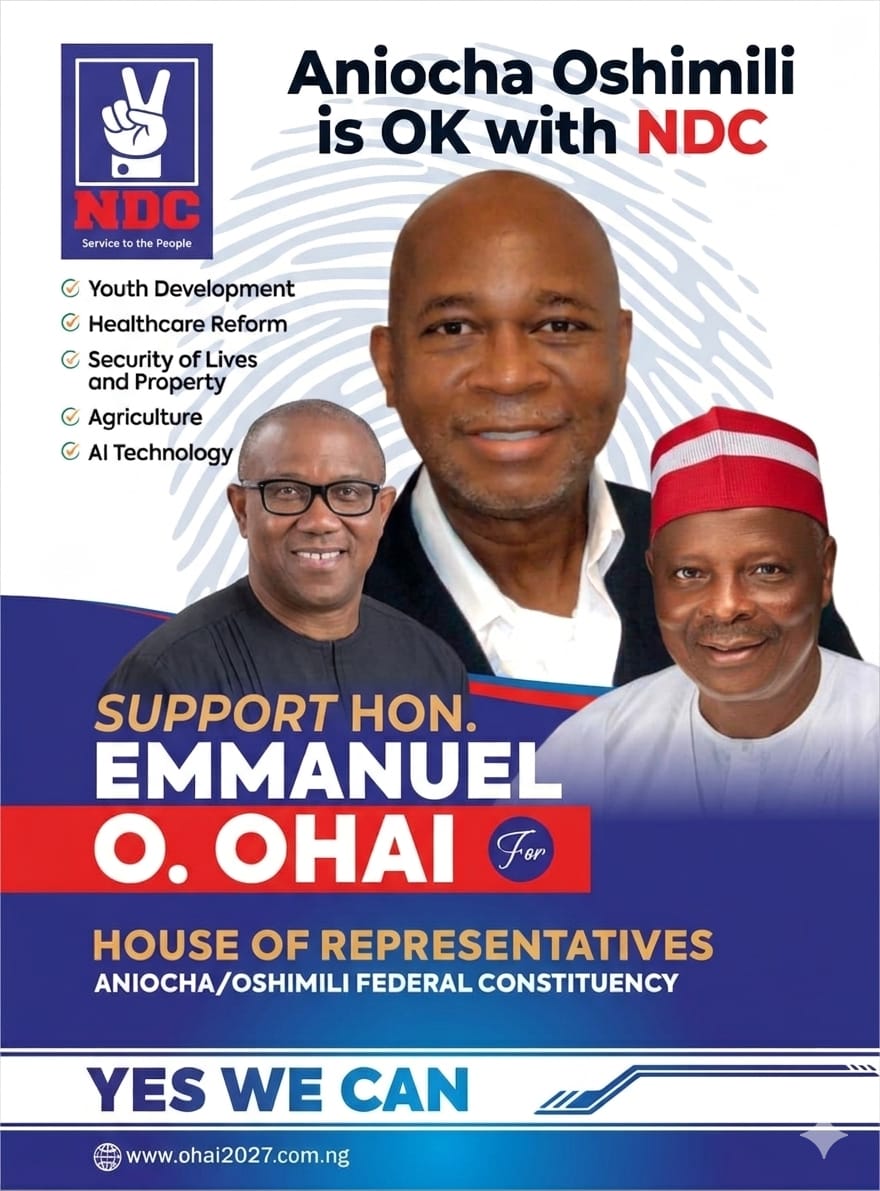


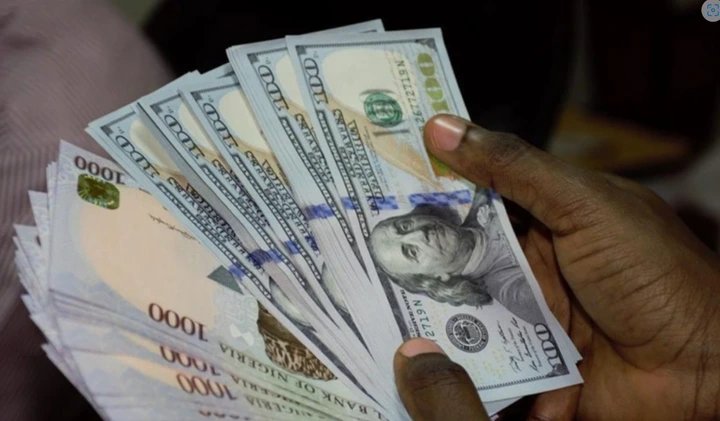
LAGOS, NIGERIA — A recent political promise to strengthen the naira to N500 to the dollar has sparked a critical debate. The promise came on October 30, 2026, from Professor Pat Utomi, a chieftain of the Nigeria Democratic Congress. He said the party’s 2027 candidate, Peter Obi, was targeting a strategic appreciation of the naira from N1,350 to N500 per dollar.
The claim projects a 63 per cent reduction in the exchange-rate quotation. It also came with a price list suggesting that sliced bread would fall from N1,750 to N800 and a 50kg bag of rice from N55,000 to N27,500.
No timeline or operational monetary framework was provided.
The Arithmetic of the Promise

The question is fair. Nigeria’s external position is the strongest in nearly two decades. Reserves reached $55.26 billion on October 30, 2026, up from $45.57 billion in January.
The current-account surplus hit $7.54 billion in the second quarter. Refined petroleum imports plunged 87.5 per cent, from $2.48 billion to $310 million, as domestic refining expanded. Inflation declined for three consecutive months to 14.63 per cent. The Central Bank cut its policy rate by 350 basis points to 23 per cent in September.
With these improving fundamentals, why does the naira still trade at about N1,347 to the dollar?
The Money Supply Problem
The arithmetic the manifesto has not done is revealing. Nigeria’s broad money supply reached N146.60 trillion in September 2026. It grew 24.47 per cent year-on-year against a CBN target of 8 per cent.
At $55.26 billion in reserves, a hypothetical full dollar backing would imply N2,653 to the dollar. Maintaining such backing at N500 would require $293.20 billion, a shortfall of $237.94 billion. That is equivalent to 61.5 per cent of annual GDP.
Apply the more generous currency-board test. The N41.59 trillion monetary base would require $83.18 billion in reserves at N500. Nigeria remains approximately $27.9 billion short.
Currency in circulation has risen 81 per cent in three years, from N3.01 trillion in August 2023 to N5.44 trillion in August 2026. Reserves grew 20.4 per cent in nine months. Broad money grew 24.47 per cent over twelve months. A currency’s external value is a ratio. Nigeria has worked on the numerator while the denominator ran away.
The Price Fallacy
The claim that halving the rate halves prices fails separately. Agriculture generated N11.87 trillion in nominal value added in Q1 2026. Yet Nigeria spent N3.30 trillion importing food and beverages in the first half.
Yam is not priced in dollars. What the dollar touches is the diesel in the truck, the fertiliser, the generator at the mill, and the packaging. That pass-through is real, but it is a fraction of retail price. It is also asymmetric. Nigerian prices climb promptly when the naira falls and descend reluctantly when it rises.
The Impossible Trinity
The theory is not obscure. Mundell and Fleming’s impossible trinity holds that a country may have a fixed exchange rate, free capital movement, and an independent monetary policy, but never all three.
The platform wants N500. It wants foreign investment to finance security, electricity, and roads. It implicitly wants lower interest rates to revive manufacturing. Pick two. In Nigeria, it is always the rate that breaks.
Who Pays if the Target Is Achieved?
Consider who pays if the target was achieved. The 2026 budget is benchmarked at N1,400 to the dollar. At N500, every dollar of oil revenue yields N500 instead of N1,400. That is a 64 per cent loss on the naira value of the largest federally distributable revenue source.
The budget is already funding only 53.9 per cent of its N68.32 trillion from projected revenue of N36.87 trillion. Every state allocation would collapse.
Remittances of $21.81 billion in 2025 would lose 63 per cent of their naira value. The family in Enugu receiving $200 a month would go from N269,000 to N100,000. Non-oil exporters would be crushed between dollar revenues and naira costs, as Ghana’s cocoa farmers were.
What Would Actually Move the Naira
What would actually move the naira is already partly underway, undramatically. The collapse in refined petroleum product imports, from $2.48 billion in the fourth quarter of 2025 to just $310 million in the first quarter of 2026, represents a quarterly reduction of $2.17 billion.
If sustained, that translates into an annualised foreign-exchange saving of approximately $8.7 billion. It is the most powerful naira-positive development of the decade.
Gas exports, non-oil export growth, and continued import substitution are the real levers. On the money side, the lever is restraint.
A money stock growing at 8 per cent rather than 24.47 per cent, alongside reserves expanding at 20 per cent annually, could strengthen the naira substantially. It could potentially bring the exchange rate to between N900 and N1,000 by 2031. That is not N500, but it is a 30 per cent appreciation delivered by production rather than proclamation.
What the Platform Should Do
First, any candidate serious about the exchange rate should publish the money supply path that accompanies the target. A rate without a monetary programme is a wish.
Second, the target should be stated in real rather than nominal terms.
Third, the price list should be withdrawn and replaced with import-content estimates. Claiming yam and garri halve when the dollar halves invites dismissal of the sound parts of the programme.
Fourth, the platform should say which leg of the impossible trinity it will surrender.
Fifth, it should name the losers and say how they will be compensated.
Sixth, the emphasis should move from the rate to what determines it. This includes refining capacity, gas monetisation, non-oil exports, the security situation that keeps farmland idle, and the electricity that would let a Nigerian factory compete with a Chinese one.
Conclusion
The most generous reading of N500 is that it describes where the naira ought to be in an over-a-decade well-run Nigeria. On that reading, it is not wrong.
The objection is that a number offered without a mechanism, a timeline, a money supply path, or an account of who pays is a campaign artefact rather than a policy. Nigerians have paid for those before, to the tune of $11.7 billion defending the naira in 2016, yet depreciation more than doubled.
The only naira that stays at N500 is one the country has earned. Emeka Nwosu, a trader in Computer Village, can tell you the current rate to two decimal places. What he would like, and what no manifesto has yet offered him, is a reason to stop checking.