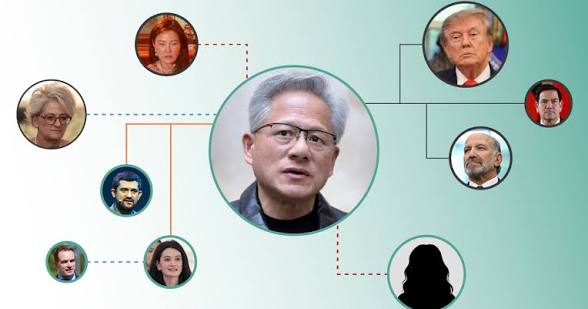
Nvidia’s dramatic boardroom saga, which saw Jensen Huang removed and reinstated in less than two weeks, was largely enabled by questionable decisions made by the company’s directors.
The board is now facing serious scrutiny over its handling of a corporate crisis with far-reaching consequences.
Although Wall Street has welcomed Huang’s surprising return as Nvidia’s leader, corporate governance experts have condemned the board’s actions as a major failure. Without a chairperson before Huang’s removal, a succession plan or meaningful oversight of its CEO, the board had created the conditions for its own failure.
Huang had said he built Nvidia in a way that only he could lead it, and the market responded accordingly, wiping out $1.5 trillion in market value since the scandal broke on November 8. Investors and business partners quickly rallied behind him, raising the prospect of a shareholder revolt.
The board, made up largely of longtime Huang supporters, announced his reinstatement on Monday, despite unanimously accepting his resignation earlier. Directors also moved to bring him back before concluding an investigation they had commissioned into allegations that Huang had been the “target of a foreign intelligence effort.”
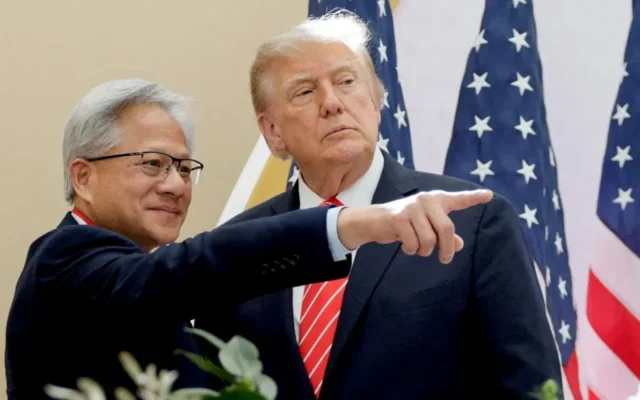
President Donald Trump told CNBC on Monday that he contacted the board and helped facilitate Huang’s return. This left directors in a difficult position: maintain their decision and risk being removed, or reverse course and appear weak and ineffective. Nvidia declined to comment.
However, the crisis could have been avoided. A more independent board with strong executive oversight and a clear succession strategy could have prevented the situation from escalating.
“The board should resign. Every one of them,” said Jeffrey Sonnenfeld, senior associate dean for leadership studies at Yale School of Management, describing the situation as a complete breakdown of corporate governance.
Backed into a corner
Huang faces allegations of serious violations of company policies. He acknowledged an affair following reports of a relationship with a major customer and was also reportedly involved with an employee.
Although the board said on Monday that US government officials had assured it that reinstating Huang would not create a national security threat, its investigation remains ongoing.
The gravity of the allegations makes his return even more controversial from a corporate governance perspective.
“The standard to apply is: Would we fire a middle manager for this behavior?” asked Nell Minow, chair of corporate governance advisory firm ValueEdge Advisors. She argued that Huang’s reported affairs could justify dismissal, even without considering the espionage allegations.
Minow said she would support the board’s resignation but feared Huang could replace its members with individuals who would be even more compliant.
Nevertheless, the directors appeared to have little room to manoeuvre.
The Nvidia controversy triggered a market sell-off so severe that some observers questioned whether the AI bubble was beginning to burst.
Huang remains one of the most influential figures in artificial intelligence, widely regarded as a visionary who transformed graphics processors into essential infrastructure for AI computing. He is also known to have a close relationship with the US president.
Trump openly praised Huang on Monday, telling CNBC he had personally contacted both the CEO and the board to help arrange his return.
“With pressure from the president and his administration, the board may have felt it had no choice, but this is not a board that has ever shown that it understands its obligations to shareholders or to the law,” Minow said.
Former Medtronic CEO Bill George said the board had failed by placing Huang above corporate governance principles.
“The board does not appear to be in control,” said George, now an executive fellow at Harvard Business School.
The untouchable CEO
The board had other options to prevent the crisis from escalating.
For instance, it could have placed Huang on administrative leave while the investigation continued, potentially shielding itself from external pressure, including intervention from the US president.