


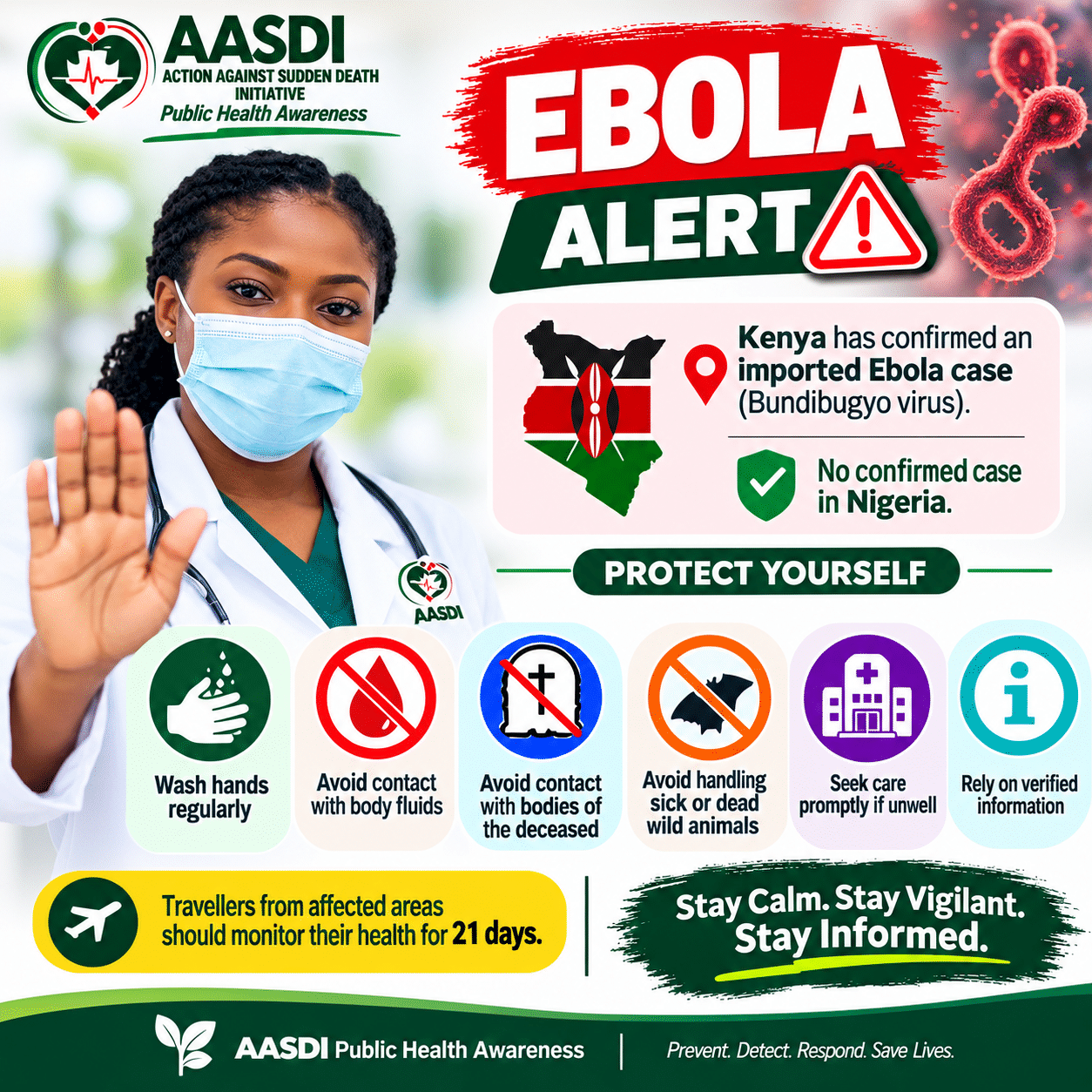
LAGOS — The Action Against Sudden Death Initiative (AASDI) has urged Nigerians to remain vigilant and follow verified public-health guidance following the confirmation of an imported Bundibugyo virus disease (Ebola) case in Kenya.
According to the health advisory, the reported case is linked to the ongoing outbreak in the Democratic Republic of the Congo, prompting health authorities to strengthen disease surveillance and preparedness.
AASDI said that as of October 6, 2026, no confirmed Ebola case had been reported in Nigeria, while encouraging members of the public to remain alert without resorting to panic or spreading unverified information.
Nigerians Urged To Observe Preventive Measures
The public-health initiative advised Nigerians to maintain good hand hygiene by washing their hands regularly with soap and water or using an alcohol-based hand sanitiser.

It also urged people to avoid contact with the blood and other body fluids of individuals who are sick, particularly where Ebola or another infectious disease is suspected.
AASDI further advised the public against handling the bodies of people who died from unexplained illnesses, stressing the importance of allowing trained health and response personnel to manage suspected infectious-disease deaths.
The initiative also cautioned against handling sick or dead wild animals and consuming raw or inadequately cooked bushmeat.
Travellers Asked To Monitor Their Health
Travellers arriving from areas affected by Ebola outbreaks were advised to monitor their health and seek medical attention promptly if they develop symptoms.
AASDI also encouraged anyone who becomes unwell after travelling to an affected area to inform healthcare workers about their recent travel history. Such information can assist health professionals in assessing potential exposure risks and determining appropriate measures.
The initiative urged Nigerians to rely on information from recognised health authorities rather than social media rumours or unverified reports.
No Need For Panic
AASDI stressed that public awareness and early reporting remain important components of infectious-disease preparedness.
The organisation urged Nigerians to remain calm while taking appropriate precautions, noting that vigilance, accurate information and prompt medical attention can help strengthen disease prevention and response.
It encouraged members of the public to “stay informed, stay vigilant” and avoid spreading rumours that could create unnecessary fear.
AASDI issued the advisory as part of its public-health awareness efforts under its message: “Prevent. Detect. Respond. Save Lives.”
World Health Organization (WHO) / Nigeria Centre for Disease Control and Prevention (NCDC), as referenced in the advisory.




